How to Adjust Your Brew When the Season Changes and Your Coffee Suddenly Tastes Off
Seasonal shifts in your tap water's mineral content and temperature change how your coffee extracts, and recognizing the pattern lets you correct it quickly.
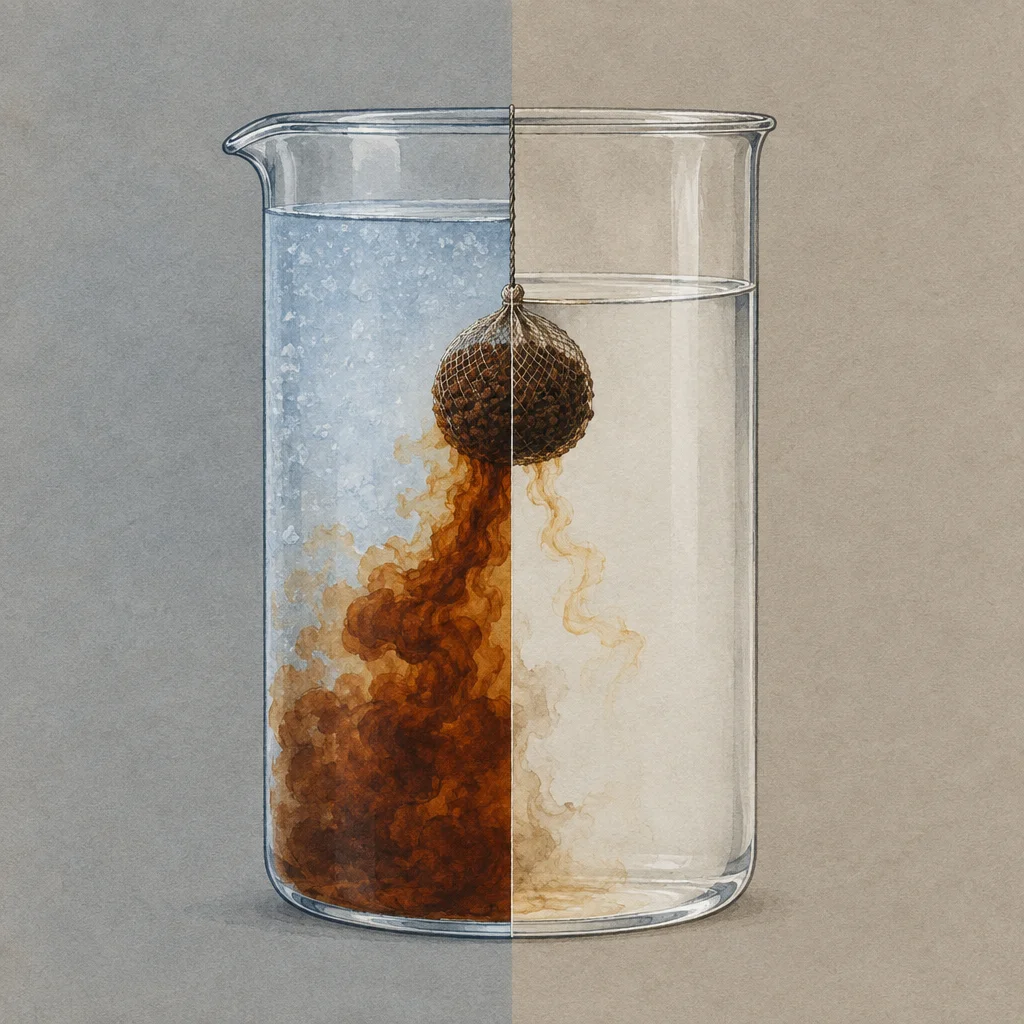
You didn't change anything. Same bag, same grinder setting, same ratio, same pour. But the cup tastes flatter than it did two months ago, or sharper, or just somehow less like itself. Before you blame the coffee or second-guess your technique, consider something most home brewing guides never mention: your water changes with the seasons, and so does your kitchen.
This isn't a fringe problem. It's one of the most common reasons a dialed-in home brew quietly drifts without any obvious cause.
Why Water Changes Throughout the Year
Municipal water suppliers adjust their treatment processes across the year. In warmer months, higher reservoir temperatures and increased biological activity often lead to shifts in chlorine levels, pH, and mineral concentrations. In colder months, the profile tends to stabilize, but it can shift again as snowmelt or heavy rain dilutes source water and changes its mineral balance.
Those minerals matter because they interact directly with the soluble compounds in your coffee. Magnesium, for example, tends to help pull certain flavor compounds into solution more readily. Calcium affects body and how flavors linger. Bicarbonate acts as a buffer that can blunt acidity. When any of these shift, your extraction shifts too, even if everything else stays identical.
You don't need to test your water to feel this. The cup tells you.
What the Seasonal Shift Usually Feels Like
The most common seasonal complaint home brewers describe sounds like this: "The coffee tastes fine but kind of dull" or "There's a weird sharpness now that wasn't there before." Both are consistent with a mineral shift.
A flatter, less vibrant cup in warmer months often points to higher bicarbonate content, which suppresses the brightness that makes good coffee taste alive. A sharper or slightly harsh quality in cooler months can suggest lower buffering, where the water is letting more acidity through than your palate expects.
The other seasonal variable is ambient temperature. A kitchen that sits at 18C in January and 26C in July affects how quickly your brewer loses heat between pours, how fast your water drops in temperature from kettle to grounds, and even how the slurry behaves during extraction. These are small differences individually, but they stack.
Three Practical Adjustments Worth Trying
Start with your water temperature. If your cup has turned flat or lifeless, try brewing a degree or two hotter than usual. Warmer water extracts more aggressively, which can compensate when higher mineral buffering is muting flavor. If the cup has turned sharp or harsh, try dropping your temperature slightly. This is often the fastest adjustment you can make, and it costs nothing.
For context: if you've been brewing at roughly 93-94C and the cup is tasting dull, moving to 95-96C is worth trying before you change anything else. If you've been brewing without a thermometer, this is a good moment to pay attention to your kettle. Boiling water that rests for thirty to sixty seconds in a standard kettle typically drops to around 90-95C depending on your environment, and in a hot kitchen it cools more slowly.
Adjust your grind slightly to compensate for temperature drift. In a warmer kitchen, water may stay hotter through the brew, which can push extraction higher. If your cup tastes more intense or bitter in summer even though you haven't changed anything, a slightly coarser grind can bring it back. In winter, the opposite: a slightly finer setting can restore extraction that's being slowed by a cooler brewing environment.
The adjustment here is genuinely small. Think one step on a stepped grinder, or a minor tweak on a stepless one. You're not redialing from scratch, you're trimming.
Consider filtered water as a consistency anchor. If your tap water shifts noticeably by season and you find yourself constantly chasing adjustments, simple filtered water from a pitcher-style filter can smooth out some of that variability. Filters that use activated carbon reduce chlorine and some organic compounds, which can improve taste consistency across seasons. They don't fully control mineral content, but they eliminate one category of unpredictable variation.
This isn't about chasing perfect brew water. It's about reducing the number of variables that change without your input.
How to Actually Notice the Shift
Most people don't connect a taste change to a season because the drift is gradual. One helpful habit is to brew your usual cup at the start of each new season and actually taste it slowly before you do anything else. Not to critique it, just to notice where it lands. Is the brightness where you expect it? Does the finish taste clean?
If something feels slightly off, and your technique is unchanged, season is a reasonable first suspect. You can even keep a brief note somewhere simple, just a sentence or two: "Late June. Cup tasting a bit flat. Tried 95C instead of 93C, better." That kind of low-effort log is genuinely useful the following year.
The Bigger Idea Here
Home brewing gets framed as a problem of technique, equipment, and recipe. Those things matter. But your brew exists inside an environment that changes, and some of the most useful calibrations aren't about adjusting a setting but about noticing that your context has shifted.
Water and ambient temperature are two of the quietest variables in home coffee. They don't announce themselves. They just make your cup taste a little worse than you know it can taste, and they wait for you to figure out why.
The good news is that once you've connected the pattern once, you'll recognize it again. A seasonal adjustment that used to feel like troubleshooting becomes something more like routine maintenance: a small recalibration that takes five minutes and keeps your cup where you want it.