How to Brew Coffee When the Bag Gives You No Information at All
An unlabeled or vaguely labeled coffee bag tells you less than you think, but three observable clues in the beans still guide a solid first brew.
Most coffee bags sold today include a roast date, an origin, tasting notes, and sometimes a suggested brew recipe. But plenty of coffee arrives without any of that. A gift from a friend who roasts at home. A bag picked up at a farmers market with a hand-stamped label and nothing else. A canister from a relative who just says it tastes good. A supermarket bag with a best-by date and the word "medium" and that is it.
You still want a decent cup. Here is how to read the beans themselves and make a reasonable first brew without guessing randomly.
Start by looking at the beans before you grind
The color and surface texture of a whole bean tell you a surprising amount about how it was roasted, and that shapes every brewing decision that follows.
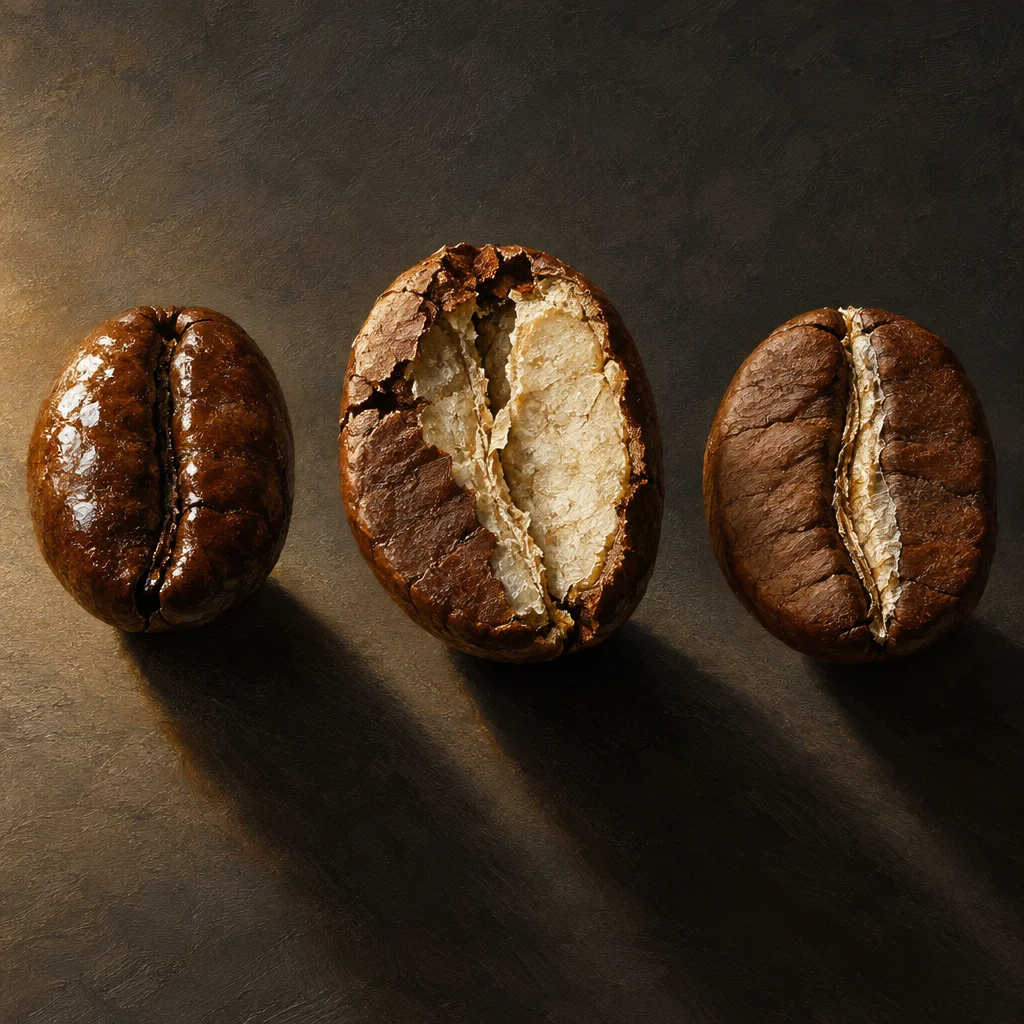
A lighter brown bean with a matte, slightly rough surface and no visible oil is almost certainly a lighter roast. These beans are denser, hold their structure well, and tend to need a bit more coaxing to extract fully. If you brew them the same way you would a dark roast, the cup often comes out thin or sour.
A very dark brown or almost black bean with a shiny, oily surface is a darker roast. These beans are more porous and extract quickly. The same recipe that works beautifully on a light roast can pull too much from a dark one, giving you a bitter, heavy result.
A medium-brown bean with little to no surface oil sits in the middle. Most brewing recipes are calibrated around something close to this, so your default approach is more likely to land well.
None of this requires expertise. You are just looking at the bean the way you would look at toast to decide if it is pale, golden, or dark. That observation alone narrows your starting point considerably.
Smell the grounds before the water touches them
Once you grind, take a deliberate moment to smell the grounds before you start pouring. The dry fragrance tells you something about how developed the roast is and, in a loose way, whether the coffee is reasonably fresh.
Very fresh, lighter-roasted grounds often smell grassy, floral, or fruit-forward at this stage. Darker roasts tend to smell chocolatey, toasty, or nutty. Either of those is useful information. What you are paying attention to is whether the smell is vivid and present or flat and papery. If it smells like not much at all, the coffee may be quite old, and you will want to lean toward a slightly finer grind to get more out of it.
You do not need to identify specific notes. You are just asking yourself: does this smell lively or does it smell tired? That question is answerable by anyone, and it changes your approach.
Choose a starting brew setting based on what you observed
Here is a simple way to set up your first brew when you have no recipe to work from.
For a lighter-looking, matte bean: start with a slightly finer grind than you might use by default, water on the hotter side (close to boiling is reasonable), and a slightly longer pour or steeping time if your method allows for it. These adjustments help you extract enough from a dense bean.
For a darker, oily bean: grind a bit coarser than you usually would, drop your water temperature slightly if you can (letting the kettle sit for thirty seconds to a minute off the boil works), and aim for a shorter contact time. This slows extraction and keeps the cup from going bitter.
For a medium-looking bean: use whatever your standard recipe is. If you do not have one yet, a ratio of roughly one gram of coffee per fifteen or sixteen grams of water is a reasonable starting point for most drip or pour-over methods.
These are starting suggestions, not rules. The goal on your first brew is to get close enough that you can taste what needs adjusting, rather than landing somewhere so far off that the feedback is hard to read.
Taste it while it is still warm and ask two questions
When the cup is brewed, taste it before it cools completely. You are trying to answer two simple questions.
First: does it taste sharp, bright, or sour in a way that feels incomplete, like the flavor stops before it should? That usually means underextraction, and a finer grind or a bit more brew time will help on the next try.
Second: does it taste heavy, dry, or bitter in a way that sits at the back of your throat? That usually points toward overextraction, and a coarser grind or slightly cooler water tends to pull that back.
If neither of those is clearly the problem and the cup is basically drinkable but not exciting, the coffee may just be old. Fresh coffee has more clarity and brightness at any roast level. Stale coffee often tastes flat no matter what you do to the recipe, and that is not a brewing failure. That is just what coffee does when it gets old.
What to do when the cup is genuinely unreadable
Occasionally you will brew an unlabeled coffee and genuinely not know what went wrong or what to fix. That happens. A few things that almost always improve a second attempt regardless of the specific problem: make sure your equipment is clean (old coffee oils in a brewer or grinder are a surprisingly common source of off flavors), use the freshest water you have available, and adjust grind size by one noticeable step in one direction before changing anything else.
Changing one thing at a time when you have no baseline is how you build one quickly. After two or three brews with small adjustments, you will have a working recipe for that bag even if no one ever told you what was in it.
The beans themselves are already telling you what they need. You just have to know where to look.