How to Brew Coffee When You're Sharing a Grinder With Someone Who Uses It Differently
A shared grinder that gets reset between users quietly ruins consistency, but one simple habit restores it without negotiating over settings.
If you share a kitchen with another coffee drinker, and that person also uses the grinder, you may have noticed something frustrating: your cup is good one morning and flat or sharp the next, and you haven't changed a thing. The grinder settings look fine. The bag is the same. But the coffee tastes different.
The most likely explanation isn't your brewing. It's the grinder.
Why a Shared Grinder Creates Hidden Inconsistency
Burr grinders have a setting that dials in how fine or coarse the grounds come out. Most home grinders express this as a numbered ring, a series of clicks, or a stepless collar you rotate. When you find the setting that works for your brew method, you rely on it being in the same place every time you reach for the machine.
But if another person in your household uses a different brew method, they may need a different grind size. A French press wants coarse grounds. A pour-over or drip machine usually wants something medium. A moka pot wants it fairly fine. If your housemate brews a French press and you brew pour-over, those settings are meaningfully different, and whoever grinds second is starting from a different place than they think.
Even if you both try to return the grinder to your preferred setting, small differences in how you each count clicks or read the collar can accumulate. Over a week of alternating, the settings drift. Neither of you is wrong, but the cups suffer.
The One Habit That Fixes Most of This
The simplest and most reliable solution is to mark your setting physically before anyone touches the grinder.
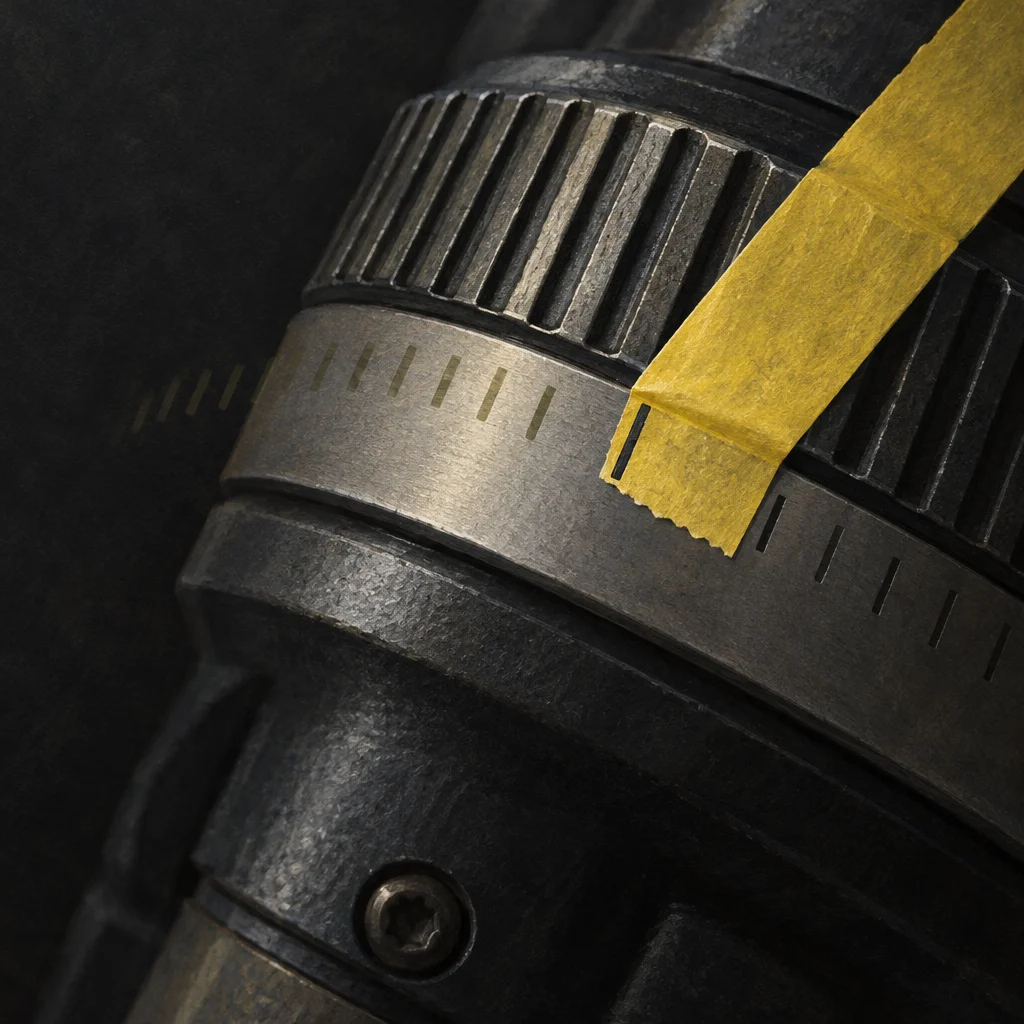
This doesn't require tools or gadgets. A small piece of tape on the body of the grinder, aligned with your preferred position on the adjustment ring, gives you a repeatable reference point that doesn't depend on counting or memory. When you return the grinder to your setting, you're matching the tape, not guessing. When your housemate returns it to their setting, they're doing the same.
If you both want to use the same grinder with different settings, two small pieces of tape in two colors accomplish this immediately. It sounds almost too simple, but the reason it works is that most grinder calibration errors at home come from imprecise re-setting after adjustment, not from the grinder itself drifting or failing.
Some grinders have numbered markings that are spaced widely enough that you can land between two numbers without realizing it. A tape reference on the body of the machine removes that ambiguity.
A Note About Grinding Order
Even with a reliable setting marked, there's a secondary issue worth knowing about: residual grounds.
Most burr grinders retain some coffee inside after each grind. When you change the setting and grind again, the first few grams that come out are actually the leftover grounds from the previous grind, not freshly ground coffee at the new setting. If your housemate grinds on a coarse setting and then you switch to medium and grind right away, the first portion of your grounds is still coarse.
For most home setups this affects a small enough quantity that it won't ruin your cup, but it's worth knowing. If you want to minimize it, grind a few grams and discard them before grinding your full dose, or simply be aware that the first bit out may be off. Some grinders retain more than others depending on how they're designed; flat burr grinders and conical burr grinders differ here, and grinders with longer chute paths tend to retain more.
This isn't a reason to stress. It's just useful information so you're not puzzled when a cup tastes slightly different from what you expected even with the setting correct.
What to Do If Marking Isn't Enough
If the tape method still leaves your cups inconsistent, there are two other things worth checking.
First, see whether the grinder's adjustment mechanism has any play in it. Some grinders, especially budget models, allow the ring to shift slightly just from vibration or being set down on a counter. If you can wiggle the collar even a little without pressing the adjustment button or actively turning it, that play is contributing to your inconsistency. In this case, always confirm the position against your tape mark by approaching it from the same direction each time. For example, always turn the collar counterclockwise until you reach your mark, rather than landing on it from either direction randomly.
Second, if you and your housemate are using very different grind sizes, like moka pot fine and French press coarse, consider whether two separate grinders might actually be cheaper and easier than the trouble of recalibrating constantly. Inexpensive hand grinders exist and work well for a single cup. This isn't a suggestion to spend money unnecessarily, but if the inconsistency is genuinely affecting both of your mornings, it's a practical option worth considering.
Keeping a Brief Shared Log
If you really want to dial things in, a brief note on a scrap of paper or a phone note can help both of you. Something like the number of clicks from closed, or a description of the tape position, gives the second person a concrete reference even if they weren't the one who originally found that setting. It also helps when a new bag arrives and you both need to adjust slightly, because a new coffee, even from the same roaster, may grind a little differently than the last.
This doesn't have to be elaborate. Even a single line per person is enough to save several frustrating mornings.
The Bigger Picture
Shared tools in a kitchen introduce small inconsistencies that are easy to overlook because they don't feel like mistakes. Nobody is doing anything wrong. But when a good grinder suddenly seems unreliable, the cause is almost always how it's being used across multiple people rather than a problem with the machine itself.
Finding your setting, marking it clearly, and communicating it simply with whoever else uses the machine is the kind of practical fix that makes a real difference without requiring any new equipment or complicated technique. Most brewing problems that feel mysterious have an explanation this straightforward.