How to Brew Coffee When You're Using a Different Brewer Than the Recipe Was Written For
A recipe built for one brew method rarely transfers cleanly to another, but two specific adjustments bring it close without starting from scratch.
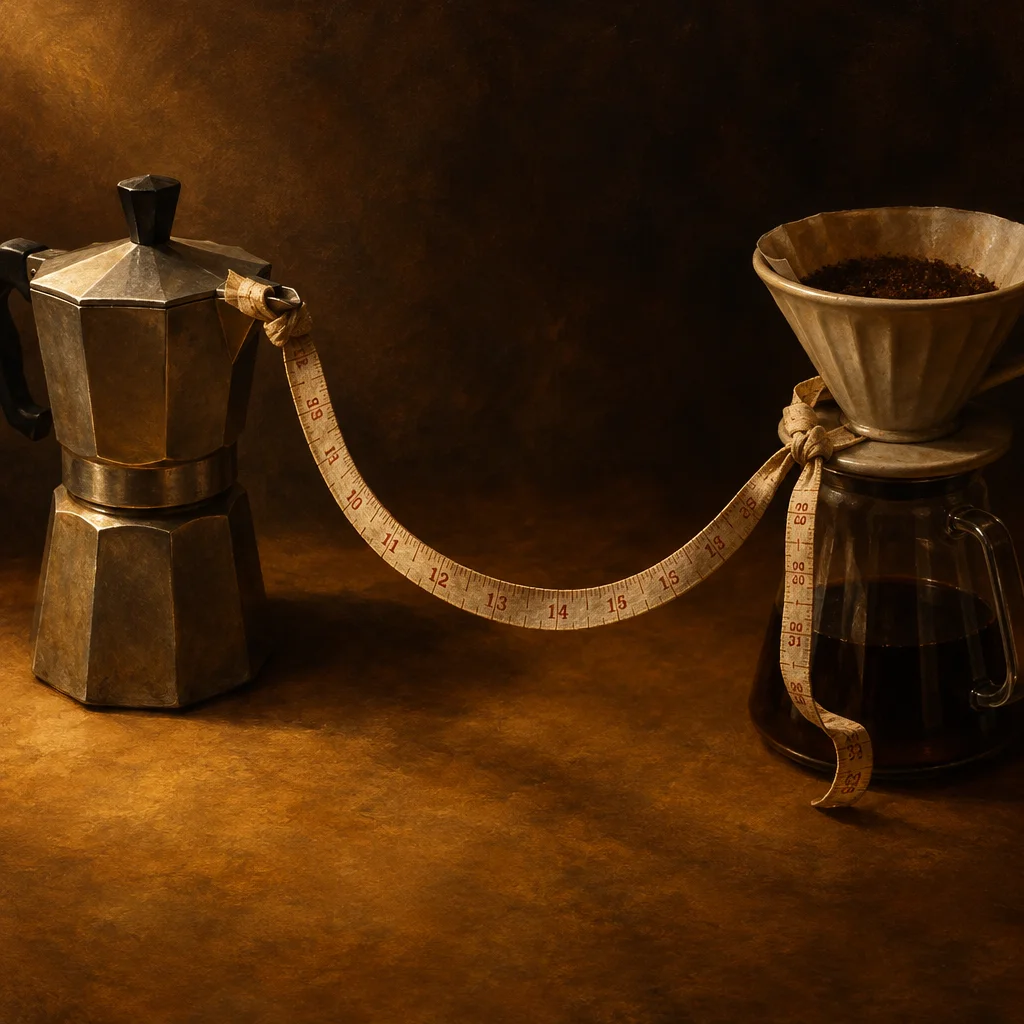
You find a recipe online that sounds genuinely promising. The notes describe exactly what you want in a cup. There is one problem: it was written for a pour-over, and you own a French press. Or it was built around an Aeropress, and you are working with a drip machine. You try to follow it anyway, and the cup comes out flat, or bitter, or just vague in a way that is hard to name.
This happens constantly, and it is not your fault. Recipes are built around the physics of a specific brewer, not around the coffee itself. When you move a recipe from one method to another, the numbers travel but the logic behind them does not. Understanding what actually changes between methods lets you translate almost any recipe into something usable, without guessing your way through ten wasted batches.
What recipes are really describing
Every recipe is controlling two things: how long water is in contact with grounds, and how evenly that contact happens. The ratio, the grind size, the water temperature, the pour technique, all of it is in service of those two factors. Different brew methods handle them differently by design.
A pour-over creates a moving flow of water through a bed of grounds. Water passes through relatively quickly, and the fine grind compensates by giving water more surface area to work with on each pass. A French press, by contrast, submerges grounds in water for the entire brew time, which is a much longer and more thorough contact. A drip machine runs water through grounds similarly to a pour-over, but with less control over pour rate and often with slightly lower water temperature.
When a recipe says "use 15 grams of coffee to 250 grams of water," the ratio is probably fine to carry over. When it says "grind fine" or "brew for four minutes," those instructions are about managing contact time for that specific method, not about the coffee itself. Those are the numbers that need translation.
The two adjustments that do most of the work
Grind size is the first dial to move. Contact time and grind size are directly linked. The longer water sits with grounds, the coarser you can grind and still get full extraction. The faster water moves through, the finer you need to grind to get enough out before the water is gone.
If you are taking a pour-over recipe and moving it to a French press, you will almost certainly want a coarser grind than the recipe suggests. The four or so minutes of full immersion in a French press will over-extract grounds that were sized for a two-to-three minute flow-through brew. The cup will taste muddy or bitter even if the ratio is perfect. Try starting roughly one or two steps coarser on your grinder than the recipe specifies, and taste before adjusting further.
Going the other direction, from a French press or cold brew recipe to a pour-over or drip machine, means the original grind suggestion is probably too coarse. You will likely under-extract and end up with a weak, sour, or watery cup. Grind finer than the original recipe calls for, aiming toward the typical range for your actual brewer.
Brew time is the second dial, and it works in the opposite direction from grind. When you switch to a method with longer contact time, you generally want to grind coarser, which we covered above. But if your method has a fixed contact time you cannot control, like an automatic drip machine where the cycle is set by the machine itself, then grind size becomes even more important because brew time is not a variable you can easily touch.
For immersion methods where you do control the timer, adjusting steep time is a useful secondary tool. If you grind coarser for a French press translation and the cup still tastes thin, try extending the steep by thirty seconds rather than jumping straight back to a finer grind. Small time changes reveal a lot about what the coffee needs.
What you do not need to change
The brew ratio, meaning the amount of coffee relative to water, is usually the most transferable part of any recipe. A 1:15 ratio produces roughly the same strength across most methods, so if the original recipe used that ratio, start there. You might land somewhere slightly different based on personal taste, but the ratio is rarely the thing that makes a cross-method recipe fall apart.
Water temperature is also fairly consistent across methods. If you are already at a reasonable temperature for your brewer, there is usually no reason to change it just because the recipe was written for a different one. Temperature adjustments are more useful for fixing a specific flavor problem once you have everything else dialed in.
A practical starting framework
When you see a recipe you want to try with a different brewer than intended, this is a reasonable way to approach it:
First, keep the ratio from the recipe. Second, think about whether your brewer has shorter or longer contact time than the original. If shorter, grind finer than the recipe says. If longer, grind coarser. As a rough starting point, assume your first cup will need one noticeable adjustment, and let that cup tell you which direction.
If the cup tastes bitter or heavy, your grind is too fine for your contact time, or your contact time is running long. Grind coarser or shorten the steep. If the cup tastes thin, sour, or hollow, you are under-extracting. Grind finer or extend contact slightly.
Most recipes, once you make this one translation, get quite close on the first or second attempt. The coffee in the recipe is still the coffee in your bag. The method is just the way you are asking water to do its job, and water is pretty adaptable once you understand what it is trying to do.