How to Brew Coffee When You're Using Filtered Water That Makes Everything Taste Flat
Heavily filtered or distilled water strips the minerals that help extraction happen, and one simple fix restores flavor without abandoning clean water.
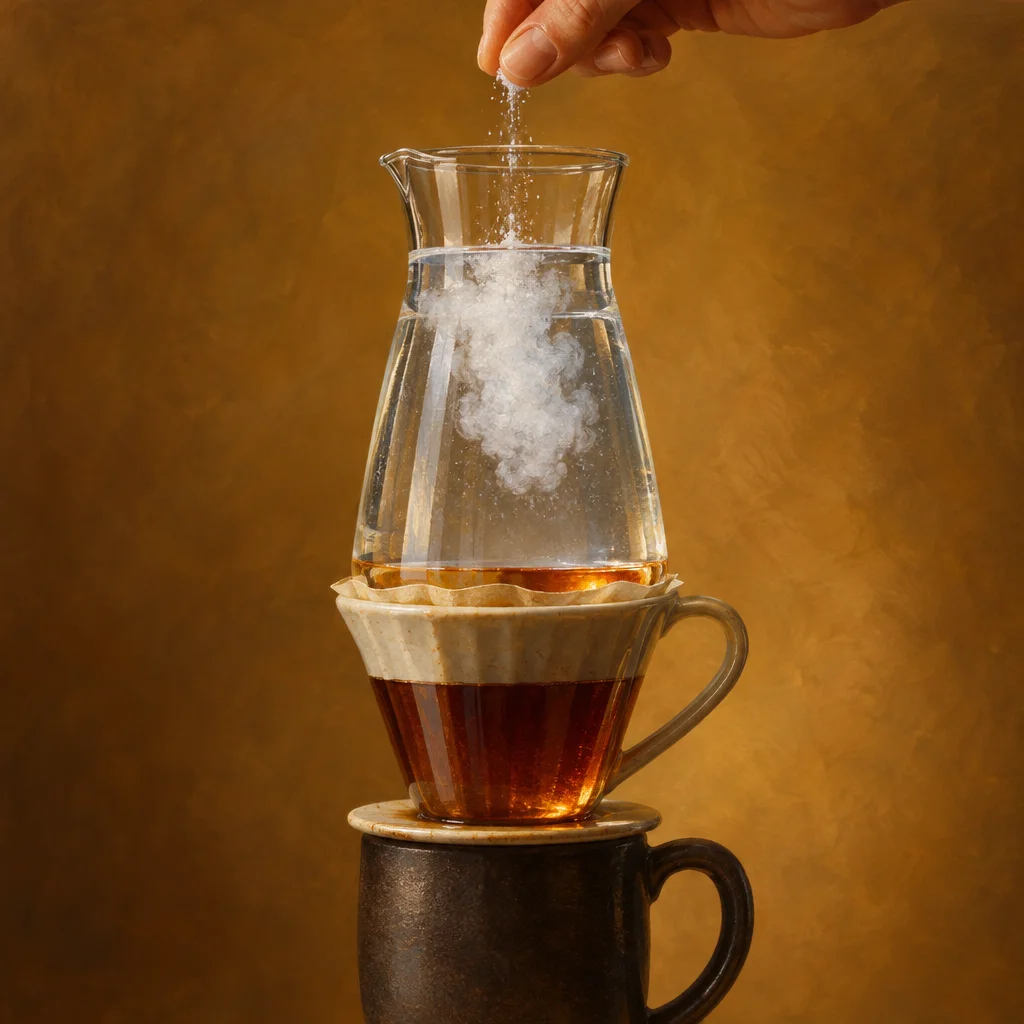
Most home brewing advice tells you to use filtered water, full stop. And that advice is not wrong, exactly. Chlorine and off-flavors in tap water really do show up in your cup. But filtered water exists on a wide spectrum, and if you have a countertop reverse osmosis system, a zero-filter pitcher, or you've been using distilled water from the store, you may have quietly created a different problem: water so clean it can barely brew coffee at all.
The cups that come out of ultra-filtered or distilled water tend to taste oddly flat. Not bitter, not sour, just muted. Like the coffee lost its middle. You might assume the beans are stale, or that your grind is off, and you'd chase those variables without finding the answer. The actual issue is that water needs a small amount of dissolved minerals to extract coffee properly, and when those minerals are gone, extraction becomes sluggish and incomplete no matter what else you do right.
Why minerals matter here
Water extracts coffee through a process of dissolving soluble compounds from the grounds. Certain minerals, particularly magnesium and calcium, make water better at grabbing those compounds and carrying them into your cup. They act less like flavor agents and more like extraction assistants. When the water is too pure, it loses that pulling capacity. The result is a brew that looks correct but tastes thin, because the water simply did not pick up what it was supposed to.
This is not a niche problem. Reverse osmosis systems, which are common in households with well water or specific concerns about tap quality, remove nearly everything from the water, including the helpful minerals. Distilled water, sometimes used because it is consistent and cheap, has the same issue. Even some high-end pitcher filters with multiple stages can take water low enough that it starts affecting your cup.
You can roughly estimate where your water falls by taste alone. Ultra-filtered or distilled water often has a slightly hollow or slippery quality when you drink it plain. That same quality transfers into your coffee.
What to actually do about it
The practical fix does not require you to buy specialized brewing minerals, though those exist and work well if you want to go that route. The simpler starting point is a small pinch of a mineral-containing salt added directly to your water before brewing.
Plain table salt is not the right tool here because it adds sodium without the magnesium or calcium that help extraction. What you want is something that contributes hardness, which is the mineral content that matters for brewing. A very small amount of Third Wave Water or similar mineral packets designed for coffee brewing is the most controlled option. But if you want to try something immediately without ordering anything, adding a very small pinch of baking soda to a liter of distilled water can raise the alkalinity enough to show a difference. Start with a quarter of a small pinch. The goal is not to taste the additive at all. You are just giving the water something to work with.
Another option, and often the easiest one, is blending. If you have a reverse osmosis tap, mix its output with a portion of your regular unfiltered tap water. A rough starting suggestion would be somewhere around two thirds filtered to one third tap, though you can adjust based on how your tap water tastes on its own. This approach keeps most of the filtration benefit while adding back some of the mineral content the process removed. It is not precise, but it often produces a noticeably better cup than pure filtered water alone.
How to know if this is your actual problem
Before you change anything, run a simple check. Brew one cup using your current ultra-filtered water and taste it carefully. Then brew an identical cup using water straight from the tap, same grind, same ratio, same temperature. If the tap water cup tastes richer or more complete, even if it has some off-notes from chlorine or hardness, then water mineral content is a real factor in your flat cups. If both cups taste similar, the issue is somewhere else.
This side-by-side comparison is worth doing because the flat-cup problem can also come from under-extraction caused by grind size or temperature, and you do not want to chase a water solution when a different adjustment is what you actually need. The tap test narrows it down quickly.
A note on going too far in the other direction
Very hard tap water, the kind that leaves heavy scale in your kettle and white deposits around your faucet, can also cause problems. It tends to produce harsh or chalky-tasting coffee, and it will clog equipment over time. If you have that kind of water, fully removing filtration is not the answer. In that case, the blending approach makes even more sense: use filtered water as your base and add just enough unfiltered water to bring some minerals back without bringing back the hardness problems.
The sweet spot for brewing water is somewhere in the middle, not so stripped that extraction suffers and not so loaded with minerals that the flavors turn muddy. Most reasonable tap water in cities actually falls close to this range, which is why the basic filtered water advice works well enough for most people. It is specifically the ultra-filtering end of the spectrum that causes this particular problem.
Starting point for tomorrow morning
If you use a reverse osmosis system or distilled water and your coffee has been tasting flat despite dialing in your grind and ratio, try the blending approach first. Mix roughly two parts filtered water to one part tap water and brew your normal recipe without changing anything else. If your tap water is heavily chlorinated, let the blended water sit in an open container for a few minutes before using it, which lets some chlorine off-gas on its own.
The result will not be a dramatic transformation. What you should notice is that the coffee tastes more like itself, the flavors that were there but muted come forward a little, and the cup feels more satisfying to finish. That is exactly what better mineral content in your water is supposed to do: not add flavor, just let the coffee express what was already in the grounds.