How to Brew the Last Few Days of a Bag Without the Cup Falling Apart
The final portion of a coffee bag behaves differently than the fresh middle, and two small adjustments keep those last cups tasting worth drinking.
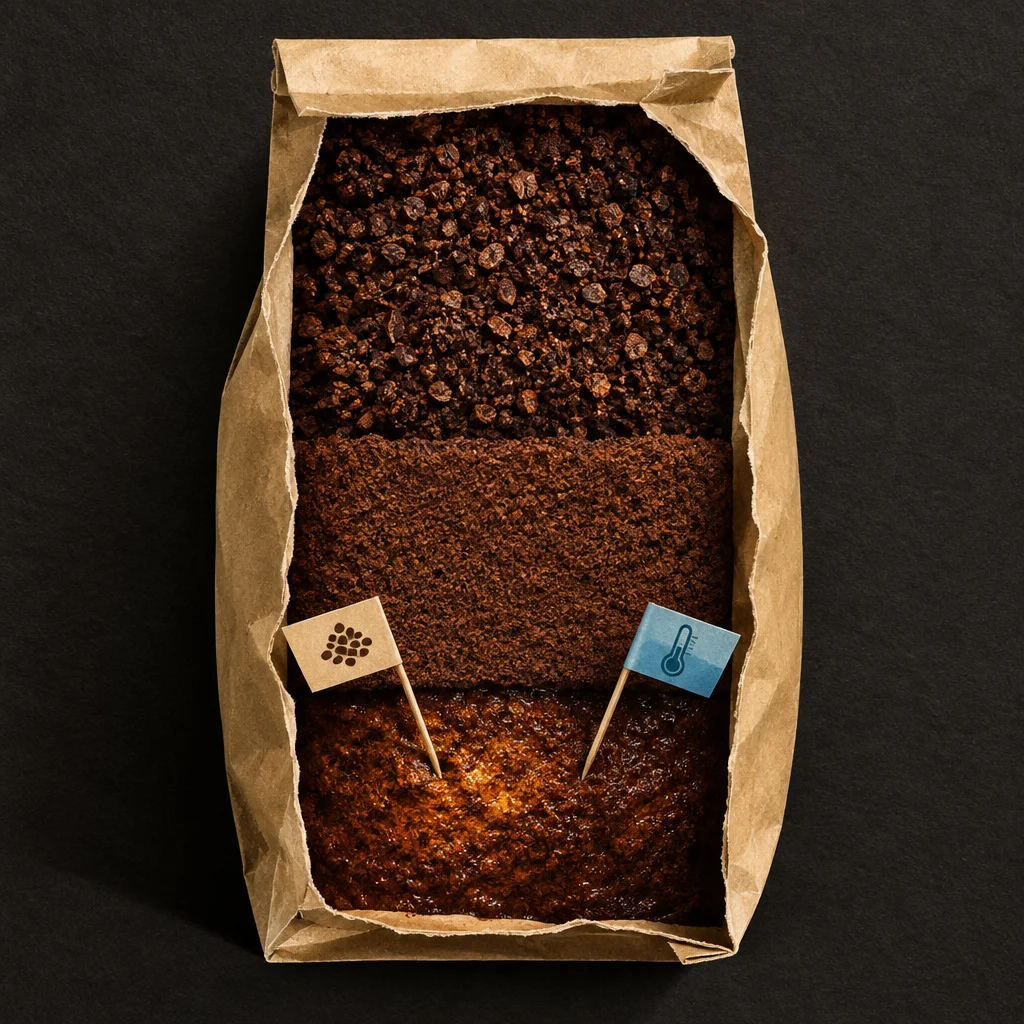
Most home brewers notice a pattern they never quite name: the first week of a new bag is easy, the middle is reliable, and then somewhere near the bottom things quietly go sideways. The cup tastes thinner, or a little flat, or there is an odd papery edge that wasn't there before. The usual instinct is to blame the coffee itself, maybe decide it wasn't a great bag, and move on. But the coffee hasn't changed in any dramatic way. What has changed is its environment, and that's something you can work with.
Why the end of the bag is actually different
Whole bean coffee is not static once you open the bag. It's slowly releasing carbon dioxide left over from roasting, absorbing ambient oxygen, and picking up or losing small amounts of moisture depending on where you store it. For the first several days after you open a bag, the coffee is relatively stable because there's still a lot of it packed together, and the beans in the center of the pile are somewhat sheltered.
By the time you're down to the last 50 to 80 grams or so, the situation has shifted. Those remaining beans have had maximum exposure to the air every time you opened the bag. There's less mass to insulate them from temperature swings if your storage spot is near a window or an appliance. The oils on fresher or more recently opened beans have had more time to oxidize. None of this means the coffee is ruined, but it does mean it's going to extract a little differently than it did on day four.
Specifically, older or more oxidized coffee tends to extract faster and more aggressively at the start of a brew, then gives up less overall. You might get a quick burst of flavor that fades, rather than the steady extraction you were getting earlier in the bag. The result can taste over-extracted in one note and under-extracted in another at the same time, which is why it's hard to pin down.
The first adjustment: go slightly coarser, not finer
The tempting fix when a cup tastes weak or flat is to grind finer to get more out of the coffee. With end-of-bag coffee, that often makes things worse. If the grounds are already extracting quickly because the coffee is older and more porous, grinding finer just accelerates that rush and amplifies any bitterness or hollow aftertaste that comes with over-extraction.
A better move is to go slightly coarser than your usual setting, maybe one small step on a stepped grinder or a subtle nudge on a stepless one. This slows the extraction rate a little and gives the brew time to develop more evenly. You're not chasing a different flavor profile; you're just compensating for the fact that these beans are moving faster than they used to.
If you normally bloom your grounds for 30 seconds, you might also try extending that to 40 or 45 seconds. Older coffee has less gas to release, so the bloom looks less dramatic, but giving it a little more time before your main pour can still help the grounds settle and hydrate more evenly before you commit to the full brew.
The second adjustment: a slightly lower water temperature
Hotter water extracts more aggressively. When you're working with coffee that's already prone to extracting in an uneven rush, dialing your water temperature down by a few degrees can smooth that out. If you usually brew at around 200 degrees Fahrenheit, try 195 or even 193. If you don't have a temperature-controlled kettle, letting your boiled water sit off heat for a slightly longer rest than usual, say 45 seconds instead of 30, moves you in the same direction.
This is a small change, and it won't rescue coffee that has genuinely gone stale from poor storage. But combined with the coarser grind, it tends to produce a noticeably more balanced cup from beans that have been sitting at the bottom of the bag for a week or more.
A note on dose
Some people instinctively add a little extra coffee when the cup tastes thin. That's not unreasonable, but it's worth knowing that adding more dose doesn't fix uneven extraction, it just gives you more of the same uneven result, sometimes with added bitterness. If you want to experiment with dose, a very small increase, maybe half a gram to one gram more than your usual amount, can help body without dramatically shifting the extraction dynamic. More than that tends to make the flatness more pronounced rather than less.
What actually helps over the whole bag: storage habits
The adjustments above are for the cup you're brewing right now. But if you want to reduce how much the end of the bag diverges from the beginning, the single most useful habit is keeping the bag sealed tightly between uses. Squeeze out extra air before you clip or roll it closed. If you have an airtight container that's roughly the right size for the amount of coffee you have left, transferring it can help, though a too-large container leaves a lot of air in there anyway, which doesn't help much.
The goal isn't perfect preservation. It's just slowing the process down so the last third of the bag behaves more like the middle third. Even small reductions in air exposure add up over a week.
The bigger picture
Home brewing is full of variables that shift without you doing anything differently. The coffee ages, the seasons change, your water tastes a little different one month than the next. Getting comfortable with the idea that your settings aren't permanent, that they're just a starting point you adjust based on what's in front of you, takes a lot of the pressure off. You don't need a perfect dialed-in recipe. You need a small toolkit of adjustments and a sense of when to reach for them.
The end of the bag is one of those moments. A step coarser on the grinder and a slightly cooler kettle are enough to keep those last few cups in decent shape, which means less waste and a little more satisfaction before you crack open whatever comes next.