How to Dial In a New Coffee Without Wasting Half the Bag
A simple three-variable sequence for adjusting grind, dose, and brew time lets you find a good cup on the first or second try instead of the fifth.
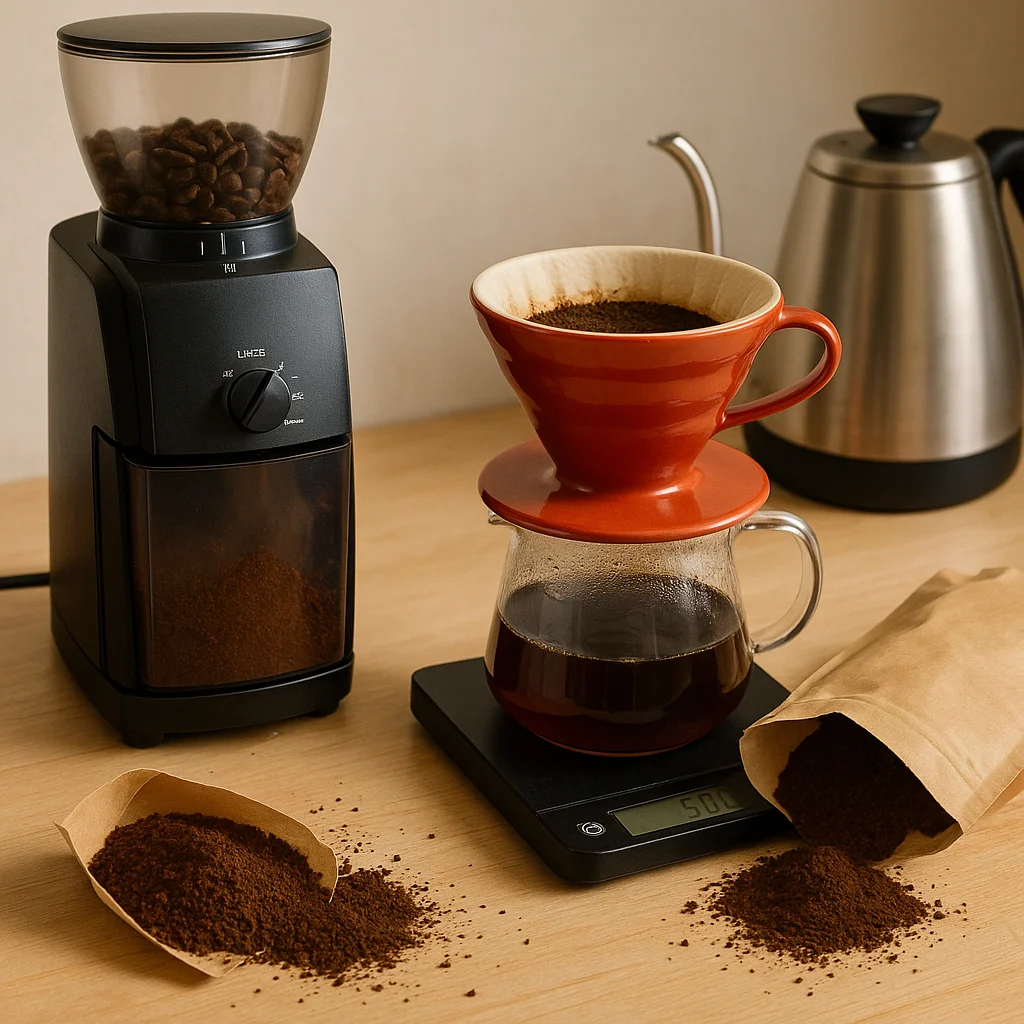
Opening a new bag of coffee should feel exciting. Instead, for a lot of home brewers, it feels like resetting a puzzle they thought they'd already solved. You nail a recipe, you run through the bag, you buy another one, and suddenly the same settings produce something sour or flat or just a little wrong. So you start adjusting. You try a finer grind. Then a coarser one. You add more coffee. You pour slower. Three days and a quarter of the bag later, you're close to where you were before.
There's a better way to approach this, and it doesn't require any special equipment or a coffee science degree. It just requires adjusting one thing at a time, in a sensible order, and knowing what each change actually does to your cup.
Start With a Baseline, Not a Guess
Before you adjust anything, brew one cup exactly the way you always do. Use your standard grind setting, your standard dose, your standard water temperature, and your standard brew time. Taste it carefully.
The goal here isn't to enjoy the cup. The goal is to find out which direction you're off. There are really only two: the cup is either under-extracted or over-extracted.
Under-extracted coffee tends to taste sour, sharp, a little thin, and sometimes hollow in the finish. It pulls back quickly on the palate. Over-extracted coffee goes the other direction: it's bitter, drying, sometimes ashy, and tends to linger unpleasantly.
If you're genuinely not sure which direction you're in, a useful thought experiment is to ask whether the coffee tastes like too much of something or too little of something. Bitterness and dryness are additions. Sourness and thinness are absences.
Write down what you taste. One or two words is enough.
Change Grind First, and Only Grind
Grind size is the most powerful extraction lever most home brewers have. It directly controls how quickly water can move through the coffee and how much surface area the water contacts. This makes it the right place to start when you're diagnosing a new bag.
If your baseline cup tasted under-extracted, go slightly finer. If it tasted over-extracted, go slightly coarser. How much is slightly? On most home burr grinders, one or two clicks in either direction is enough to produce a noticeable change. If your grinder has a stepless adjustment, a very small nudge is sufficient.
Brew again with everything else identical. Taste again. Write down what changed.
Keep adjusting in the same direction, one small step at a time, until you're in the right general neighborhood. You're looking for a cup that tastes balanced: sweet, reasonably full in body, with a finish that makes you want another sip rather than a glass of water.
The reason to move grind first and leave everything else alone is that it lets you isolate the effect. If you adjust grind and dose at the same time, you can't tell which change did the work, and you'll have a harder time repeating the result or troubleshooting it later.
Adjust Dose Second If Grind Gets You Close But Not There
Once you've landed on a grind that's in the ballpark, you may still find the cup is a little weak or a little intense. This is where dose comes in.
Dose means how many grams of coffee you're using relative to how much water. If the cup tastes thin or watery even though the extraction flavor direction seems right, adding a small amount of coffee, maybe half a gram to a gram, can bring it up without pushing you into over-extraction. If the cup tastes dense or heavy in a way that doesn't feel pleasant, pulling back slightly on the dose can open it up.
One thing to keep in mind: changing your dose will interact with your grind. Adding more coffee to a fixed amount of water tends to increase resistance and slow the brew down slightly, which can nudge you toward over-extraction if you're already at the edge. Reducing dose does the opposite. If you change your dose by more than a gram or two, it's worth brewing again with fresh attention to extraction flavor, not just strength.
Use Brew Time as a Confirmation, Not a Starting Point
Brew time is the variable most beginners want to adjust first, but it's more useful as a signal than a dial. For pour-over methods, brew time tells you whether your grind and dose combination is working the way you expect. For immersion methods like French press, time is something you can adjust deliberately, but it's still downstream of grind.
If your pour-over is draining noticeably faster or slower than it used to, that's information about your grind, your dose, or both. It's not a problem to fix directly by pouring differently. Fix the upstream variable instead and let the time follow.
For French press or similar methods, if you've dialed in your grind and dose and the cup is still slightly under-extracted, adding thirty seconds to a minute of steep time is a reasonable small experiment. Going the other direction, shortening steep time, can help if you're just barely over-extracted and don't want to go coarser.
What to Do When You're Stuck
Sometimes you go through several grind adjustments and the cup doesn't seem to be moving in the direction you'd expect. Before you start blaming your grinder or your beans, check two things.
First, make sure you're giving your grinder a moment to clear between adjustments. On many home grinders, some old grounds from the previous setting linger in the chute or burr chamber. A short purge, grinding a few grams and discarding them, helps ensure you're actually tasting the new setting.
Second, consider your water temperature. If you're using a gooseneck kettle without a thermometer, the water temperature varies more than you might expect depending on how long the kettle has been sitting. Very hot water accelerates extraction and can tip an otherwise balanced recipe into bitterness. Water that's cooled too much slows extraction and can leave you with sourness that has nothing to do with your grind. If you suspect this is a factor, let your kettle rest for thirty to sixty seconds after boiling before you pour, and try to be consistent about it from session to session.
The Bigger Picture
Dialing in a new bag doesn't have to mean chaos. The sequence of grind first, dose second, time as a check is a practical structure that keeps you from chasing your own adjustments in circles. It works because it respects the order in which variables actually affect each other.
Most new bags only need two or three small grind adjustments to find their place. Once you're there, write down what you landed on. That note takes thirty seconds and saves you from starting from scratch the next time you open a bag from the same roaster.