How to Store Coffee at Home So It Actually Stays Fresh
The container, location, and portioning habits you use after opening a bag determine how fast your coffee goes flat, and small changes make a real difference.
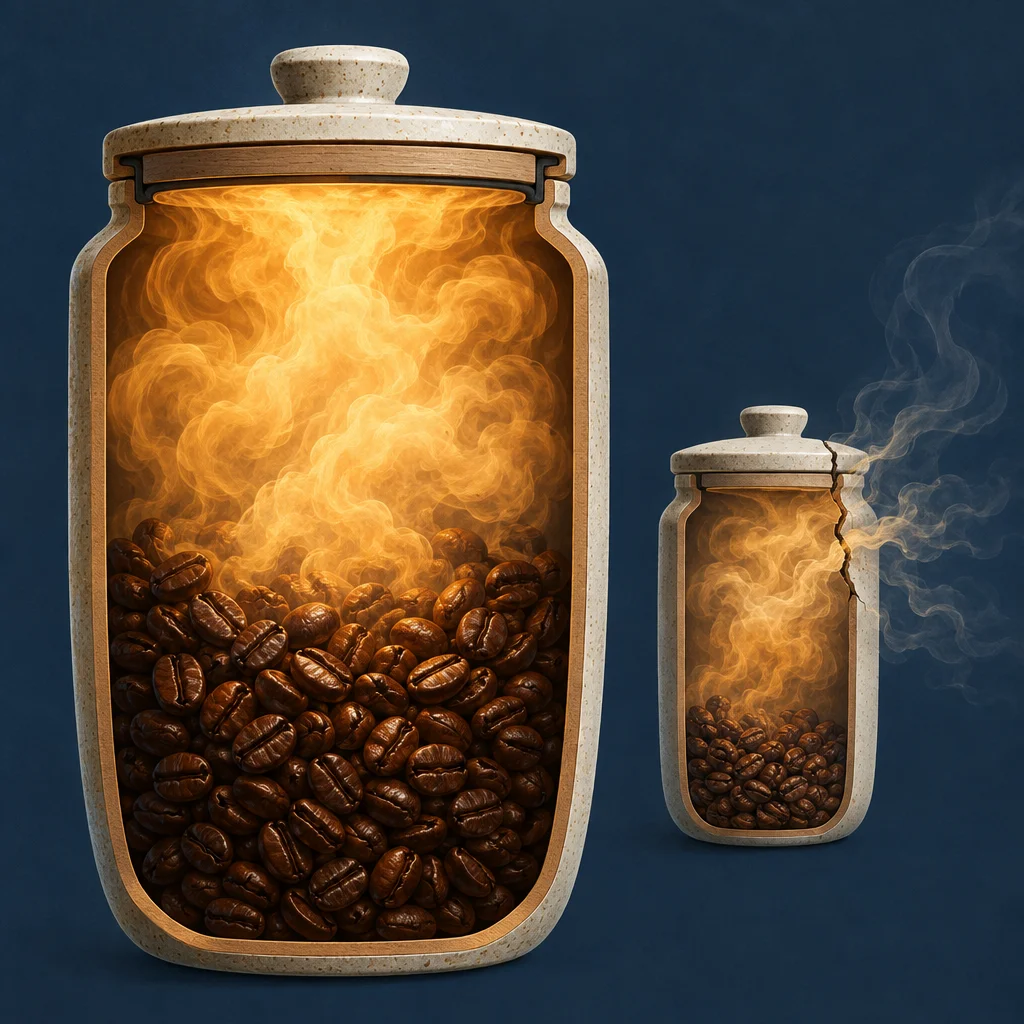
Most home brewers spend real thought on grind settings and water temperature, then store their coffee in a clear glass jar on the counter next to the stove. It is an extremely common habit, and it quietly undoes a lot of that careful brewing work. Understanding what actually degrades coffee after the bag is opened gives you a few simple adjustments that cost almost nothing and protect the flavor you paid for.
What Coffee Is Fighting Against
Roasted coffee has four enemies: oxygen, light, heat, and moisture. Of these, oxygen is the most relentless. The moment roasted beans are exposed to air, oxidation begins changing the aromatic compounds that make coffee taste interesting. The process is not dramatic at first, but it is continuous, and it accelerates once a bag is opened and the protective atmosphere inside (many roasters flush bags with nitrogen or carbon dioxide) is gone.
Light degrades coffee through a photochemical process that breaks down similar aromatic compounds, which is why clear glass jars are one of the least effective storage options despite looking beautiful on a shelf. Heat speeds up almost every chemical reaction involved in staling, which is why storing coffee near the stove, above the fridge, or on a sunny windowsill tends to produce noticeably flatter cups within days of opening.
Moisture is the fourth factor and deserves its own moment of attention, because it is the reason the freezer is more complicated than it sounds.
The Freezer Question, Answered Simply
Freezing coffee is genuinely effective at slowing oxidation, but only under specific conditions that most home situations do not meet. The problem is condensation. When you take coffee from a freezer and bring it to room temperature, moisture from the air can condense on the cold beans. That moisture accelerates extraction in ways that are hard to predict, and it introduces the one enemy that cold temperatures cannot neutralize.
If you want to use the freezer, the approach that avoids condensation problems is to pre-portion the coffee before freezing, seal each portion in a small airtight container or bag, and take out only one portion at a time. Let the sealed container come fully to room temperature before you open it. That way condensation forms on the outside of the container rather than on the beans. This works, but it requires planning ahead and consistent discipline. For most home brewers using a single bag over two to three weeks, good room-temperature storage in an opaque airtight container is simpler and produces excellent results without the complexity.
What Actually Works for Everyday Storage
The most practical upgrade most home brewers can make is a container that blocks light and seals reasonably well against air. A ceramic canister with a tight-fitting lid, an opaque tin, or one of the purpose-built coffee storage containers with a one-way valve or a compression lid all work well. The one-way valve feature is a genuine benefit: it lets carbon dioxide released by the beans escape without letting oxygen back in, which is exactly what you want.
You do not need to spend a lot. An inexpensive ceramic or metal container with a rubber-sealed lid works better than an expensive clear glass jar. The material and the opacity matter more than the price.
Location matters as much as the container. A cupboard away from the oven or dishwasher, a drawer, or a pantry shelf are all solid choices. Somewhere dark, cool, and dry is the target. Room temperature in a typical home kitchen is fine. You are not trying to recreate a climate-controlled storage room, just avoiding the specific heat and light sources most kitchens have built in.
The Portioning Habit Worth Building
One practical change that is easy to underestimate is how often you open the container. Every time you remove the lid, you introduce a fresh burst of oxygen. For a bean canister you open twice a day, this adds up. A simple way to reduce exposure is to keep a small amount of coffee in a secondary container near your grinder for the next day or two, and store the rest sealed. You open the main container less often, and the secondary container empties quickly enough that freshness is not a concern.
This also makes the math of a bag cleaner. If you buy a 250-gram or 340-gram bag and know you will use it in two weeks, you do not need to freeze anything. That is a realistic timeframe for most home brewers making one or two cups a day, and room-temperature storage in a good container handles it comfortably.
Whole Beans or Ground: Does Storage Change?
Ground coffee stales faster than whole beans because grinding dramatically increases the surface area exposed to oxygen. A bag of ground coffee that sits open for a week will taste noticeably flatter than whole beans stored under the same conditions. If you grind at home, the best practice is to grind only what you need immediately before brewing rather than grinding a week's worth in advance. If you buy pre-ground coffee, the same storage principles apply, but the window is shorter. An airtight opaque container, a cool location, and using it up within a week of opening will give you the best results.
A Simple Starting Point
If you want one concrete action to take today: find an opaque container with a lid that seals, put it somewhere cool and away from light, and stop opening it more than you need to. That single change will produce a noticeable improvement in how your coffee tastes in the second half of a bag compared with what you are used to. From there, portioning and the other habits can follow at whatever pace feels comfortable.
Freshness is one of the few things in home coffee brewing that requires no equipment upgrades, no new technique, and no calibration. It just requires keeping oxygen, light, heat, and moisture away from beans you already bought. The cup at the end of the bag can taste nearly as good as the first one. It mostly depends on what happened in between.