How to Use Brew Time as a Diagnostic Tool (Not Just a Target to Hit)
The total time your brew takes from first pour to last drip reveals specific extraction problems before you change a single variable.
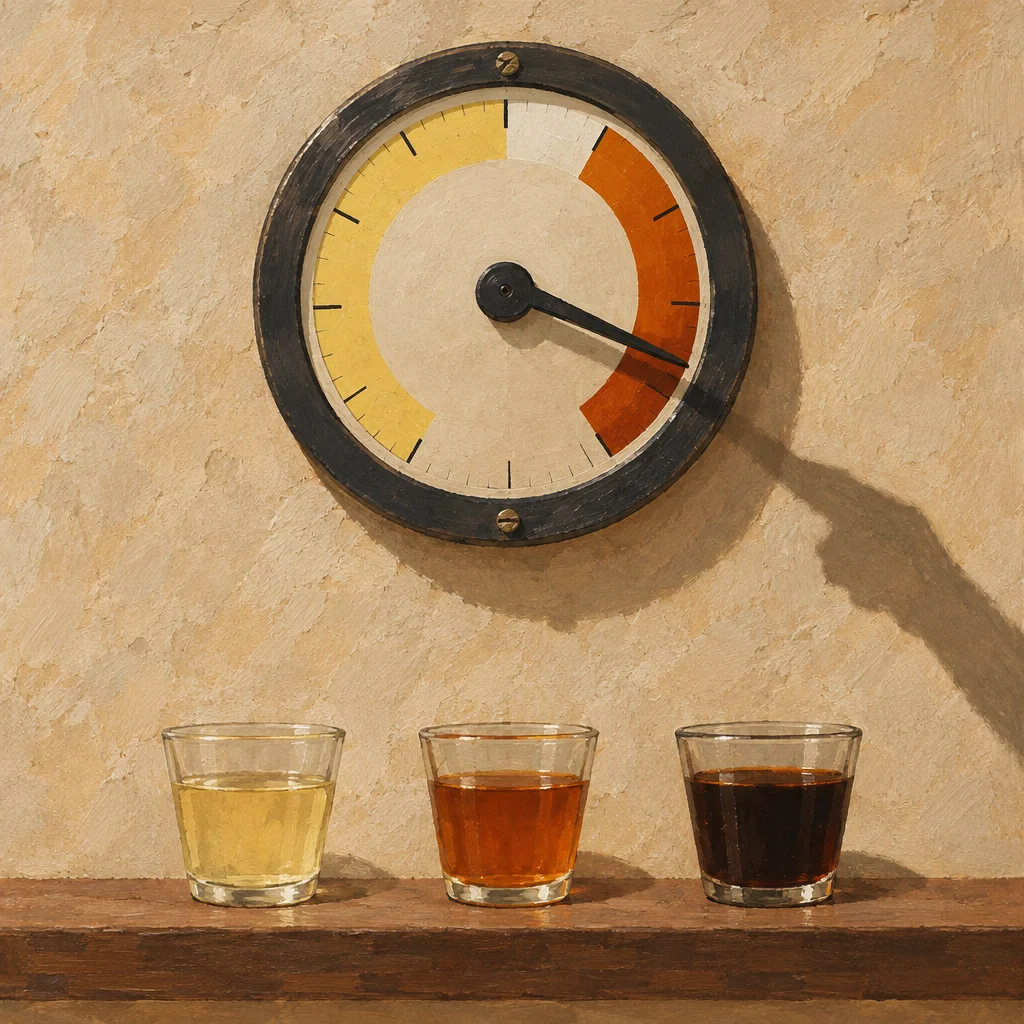
Most home brewers treat brew time the way they treat a speed limit: something to match and then forget. You read a recipe, it says four minutes, you aim for four minutes, and if you land somewhere close, you move on. The problem with that approach is that time alone tells you almost nothing. What actually matters is what your brew time is telling you in combination with everything else happening in the cup.
Breaking down this idea takes less effort than it sounds, and once you start reading time as feedback rather than a finish line, your ability to adjust becomes noticeably more accurate.
What brew time actually measures
When you pour water over coffee, two things determine how long the liquid takes to drain through: how freely water moves through the bed of grounds, and how much resistance those grounds create. Grind size affects this directly, because finer particles pack more tightly and slow drainage. But grind is not the only factor. Dose weight, grind distribution, the shape of your brewer, and even how you pour all influence the time you see on your timer.
This means brew time is a composite signal. It reflects the sum of many variables at once, which makes it genuinely useful as a diagnostic when you hold some of those variables steady.
The practical approach: pick one brew you make regularly with a consistent recipe and note the time every session. You do not need to obsess over it. A rough window is enough. For a standard Hario V60 with 15 grams of coffee and 250 grams of water, many people land between 2:30 and 3:30 from the start of the bloom to the final drip. For a Kalita Wave with similar parameters, the window shifts slightly longer because of the flat bed. Your specific brewer and recipe will create its own window, and that window becomes your reference.
When the time runs long
If your brew suddenly takes notably longer than your usual window, and you have not changed your recipe, a few things are likely candidates.
First, your grind may have shifted finer. This is surprisingly common and happens for reasons that have nothing to do with your setting changing, including humidity affecting how beans feed into the burrs or small inconsistencies in how you load the grinder. Finer particles restrict water flow and extend drain time.
Second, you may have poured differently. Aggressive, centered pours that displace grounds toward the filter walls can create an uneven bed that drains unevenly and slowly. A more gentle, distributed pour often speeds things back up without any grind change at all.
Third, your coffee may be fresher than usual. Freshly roasted beans release more carbon dioxide, which can slow initial water penetration and make the whole brew run longer. If you opened a new bag within the last couple of days of roasting, that is worth noting as context.
When a long brew time comes with a cup that tastes bitter, astringent, or hollow-dull, that is an over-extraction signal. Time and flavor together confirm the diagnosis. If the brew runs long but tastes fine, the question becomes whether you are actually outside your normal window or just at the longer edge of it. Not every slow brew is a problem.
When the time runs short
A brew that finishes faster than usual, especially one that drains almost immediately after your final pour, typically points toward a coarser grind, a lighter dose, or a combination of both. Coarser particles leave more open space between them, and water moves through quickly.
The cup signal that pairs with a short brew time and points toward under-extraction is a sour, thin, or sharp-but-weak flavor. The coffee may taste acidic in an unpleasant way rather than a bright, clean way. Short brew time plus those flavors means water moved too quickly to pull much out of the grounds.
Short brew time with a cup you actually enjoy is not a problem. It just means your recipe and grind have settled into a fast-draining equilibrium that works for your taste. Some people genuinely prefer lighter-bodied cups that come from faster extraction. There is no universal correct time, only correct results for you.
Using time to check your grind adjustments
Here is where brew time becomes especially practical. When you adjust your grind, time lets you confirm the adjustment did what you expected before you commit to drinking a full cup based on hope.
If you moved your grinder coarser to address over-extraction, and your next brew still takes the same long time, one of two things is happening: either your grinder did not produce a meaningfully different grind at the new setting yet, or a different variable is causing the slow drain. Time gives you a way to check before blaming the grind.
Similarly, if you dialed finer to address a sour, under-extracted cup, a brew that finishes in the same quick window as before suggests your adjustment may not have registered in the grind yet. This is worth checking because grinders often require a small purge of grounds before a new setting fully comes through.
A simple habit to build
You do not need a dedicated timer app or a notebook. A phone timer you glance at and remember roughly is enough to get started. The goal is pattern recognition over time, not data logging.
Start your timer when you begin your first pour. Stop it when the last drip falls. Note, loosely, whether the session felt faster, slower, or typical. When a cup tastes off, that note helps you connect the timing pattern to the flavor result. Over a few weeks, you build an intuitive map of how your specific brewer, grinder, and usual coffee behave together.
Once you have that map, brew time stops being a target and starts being a conversation. Your brewer is telling you something every session. Listening for it takes almost no extra effort and gives you a reliable second opinion on what your grind adjustment or new bag of beans is actually doing.