How to Use the Same Coffee at Two Different Grind Sizes to Find Your Flavor Preference
Brewing the same coffee at a coarser and finer grind on the same day teaches you what your palate actually prefers, not what a recipe assumes.
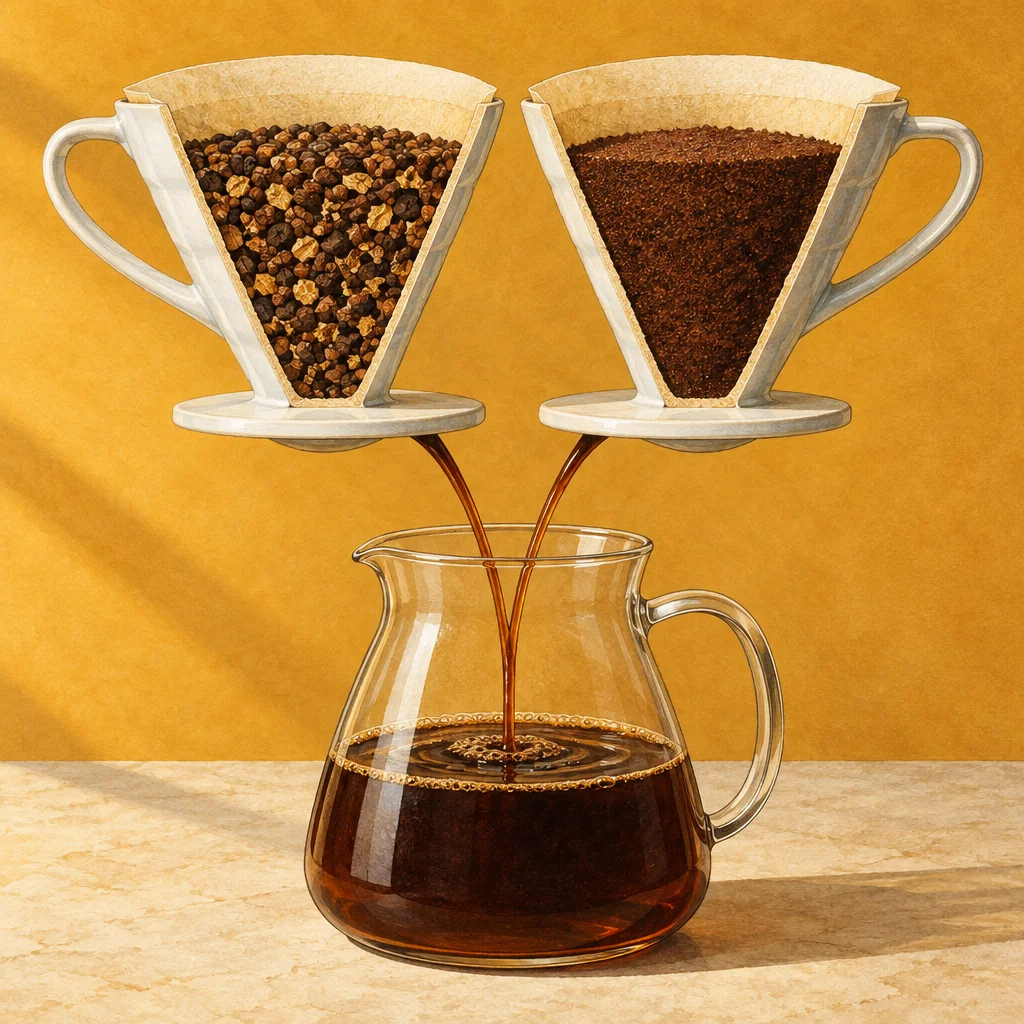
Most home brewing advice treats grind size as a problem to solve: find the right setting, lock it in, stop thinking about it. That framing skips something genuinely useful. Your grind setting is not just a dial to optimize. It is a tool that moves flavor in a specific direction, and you can use it intentionally to figure out what kind of cup you actually want.
This is not a troubleshooting exercise. It is a preference-mapping exercise, and it takes one morning and about twice your usual dose of coffee.
The Basic Idea
Grind size controls how fast water extracts soluble compounds from ground coffee. A finer grind gives water more surface area to work with, so extraction happens faster and you pull more from the grounds in a given time. A coarser grind gives water less surface area, so extraction is slower and you pull less.
The flavor consequence of this is not simply "more or less coffee strength." Different compounds extract at different rates. Acids and bright, light-tasting compounds tend to come out early in extraction. Sweetness and body follow. Bitter and dry compounds tend to arrive later. So a coarser grind, all else held equal, tends to produce a brighter, lighter, more acidic cup. A finer grind tends to produce a fuller, heavier, sometimes more bitter cup.
Neither direction is wrong. They taste different, and one of them is closer to what you enjoy.
What to Do
Pick a coffee you already know reasonably well. Brew it twice using your usual method and recipe, changing only the grind size between the two brews. Keep everything else identical: dose, water temperature, water volume, pour technique if you are doing a manual method, and brew time as best you can manage it.
For the grind adjustment, go meaningfully different. A single click on most home grinders is not enough to taste clearly. Suggest moving three to five clicks in each direction from your current setting, or if you are starting fresh, brew one batch at what feels medium for your method and one batch noticeably coarser.
Brew the coarser cup first, then the finer cup. Let both cool to a similar temperature before tasting so temperature differences do not confuse what you are trying to hear.
How to Taste What You Made
You do not need formal tasting vocabulary. You are looking for a few specific impressions.
Start with the coarser cup. Take a sip and notice where the flavor lands and how long it stays. Does it feel light and quick, like it arrives and leaves fast? Is there a sharp, bright note at the front of your mouth? Does it taste a little thin or watery? Or does it taste clean and lively in a way you like? These are all normal results from a coarser grind, depending on the coffee and how far you pushed the setting.
Then taste the finer cup. Notice the same things. Does this cup feel heavier? Is there more presence in the middle of your mouth, more sense of body or texture? Does a dry, slightly bitter sensation linger after you swallow? Or does it feel richer and more satisfying in a way the first cup did not?
There is no correct answer you are supposed to arrive at. Some people taste the coarser cup and immediately prefer it. Some find the finer cup more rewarding. Many people discover they want something in between, which tells them their starting setting was already close but now they know which direction to nudge.
What the Results Actually Tell You
If you prefer the coarser cup, your palate leans toward brightness and clarity. You can move your grind setting a little coarser from wherever you normally brew and expect to like the result.
If you prefer the finer cup, you lean toward body and richness. Move your setting finer from your usual position.
If both cups have something you like but both have something you do not, you have learned something more specific. Maybe the coarser cup tastes bright but hollow. Maybe the finer cup tastes full but leaves a dryness you do not enjoy. That contrast gives you a target. You are not choosing between two finished options. You are using the two ends to locate the middle.
A Few Things Worth Knowing Before You Try This
Your brew time will shift when you change grind size, especially with pour-over methods. A finer grind slows drainage, so your brew may take longer. A coarser grind speeds it up. Try not to compensate by changing your pour. Let the grind change do its work and observe what happens naturally. The difference in time is part of what you are learning.
Do this with a coffee that has at least a week of rest after its roast date if that information is on the bag. Very fresh coffee, roasted in the last two or three days, is still off-gassing and does not extract evenly. The difference between your two cups might reflect that instability more than it reflects the grind change.
Also, this exercise works best when you are not rushed. Tasting two cups back to back on a weekday morning when you need to leave in fifteen minutes is fine for a rough impression, but if you can take your time and taste each cup twice as it cools slightly, you will hear more.
Why This Beats Chasing a Recipe
A recipe from a bag or a website is built around a general preference, sometimes toward a specific style of coffee, sometimes toward a particular brew method's strengths. It is a reasonable starting point but it is not tuned to your palate, your water, or your equipment.
Spending one morning with two cups of the same coffee teaches you something a recipe cannot. It shows you what extraction direction actually means in your cup, with your coffee, on your equipment. That knowledge carries forward. The next time a new bag tastes off, or a new coffee surprises you, you already know which direction to try first.
That is worth the extra dose.