How to Use Your Nose to Diagnose Your Brew Before You Take a Sip
The aroma rising from your cup in the first thirty seconds reveals specific extraction problems you can act on before tasting a drop.
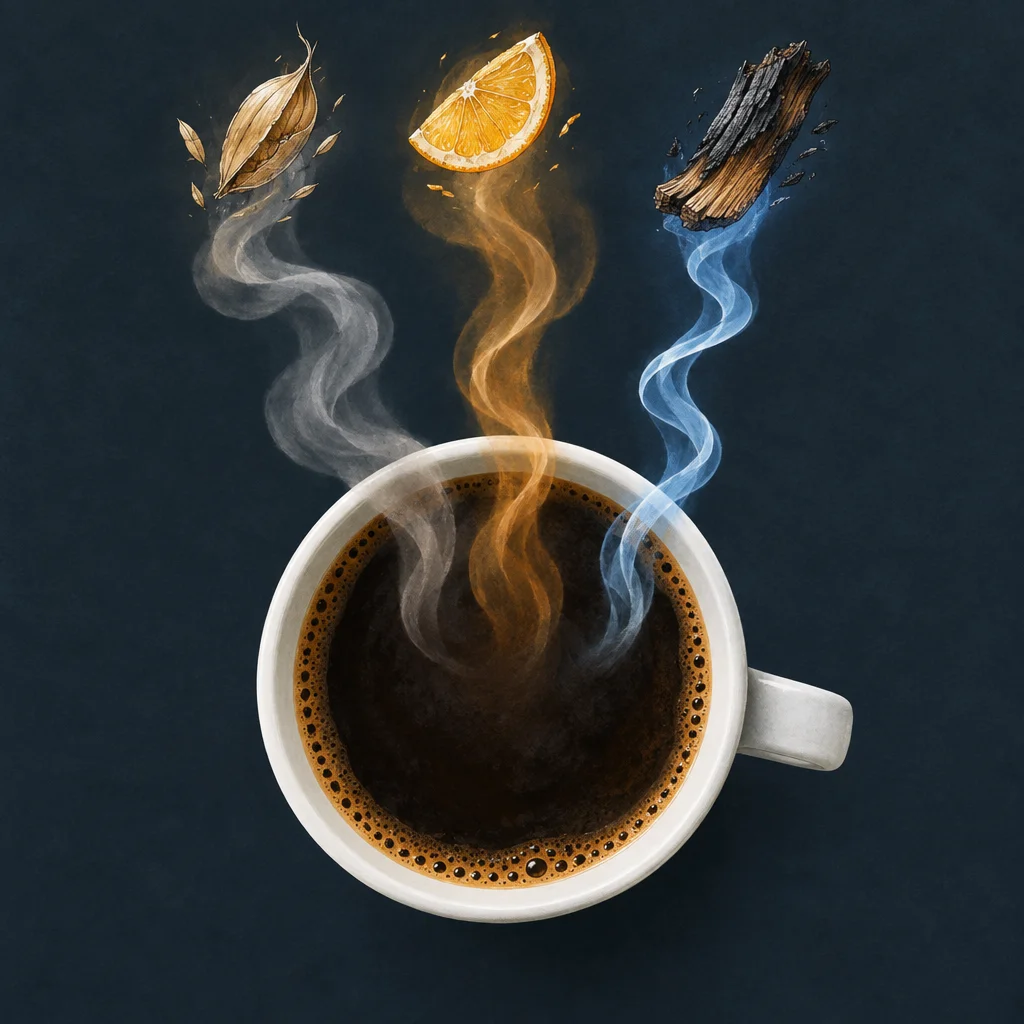
Most of us smell our coffee the same way we smell a candle in a shop: a quick inhale, a general impression, then we move on. But the aroma coming off a freshly brewed cup is actually packed with information, and learning to read it takes nothing more than slowing down for about thirty seconds before you drink.
This is not about developing a sommelier's vocabulary or memorizing flavor wheels. It is about noticing a handful of specific signals that your nose can detect faster than your tongue, signals that point directly to whether your extraction is on track or needs adjusting.
Why Aroma Shows Up Before Flavor Does
When hot water moves through coffee grounds, it pulls out hundreds of aromatic compounds. The lightest and most volatile of these escape into the air almost immediately, which is why a freshly brewed cup smells more intense than it tastes. By the time those same compounds reach your tongue, many have already dissipated or changed.
This means your nose gets a preview of your extraction. The specific character of that preview, not just whether it smells good or bad, tells you something real.
Reading the Aroma Right After Brewing
The most useful moment to smell your coffee is when it is still very hot, right after it finishes brewing and before you add anything to it. Hold the cup or mug close and take a slow, deliberate inhale through your nose. Give it two or three seconds. Then pull back and notice what you actually registered.
There are three broad aroma territories worth learning to recognize, and each one maps to a different extraction state.
The first is sharp and thin. If the dominant impression is almost harsh, a little raw, or primarily reminds you of dry grain or paper, your extraction is likely running short. The coffee is giving up its lightest, most acidic aromatics without fully developing the fuller, rounder compounds that follow. This often accompanies a brew that will taste bright to the point of hollow, or sour in an unpleasant way. Common causes include water that cooled too quickly, a grind that is too coarse, or a brew time that ran faster than it should have.
The second is heavy and flat. If the aroma feels dense but somehow muffled, a little dull or musty rather than rich, extraction has probably gone long or the coffee itself is older than ideal. Over-extracted aromatics tend to lose their brightness and collapse into a heavier, less distinct smell. The cup will often confirm this with a dry, bitter, or papery finish. This can point to a grind that is too fine, water that was too hot, or brew time that ran long.
The third is layered and shifting. This is the one you want. A well-extracted cup tends to produce an aroma that feels like it has more than one thing happening. You might catch something brighter on the first inhale, then something warmer underneath. It does not need to smell complex in a showy way. It just needs to feel like there is something interesting going on rather than a single flat note. This is a good sign before you even drink.
The Warm Cup Test
Here is a simple habit to try. After you pour your brew, hold the cup in both hands and bring it up so the steam rises toward your face. Do not rush to sip. Just breathe normally and notice what reaches you passively. Then take one intentional slow inhale.
Ask yourself one question: does this smell like it has range, or does it smell like one thing? You do not need the words for what you are smelling. You just need to notice whether there is movement and dimension, or whether everything collapses into a single impression.
If it collapses flat or sharp, make a mental note before you taste. You will almost certainly confirm it on the palate, and having noticed the aroma first means you will have a cleaner hypothesis about what went wrong.
Aroma Fades Fast, So Timing Matters
The window for this kind of reading is short. After about two minutes, as the cup cools slightly and those first volatile compounds disperse, the aroma becomes quieter and harder to interpret in this way. You can still taste useful things in a cooler cup, but the aroma diagnostic works best when the brew is fresh.
This is actually useful as a practical habit because it naturally slows you down right at the moment most people are already waiting for the coffee to cool enough to drink. You are not adding any extra time. You are just filling that pause with attention.
A Note on Whole-Bag Aroma
The same basic logic applies when you open a fresh bag. Ground coffee smells most vibrant in the first few minutes after grinding, and whole bean coffee loses its most fragrant top notes gradually after the bag is opened. If you notice that your dry grounds smell noticeably duller than they did a week ago from the same bag, that is useful information about where the coffee is in its aging curve, and it often explains why a cup that was excellent ten days ago has become harder to dial in even without changing anything.
You do not need to track this formally. Just make it a habit to notice what the dry grounds smell like right after grinding, before water ever touches them. Over time, you will build a reference for what fresh and fading smell like, and that reference will help you calibrate your expectations before you brew.
Starting Small
If you want to build this into a real habit, start with just one question per brew: does this smell like something I want to drink? Not in a judgment-of-the-coffee way, but in a is-the-extraction-on-track way. The answer will not always be precise, especially at first. But the habit of pausing and noticing, before the first sip, is what turns tasting into a real feedback loop instead of just drinking.
Your nose already knows more than you are asking it.