Water Temperature Does More Work Than Your Grind Setting Does
Brew water temperature changes extraction speed and flavor direction more dramatically than small grind adjustments do, and most home brewers have never measured theirs.
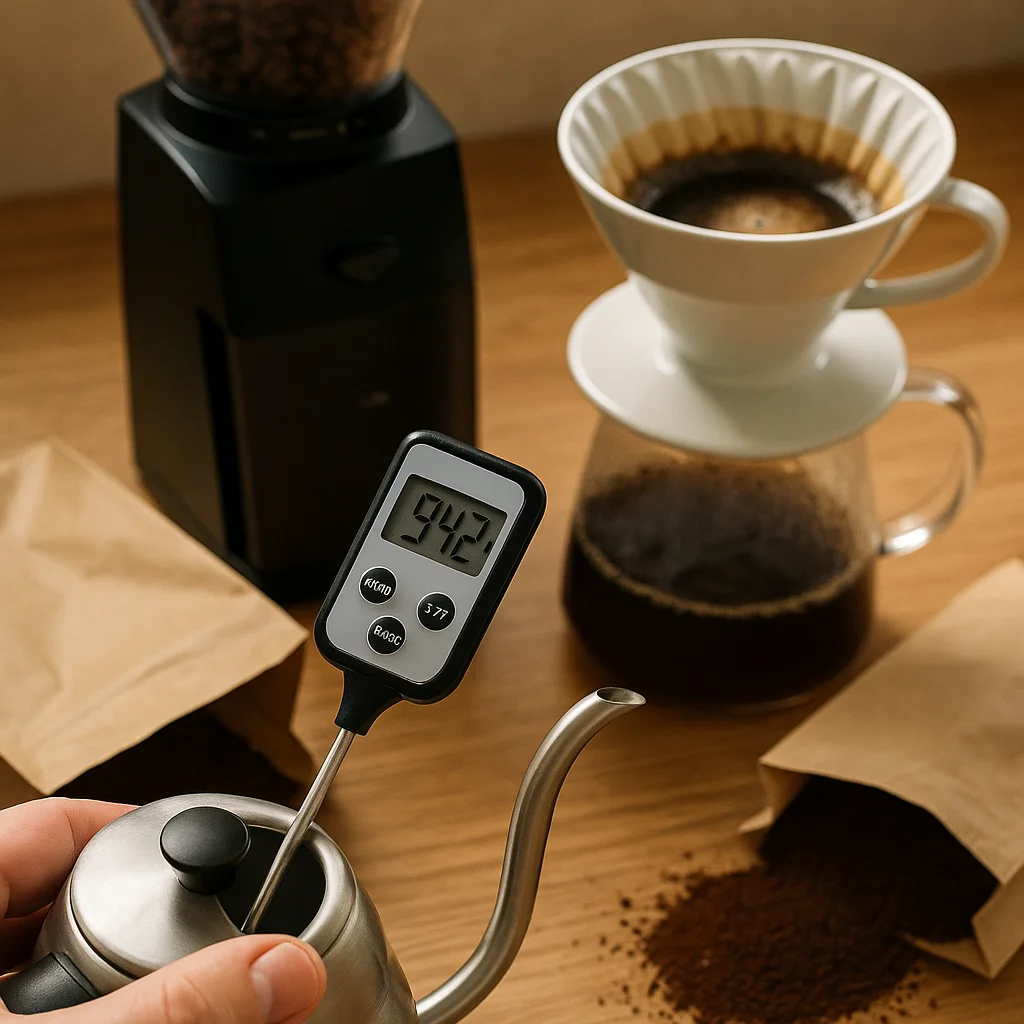
Most home brewers reach for the grinder when something tastes off. Too sour? Go finer. Too bitter? Go coarser. That instinct is reasonable, but there is another variable sitting right next to your kettle that has at least as much influence on what ends up in your cup, and it costs nothing to adjust: the temperature of your brew water.
If you have never actually measured your water temperature during a brew, you are almost certainly brewing at a different temperature than you think.
Why Temperature Matters So Much
Hot water does not just dissolve coffee. It selectively dissolves different compounds at different rates depending on how hot it is. The acids that give coffee brightness and fruit-like flavors dissolve relatively quickly and at lower temperatures. The sugars and heavier compounds that create sweetness and body need more heat and more time. The bitter, harsh compounds that nobody wants tend to extract aggressively at very high temperatures or with extended contact time.
This means that water temperature is essentially a dial that shifts the flavor balance of your cup independently of how fine or coarse you grind. Grind size changes how fast water moves through the coffee and how much surface area it contacts. Temperature changes which compounds get pulled out in the first place. They work together, but they are not the same thing.
As a practical example: imagine you brew a cup that tastes flat and a little sour, without much sweetness or depth. You might assume the grind is too coarse and make it finer. But if your water is only around 185 degrees Fahrenheit, you might be under-extracting because the water is not hot enough to pull the sweeter compounds efficiently, not because the grind is wrong. Making the grind finer and keeping cool water often just makes the sourness more concentrated.
Where Home Brewers Lose Temperature
The gap between where your kettle stops heating and where water actually contacts your coffee grounds is bigger than most people realize. Here are the places temperature quietly slips away.
The pour itself. When water leaves a kettle spout and arcs through the air before hitting grounds, it drops in temperature. A longer pour arc or a slow, high pour loses more heat than a close, quick one. In a cool kitchen in winter, the drop can be meaningful.
An unpreheated brewer. If your pour-over dripper, French press, or drewer carafe is room temperature when you start, it absorbs heat from your first pour immediately. That first contact can drop water temperature by several degrees before the water even reaches the coffee. Rinsing your brewer with hot water for thirty seconds before you brew is a small habit that actually changes the thermal environment your coffee extracts in.
Waiting after boiling. If you boil water and then pause to weigh your coffee or adjust something before pouring, you might be starting your brew at a lower temperature than you intended. Water in a standard kettle that has been sitting off-heat for two or three minutes can drop 10 to 15 degrees depending on ambient temperature and kettle material.
How to Actually Know What Temperature You Are Brewing At
A simple instant-read kitchen thermometer tells you everything you need to know. They cost less than a bag of good coffee and they are useful for cooking too. You do not need a dedicated coffee thermometer.
To get a real measurement, heat your water, preheat your brewer with a quick hot water rinse, discard that rinse water, and then measure your brew water just as you begin pouring. That number is your actual brew temperature. Do this two or three times across different mornings and you will have a reliable sense of where you are actually starting.
What Range to Aim For
A commonly suggested starting range for most filter coffee methods is between 195 and 205 degrees Fahrenheit, or roughly 90 to 96 degrees Celsius. Lighter roasted coffees often benefit from the higher end of that range because their cellular structure is denser and their desirable compounds need more energy to dissolve. Darker roasts, which are more porous and soluble, often taste cleaner and less harsh at the lower end.
This is a starting framework, not a rule. Your job is to find out where you currently are and then move intentionally if you want to change the flavor direction.
If your coffee tastes thin, sour, or underdeveloped and you have not changed your grind recently, try brewing 5 to 10 degrees hotter before you touch the grinder.
If your coffee tastes harsh, ashy, or overwhelmingly bitter and your grind is already relatively coarse, try pulling back 5 to 10 degrees on temperature before you go coarser still.
A Simple Pairing Approach
Once you know your actual brew temperature, you can think about grind and temperature as a team rather than a single dial. A suggested way to approach this: fix your temperature at a consistent point you can repeat, then use grind size to do your fine-tuning. This gives you two real levers instead of one, and it keeps your troubleshooting organized.
If you have a variable-temperature kettle, you can set it and forget it, which removes one more inconsistency from your morning routine. If you do not have one, a regular kettle and a quick thermometer check gets you most of the way there with very little effort.
The Practical Upshot
You do not need any new equipment to take temperature seriously. You need to know what yours actually is right now, and then you need to adjust it deliberately if your cup calls for it. Most home brewers who measure their brew temperature for the first time are surprised by what they find, whether that is water that is cooler than expected from a long pour arc, or water that is hotter than they realized from a freshly boiled kettle with no rest time.
Getting this number under control will not replace good grind technique. But it will stop you from chasing grind adjustments that were never going to solve the problem in the first place.