What Your Coffee Grounds Look Like After Brewing Tells You Exactly What Went Wrong
The shape, color, and texture of spent coffee grounds in your brewer are a reliable diagnostic map that points to specific extraction problems before you adjust anything.
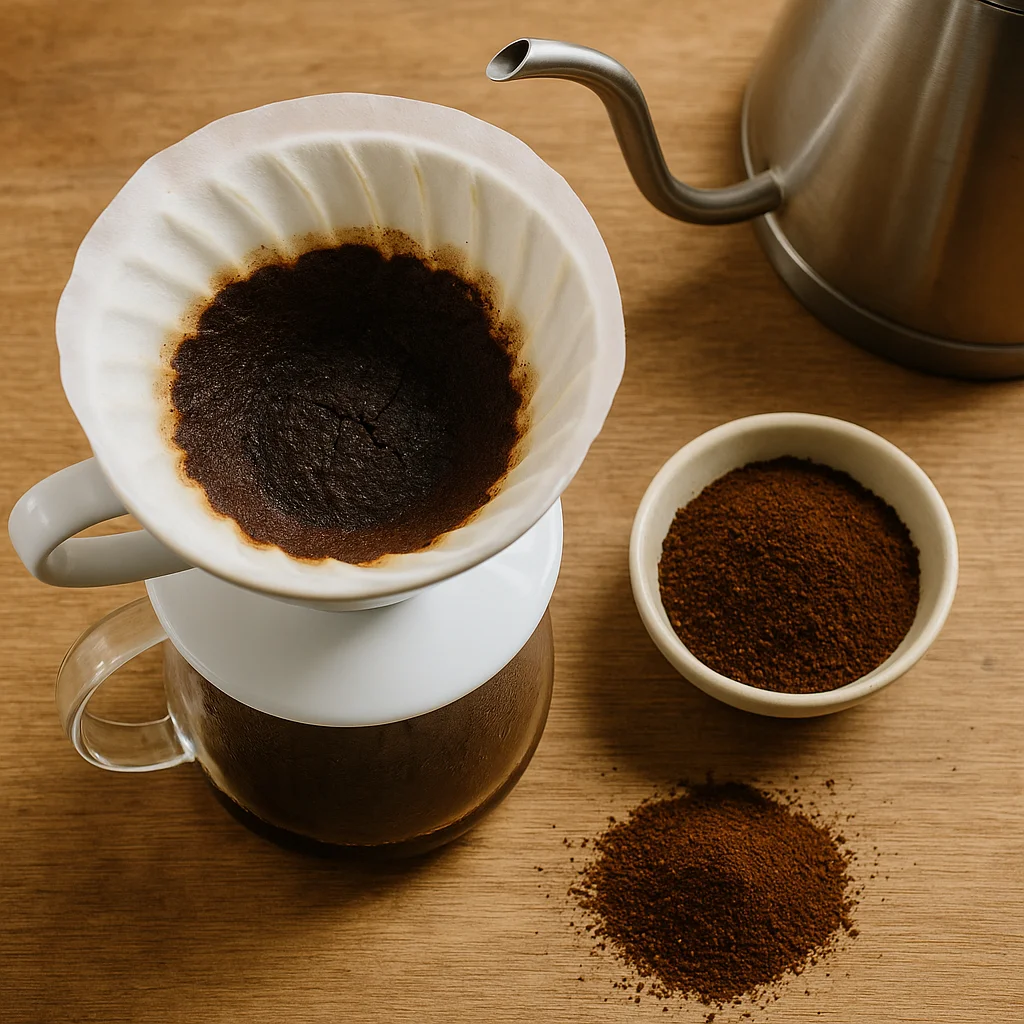
Most home brewers taste a bad cup, shrug, and start adjusting things at random. Grind a little finer. Add a bit more coffee. Try a longer pour. Sometimes this works. Often it makes things worse. There is a faster path, and it starts with looking at what is left behind after the water has done its job.
Spent coffee grounds hold a surprising amount of information. The way they look, feel, and sit in your filter or press tells you whether extraction went the way you wanted, and if not, which direction it missed. Learning to read them takes about two minutes and can save you a lot of wasted coffee.
What a Good Extraction Leaves Behind
When a brew has extracted evenly, the spent grounds in a flat-bottom or cone filter should be relatively uniform in color across the whole bed, somewhere in the medium-brown range, and they should feel damp but not soupy. In a pour-over, the bed should be relatively flat after the final drawdown, maybe with a slight dome in the center, and the sides of the filter should show a clean ring of grounds rather than a muddy splash zone halfway up the paper.
In a French press, well-extracted grounds settle into a firm, cohesive layer at the bottom. They should not be floating in a cloud throughout the liquid, and they should not be brick-hard and dry on top.
This is your baseline. When something tastes off, the grounds usually show you why.
Pale, Dry, or Crumbly Grounds Point to Under-Extraction
If your grounds look noticeably lighter than you expected, or if the bed feels dry and almost sandy after brewing, water moved through too quickly or the grounds absorbed too little of it. This usually means under-extraction, which tends to taste sour, flat, or thin.
In a pour-over, fast drawdown times often leave this kind of residue. If your bed drains in under two minutes for a standard single-cup recipe, check whether your grind is too coarse, whether your water temperature was lower than intended, or whether the grounds were clumped and channeled rather than sitting as a uniform bed.
A dry, pale bed in a drip machine can suggest that your machine is not getting water hot enough, or that grounds were so coarsely milled they never really had a chance to saturate fully.
Dark, Muddy, or Pooling Grounds Point to Over-Extraction
If the spent bed looks very dark, almost black, or if there is standing liquid pooling on top of the grounds well after brewing should have finished, water sat in contact too long. Over-extraction tastes bitter, harsh, or hollow. The pleasant sweetness and brightness get pulled out first during extraction, and the astringent compounds follow if extraction continues too long.
A pour-over bed that takes more than four or five minutes to drain for a standard recipe, combined with very dark grounds and a gummy, dense texture, is a fairly clear sign the grind was too fine. The same dark, gummy result in a drip machine can suggest grounds were packed too tightly, the basket was overfilled, or the grind is finer than your machine can handle efficiently.
In a French press, grounds that feel almost paste-like after you press and pour have usually been sitting in contact with water for longer than they needed, or the grind was finer than intended for that method.
Uneven Color Across the Bed Is Its Own Problem
Sometimes the grounds look fine on average, but there are distinct patches, pale spots in one area and darker spots in another. This is a sign of uneven extraction, sometimes called channeling, where water found an easier path through part of the grounds and barely touched the rest.
If you see this consistently in a pour-over, it often means the grounds were not evenly wetted during the bloom, or that your pours were landing in the same spot each time rather than moving in slow circles. It can also happen when grounds were clumped before brewing, which is sometimes a static issue or a sign of uneven distribution before water hits the bed.
In a drip machine, uneven color in the basket often points to grounds that were not level before brewing started. A simple habit of tapping the basket gently on the counter before closing the lid and starting the cycle can make a visible difference.
The Ring on the Filter Tells You About Your Bloom
In a pour-over specifically, look at how high up the paper the grounds have climbed. Grounds splashed near the top of the filter during your initial pour suggest you poured too aggressively, which can disturb the bed and contribute to uneven extraction. Grounds that hugged the bottom of the cone throughout suggest your bloom pour was cautious enough, which is generally a good thing.
A very thick, dark ring of fine particles stuck to the upper sides of the filter after a full brew can suggest that grounds are too fine and are floating up with the turbulence rather than sitting in the bed.
How to Make This a Two-Second Habit
Before you rinse your filter or dump your press, just look. Give yourself about ten seconds. Notice the color of the bed, whether it looks uniform or patchy, how wet or dry it feels if you press a spoon lightly into it, and how high up the filter the grounds reached. You do not need to do this obsessively, but doing it for a few consecutive brews while you are dialing in a new bag or a new method can help you make better adjustments faster.
Adjusting grind size is usually the first lever to reach for when the grounds are telling you something is off. Coarser for dark, gummy, bitter results. Finer for pale, dry, sour results. Pair that with a taste note and you have two data points working together instead of guessing from flavor alone.
The cup and the grounds are telling the same story. It is worth listening to both of them.