Why Your Grinder Lies to You When You Switch Bean Origins
Switching between bean origins mid-bag or between bags changes three physical properties of the coffee itself—density, surface oil level, and shape uniformity—that cause your grinder to behave as if you've turned a dial you never touched, producing a measurably different particle distribution at the exact same setting.
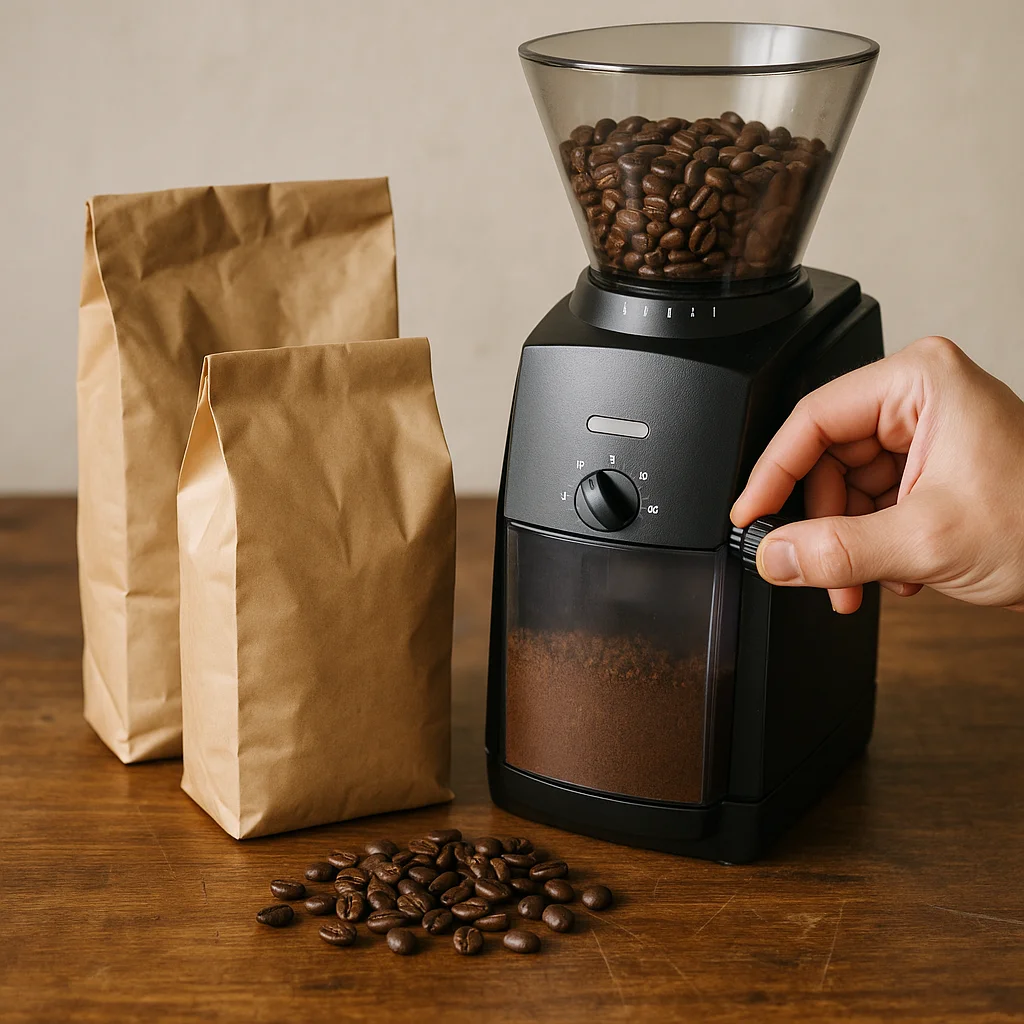
Most home brewers treat their grinder setting like a fixed address. You find the number that works, you stay there, and you expect the machine to keep delivering the same result. That logic holds pretty well when everything else stays constant. But swap bean origins—say, from an Ethiopian natural to a Colombian washed—and suddenly the same setting produces a cup that's either flat and underextracted or harsh and overextracted, and you're left wondering what you did wrong.
You probably did nothing wrong. The grinder didn't malfunction. What changed is the material you fed into it.
Bean Density Is Not a Fixed Number
Green coffee density varies significantly by origin, altitude, and processing method. High-altitude beans grown in thin air develop denser cellular structure because they mature slowly. Low-altitude or robusta-leaning varietals tend to be less dense. Roasting reduces density across the board, but it doesn't erase the original difference.
Density matters to your grinder because denser beans resist the burrs differently. A harder, denser bean requires slightly more force to fracture. At the same burr gap, a denser bean will fracture into a slightly different particle size distribution than a less dense bean—often producing more fines and a skewed distribution toward smaller particles when density is high. That shifts your extraction faster than you'd expect: more fines means more surface area, and more surface area means quicker, often uneven extraction.
Flip it the other direction—switch to a lighter-density bean at the same setting—and you get coarser effective output, slower extraction, and a thin, underdeveloped cup. The burr gap didn't change. The beans did.
The practical fix is simple once you understand the mechanism: when switching origins, particularly between high-altitude washed coffees and low-altitude or naturally processed ones, assume your setting needs to move. A denser incoming bean usually means you open the gap slightly. A less dense one usually means you close it. You won't always need a dramatic change—sometimes one or two clicks is enough—but you should expect to recalibrate rather than assume your old number carries over.
Surface Oil Level Changes How Beans Move Through the Chamber
Natural and honey process coffees, and heavily developed roasts of any origin, carry significantly more surface oil than a lightly roasted washed coffee. This is visible: dark or naturally processed beans look slicker. That oil isn't just cosmetic.
Oily beans move differently through your grinder's feed throat and burr chamber. They clump more, they slow the feed rate slightly, and they interact with burr faces in a way that can cause inconsistent nip—the moment the bean actually contacts the burrs. Inconsistent nip means the particle distribution widens. You get more variance between particles, which is the enemy of clean extraction.
An oily bean at the same setting as a dry bean will often produce a cup that tastes muddier or more chaotic, not because the extraction rate changed dramatically but because particle consistency dropped. Some particles extract too fast, some too slow, and you taste both at once.
If you're switching to a noticeably oilier bean, two things help. First, run a small purge—a few grams through before your actual dose—to coat the burr faces with the new bean's oils before you grind what you'll actually brew. Second, be alert to any clumping in the chamber. A gentle tap on the grinder body mid-grind (on machines where this is feasible) can break up minor clumps and keep the feed rate even.
Shape Uniformity Affects How Beans Fracture
This one gets almost no attention, but it's real. Bean shape varies by variety and processing method. Peaberries are round. Flat beans have two faces. Some Ethiopian heirloom varietals have a notably elongated profile. Washed beans tend to have cleaner, more uniform shapes because the processing removes the fruit and dries the bean more evenly. Natural process beans can be more irregular because the fruit dries around them asymmetrically.
Burrs are calibrated to fracture beans that enter the grinding zone at a predictable angle and orientation. When beans are uniform in shape, they tend to orient similarly as they drop into the burrs, and fracture patterns are consistent. When shapes vary more—which is common in naturals and certain heirloom varietals—the entry angle varies, fracture patterns vary, and particle distribution widens again.
You can't fix bean shape. What you can do is recognize that irregular-shaped beans tend to benefit from slightly slower feed rates, which some grinders allow you to control by grinding in smaller batches or using the grinder's doser rather than grinding all at once into a portafilter. Giving each bean more individual contact time with the burrs rather than having them pile up together reduces the chaos of inconsistent orientation.
The Practical Recalibration Routine
When you open a bag of a different origin than your last one, don't just assume your setting carries over. Before your first real brew, do a quick sensory check on your grind output: look at it, touch it, smell it. Compared to what you're used to, is it finer or coarser? Does it clump more? Does it feel drier or oilier between your fingers?
Those observations are real data. A dry, slightly coarser-feeling grind from a washed light roast going into the same setting as a natural medium roast should prompt you to close the gap slightly. A noticeably clumpy, oily output should prompt you to open it a hair and run a purge.
Your target is the same thing it always is: a grind output that looks consistent, breaks apart easily between your fingers without balling up, and smells clean rather than dusty or heavy. Once you've matched that visual and tactile baseline, your first brew will land much closer to where you want it.
None of this requires precision instrumentation or obsessive record-keeping. It requires understanding that your grinder is a machine that responds to the material you put in it—and that material is not constant just because the bag says the same roast level or the same brand. Origins are different. Processing methods are different. Your setting is a starting point, not a permanent answer.
Knowing that turns a frustrating mystery into a two-minute adjustment.