Your Coffee Tastes Different at the Bottom of the Bag — Here's the Physics Nobody Talks About
The last third of a coffee bag extracts differently than the first two-thirds because of three physical changes to the beans themselves, not your technique.
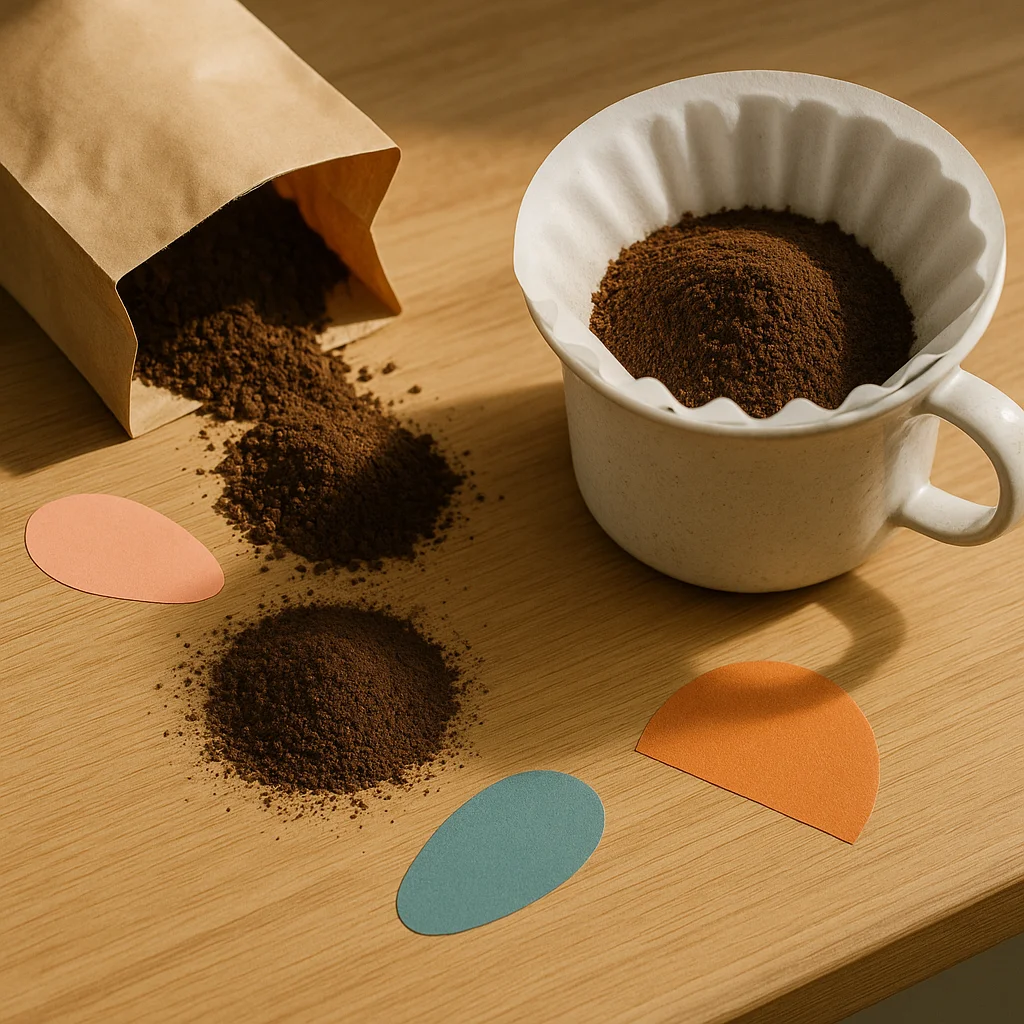
You dial in a bag of coffee on day three. Everything clicks — the grind, the ratio, the pour. Then two weeks later, using the exact same settings, the cup tastes thin, bitter, or just a little off. You haven't changed anything. The beans are from the same roaster, same roast date, same everything.
You're not imagining it. The coffee at the bottom of the bag genuinely is different from the coffee you started with — physically different, in ways that change how it grinds and how it extracts. Here's what's actually happening.
The CO2 situation has completely reversed
Fresh roasted coffee is packed with carbon dioxide, a byproduct of the roasting process. In the first days after roast, that CO2 is actively degassing — escaping from the beans. This is why a fresh bag of specialty coffee often tastes a little flat or sharp right off the roaster. The gas interferes with water uptake during extraction.
Most specialty coffee hits its drinking window somewhere between five and twenty-one days post-roast, depending on the origin and roast level. At that point, CO2 has stabilized enough that water can actually saturate the grounds properly.
But by the time you're at the bottom of a bag — assuming the bag took three to four weeks to use — degassing hasn't stopped. It's just slower. The beans in that final third have been exposed to the inside of your bag, to whatever oxygen sneaked in each time you opened it, and to room temperature fluctuations across weeks. CO2 content is meaningfully lower than it was when you first scooped from that same bag.
Lower CO2 means the grounds compact slightly differently when wet. You get less of the blooming resistance that slows water's initial path through the bed. Water moves faster through older, more gassed-out grounds — which pushes extraction toward over-extracted bitterness if you're doing a pour-over, or toward a thin, hollow body with drip. It's not dramatic. But it's real, and it's consistent.
The oils have migrated and oxidized
Coffee beans contain oils — lipids that carry a significant portion of the aromatic compounds responsible for flavor. Those oils sit inside the cell structure of the bean and on the surface after roasting breaks down that structure. Fresh from the roaster, they're intact and aromatic.
Over three to four weeks, two things happen. First, surface oils continue migrating outward as the bean structure keeps changing post-roast. Second, any oils already on the surface oxidize on contact with oxygen. Oxidized coffee oil doesn't taste like fresh coffee oil. It tastes flat, papery, or faintly rancid — that specific staleness that's hard to name but unmistakable.
The beans at the bottom of the bag have been sitting longest. Even if your bag has a one-way valve and you squeeze the air out between uses, the opening-and-closing cycle introduces small amounts of oxygen repeatedly. The bottom third has accumulated more oxidative exposure than the top two-thirds by simple time in the bag.
This oxidation changes the flavor compounds that make it into your cup — but it also changes how the beans grind. Oxidized surface oils make bean surfaces slightly tacky in a different way than fresh oils do. That changes how grounds clump, how they flow out of the grinder chute, and how they distribute in the brew bed. None of it wildly. All of it consistently, in a direction that pushes the cup toward flat and muted.
The cell structure has staled in a way that affects particle fracture
This one is subtler but arguably the most direct cause of grind-level inconsistency.
Coffee beans are porous cellular structures. Fresh post-roast, that structure has a specific brittleness — the beans fracture along predictable lines when burrs shear them, producing a grind distribution that your recipe was built around. As beans age, moisture content continues to equilibrate with ambient air (even inside a bag), and the cell structure becomes slightly less brittle. Stale beans are a little more compressible, a little less prone to clean fracture.
The practical result: at the same burr setting, older beans at the bottom of the bag produce slightly more fine particles than fresh beans did three weeks earlier. More fines means more surface area in contact with water, faster extraction, and a cup that tastes more bitter or astringent even though your setting hasn't moved.
This is the mechanism that explains the bottom-of-bag bitter cup that drives people to adjust their grind coarser — only to find the adjustment overshoots into sourness, then spend another three days chasing a recipe that already ran out of beans.
What to do with this instead of fighting it
The fix isn't complicated, and it doesn't require a new bag every week.
First, expect a coarser grind and a slightly shorter brew time in the last third of a bag. If you're doing pour-over, your drawdown may speed up by fifteen to twenty seconds without any change to grind setting. Don't panic. Go one step coarser and see if the timing normalizes and the bitterness backs off.
Second, reduce your water temperature by two to three degrees when working through older beans. Lower brew temperature extracts less aggressively and compensates for the higher fines content that's already pushing extraction up.
Third — and this is the one most people skip — use your nose before the first brew from a new part of the bag. Open the bag and smell. Fresh aromatic complexity versus flat, papery, or faintly oily tells you where you are in oxidation before you grind a gram. It's a faster feedback loop than tasting a bad cup and diagnosing backward.
None of this means you need to chase every variable every morning. It means your recipe is a starting point calibrated to a moment in the bag's life, not a permanent setting. The beans age. The physics shift. A small adjustment at the right time is the difference between a cup worth finishing and one you pour down the sink.
The bag is a document. The bottom of it is a different chapter.