How to Brew Coffee When You're Buying the Same Beans but Getting Them From a Different Roaster Each Time
The same origin and roast level from two different roasters can taste completely different, and knowing three reasons why helps you adjust confidently.
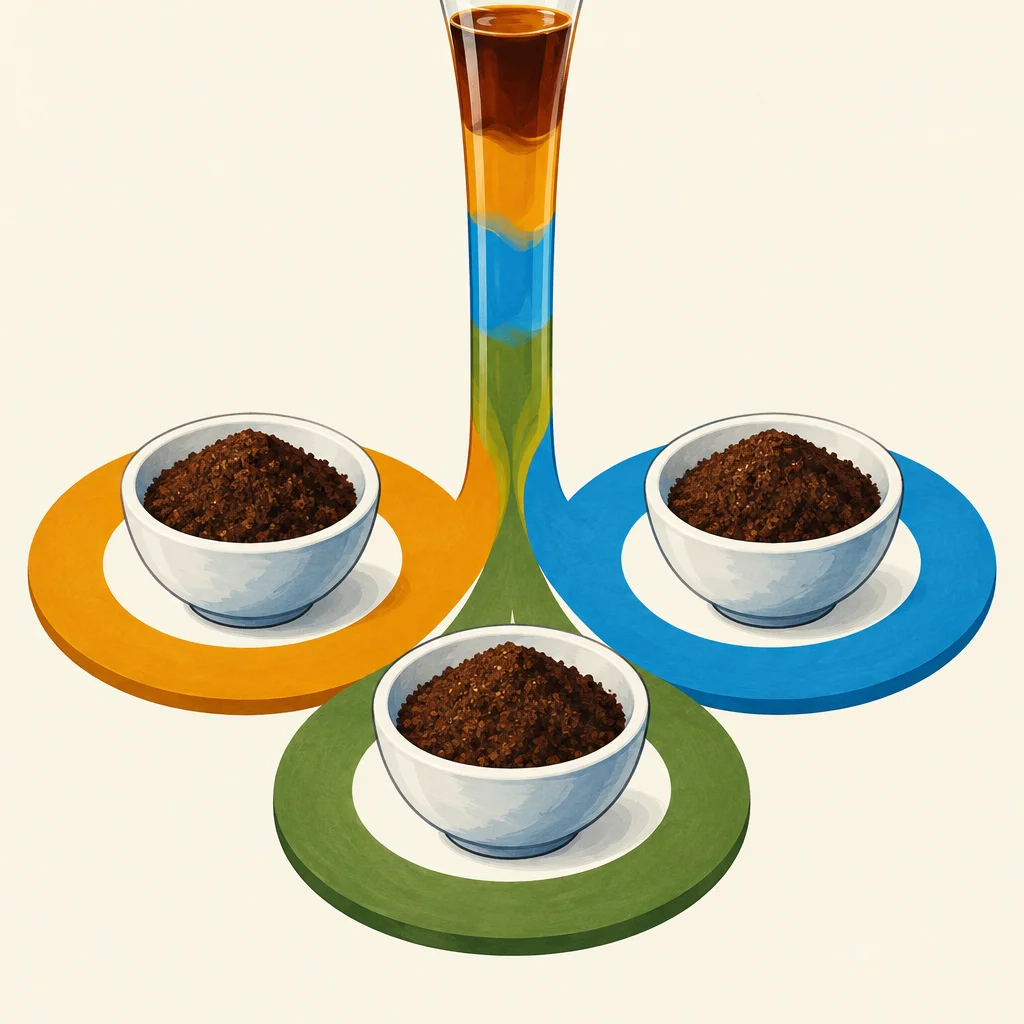
You found a Colombian medium roast you loved, finished the bag, and ordered what looked like the same thing from a different roaster. Then you brewed it exactly the same way and the cup tasted totally different. Flatter, or sharper, or heavier than you expected. You did nothing wrong. The beans just aren't the same thing, even though the label reads similarly.
This happens constantly to home brewers, and it's worth understanding why, because once you see the pattern you can adapt quickly instead of spending a week convinced your brewing is broken.
Why two "Colombian medium roasts" can taste so different
Roasters make a large number of decisions before a bag ever reaches you, and those decisions compound.
The first is sourcing. Colombia is a big country with many growing regions, altitudes, and processing methods. A washed coffee from Huila and a natural-processed coffee from Nariño are both Colombian, but they behave differently in the cup and differently under heat. One roaster might source from farms that produce dense, high-altitude beans. Another might work with a different importer and get beans from lower elevations with softer cell structure. Same country on the label, different raw material in the bag.
The second is the roast curve itself. "Medium" is not a standard. It's a general category that roasters interpret based on their equipment, their philosophy, and what they think their customers want. One roaster's medium might end the roast earlier, preserving more acidity and a brighter, lighter body. Another roaster's medium might push a little further, rounding out the acidity and adding more sweetness and weight. Both are medium. Both taste genuinely different.
The third is freshness and post-roast handling. Even identical beans roasted to identical profiles taste different at different points in their rest period. Beans roasted four days ago behave differently than beans roasted fourteen days ago, and roasters vary in how quickly they ship, how they package, and how much rest they recommend.
None of this is a quality problem. It's just variability, and it's manageable once you expect it.
What to actually do when you open a new roaster's bag
The most useful thing you can do is treat any new bag from an unfamiliar roaster as a dialing-in situation, even if the origin and roast description sound identical to something you've brewed before. Give yourself two or three cups before you decide what needs to change.
Start with your standard recipe. If your usual recipe is 15 grams of coffee to 250 grams of water at roughly 93 degrees Celsius, brew that first. Taste it without adjusting anything. What you're trying to do is understand the baseline of this specific coffee before you start moving variables.
If the cup tastes thin and sour, the beans may be roasted lighter than what you're used to, or they might be denser and need slightly more extraction. Try a slightly finer grind before you reach for a higher dose. Grind size is the easiest lever to move for extraction.
If the cup tastes heavy, dull, or bitter, the beans may be roasted darker than your usual source. Try a slightly coarser grind first. Darker roasts are more soluble and extract faster, so your previous grind setting might be pulling too much.
If the cup tastes flat and a little empty, check when the beans were roasted. If they're very fresh, say under five days from roast, give them a few more days of rest if you can. If the roast date is older, the beans may simply need a longer bloom or a touch more water temperature if you can control it.
A practical tip for comparing roasters honestly
When you're trying to understand why two supposedly similar bags taste different, it helps to write down three things before you brew: the roast date, the grind setting you started with, and what the first cup tasted like. You don't need formal tasting notes. Something like "bright and a little sharp" or "sweet, heavy, kind of chocolatey" is enough.
That record lets you move deliberately instead of just chasing a feeling. If you grind finer and the next cup is better, you know the first bag was pulling too coarse for this particular coffee. That's a useful data point. Without it, you're just guessing and hoping.
Some home brewers keep a small notebook next to their scale for exactly this reason. Nothing elaborate, just the roaster name, the coffee name or origin, the roast date, the grind setting, and a word or two about the result. Over a few months, patterns emerge. You might notice that one roaster consistently needs a finer grind for their medium roasts, or that another roaster's bags always benefit from an extra day of rest. That knowledge is genuinely useful and it accumulates fast.
The adjustment that helps most often
Across all the variables, grind size tends to be the most reliable first adjustment when a new roaster's coffee tastes off. Water temperature and dose matter too, but grind is faster to test and has a more immediate effect on what ends up in your cup.
If you're brewing pour-over and the cup from a new roaster tastes sharper or thinner than expected, try going one or two steps finer on your grinder and keep everything else identical. If it tastes heavy or bitter, go one or two steps coarser. Most of the time, one or two small adjustments will get you close to a cup you enjoy.
The deeper point is that buying coffee from multiple roasters, or switching sources when a favorite runs out, is not a problem to solve once and forget. It's an ongoing part of brewing at home. The beans change, the roasters change, the harvests change. Getting comfortable with a short dialing-in process means you're never starting from zero, even when the bag is new.