How to Brew Coffee When You're Working With Whole Beans You Froze Months Ago and Have No Idea What to Expect
Frozen beans behave differently from fresh ones at the grinder and in the cup, and three small adjustments help you brew them well.
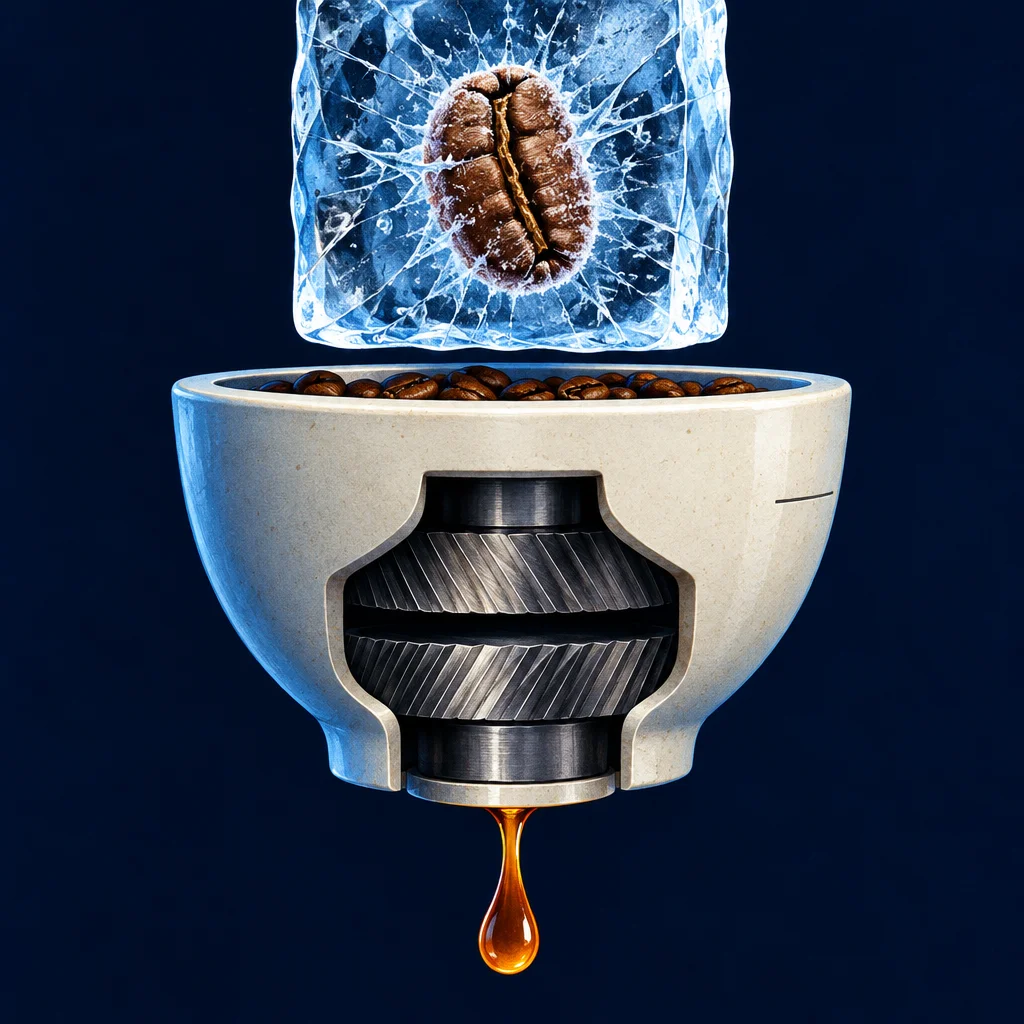
Freezing coffee is one of those habits that sounds extreme until you actually try it. Maybe you bought too much during a sale, received a gift bag you couldn't get to, or intentionally stashed a bag of something special for later. However they ended up in your freezer, those beans are now sitting in a container somewhere behind the ice trays, and you're not quite sure what to do with them.
The good news is that frozen beans, handled correctly, can taste genuinely good. The less good news is that pulling them out and treating them exactly like fresh beans will probably disappoint you. A few things change when coffee spends weeks or months at freezer temperature, and knowing what those things are makes the difference between a flat, chalky cup and a surprisingly solid one.
Let Them Come to Room Temperature First, Fully
This is the most important step and the one most people skip. When frozen beans meet warm air, condensation forms on the surface. If you grind them while they're still cold or even cool to the touch, that moisture gets introduced to your grinder and to your grounds before brewing even starts. It makes grinds clump together and can make extraction uneven.
The fix is simple: take the beans out of the freezer and leave the container completely sealed until it reaches room temperature. Do not open it early. The seal keeps moisture from forming on the beans themselves rather than on the outside of the container. Depending on how much coffee is in there and how warm your kitchen runs, this could take anywhere from 30 minutes to a couple of hours for a standard mason jar or sealed bag.
If you're in a hurry, a smaller portion will warm up faster. But skipping this step entirely is the single most reliable way to get a muddy, inconsistent grind from otherwise decent frozen beans.
Expect Your Grinder to Work a Little Differently
Even after beans return to room temperature, they tend to grind differently than beans that have never been frozen. Cold storage can make the cellular structure of the bean a bit more brittle, which means frozen beans often grind finer at the same grinder setting than fresh beans from the same bag would.
In practice, this means your usual grind setting might produce grounds that are slightly finer than you expect, which can slow your brew time and push the cup toward bitterness or over-extraction. It doesn't always happen, and the effect varies depending on how long the beans were frozen and how they were stored, but it's worth watching for.
The suggestion here is to start one notch coarser than your usual setting and check your brew time. If you're a pour-over drinker, pay attention to how fast the water drains. If you're using a French press or drip machine, taste the cup before you decide the setting is right. You may find your usual setting works fine, or you may find that a slight coarser adjustment produces a noticeably cleaner result. Either way, don't assume frozen beans will behave identically to what you remember.
Adjust Your Dose Slightly Upward if the Cup Tastes Dull
Frozen beans stored well, in an airtight container with minimal air inside, hold onto flavor much better than beans left out on a counter for weeks. But no storage method is perfect. If the container wasn't fully airtight, or if the beans went through temperature fluctuations because your freezer cycles or someone left the door open too long, some aromatic compounds will have faded.
If your first cup tastes flat or muted, the most direct adjustment is to add a small amount more coffee to your dose before reaching for other variables. Something like a half gram to a full gram more per serving is a reasonable place to start. This won't restore flavor that's completely gone, but it can compensate for mild fading in a way that feels noticeable in the cup.
This is different from adjusting grind or water temperature, which affect extraction rate. Increasing dose just means there's more coffee material for the water to work with, which often helps when the beans themselves are less aromatic than they once were.
A Note on How You Stored Them
All of the above assumes the beans were stored reasonably well. If they went into the freezer in an open bag with a clip on top, or in a container with a lot of air space, what you're working with is probably more stale than frozen. The freezer slows staling but doesn't stop it, and it certainly can't reverse oxidation that happened before the beans were sealed.
If you open your container and the beans smell like nothing much, or like the inside of a freezer, they may still be brewable but won't be spectacular. In that case, the approach from the tip above applies even more: use a slightly higher dose, grind just a touch coarser to avoid bitterness, and keep your water temperature on the higher end of whatever range you normally use. You're not rescuing the beans so much as giving them the best possible conditions to express whatever flavor is left.
If, on the other hand, you open the container and the beans smell bright and recognizable, that's a good sign. Well-sealed beans can hold up surprisingly well over months in a freezer, and when that's the case, the adjustments above become more about optimization than damage control.
One More Thing Worth Knowing
Once frozen beans thaw and reach room temperature, don't put them back in the freezer. Repeated freeze-thaw cycles accelerate the degradation that freezing is supposed to prevent. If you have a large quantity, it's worth portioning them into smaller sealed containers before freezing so you can thaw only what you need at a time.
This is the kind of thing that's easy to do before the beans go into the freezer and genuinely annoying to deal with after. If you're reading this after the fact and your beans are already in one big container, just thaw and use them within a week or two rather than re-freezing. At room temperature in a sealed container, they'll stay in reasonable shape for that window without much trouble.