How to Brew Coffee When You're Working With Beans That Are Much Oilier Than What You Usually Buy
Very oily beans behave differently at the grinder and in the cup, and three targeted adjustments keep extraction balanced when you switch.
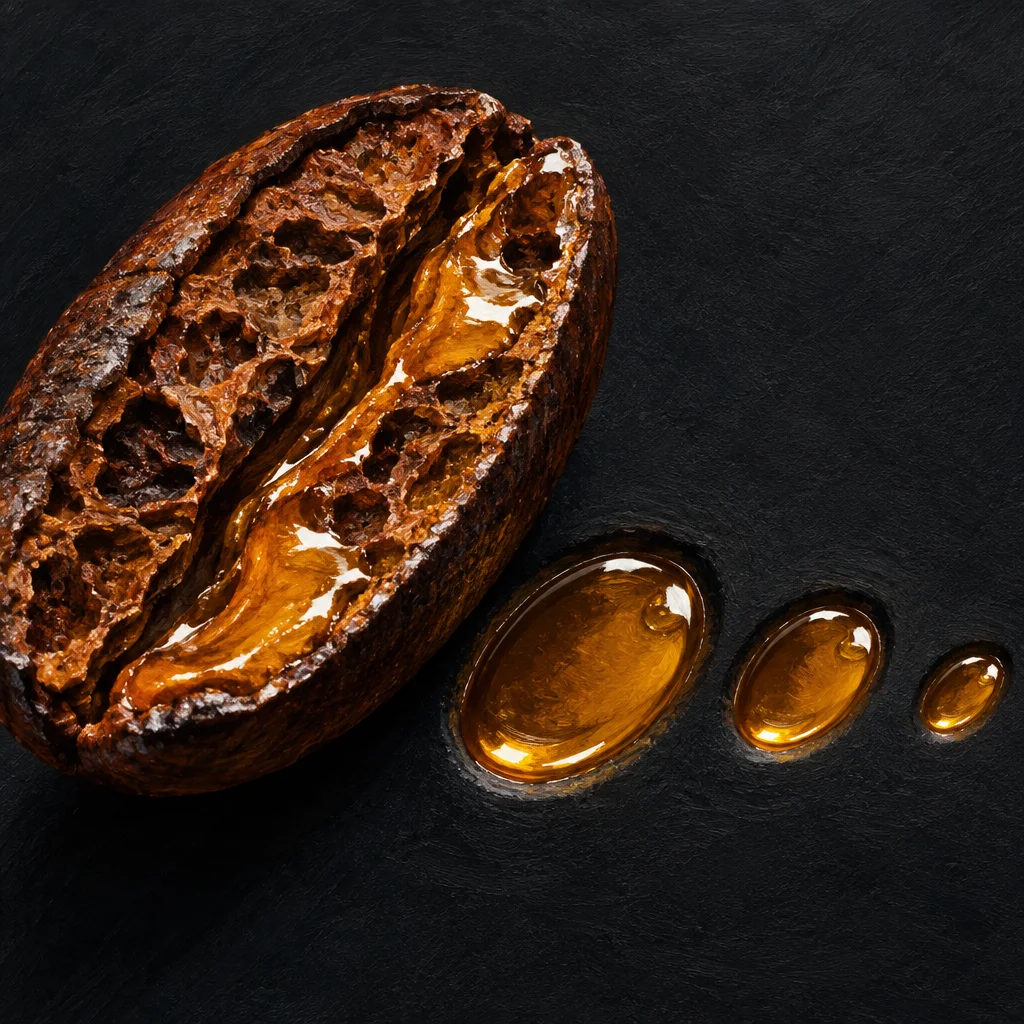
If you open a new bag and the beans are slick and dark-looking, almost glossy, you are not imagining things. Those beans are going to behave differently from the drier, matte-surfaced ones you might be used to, and if you just grind and brew without thinking twice, the results can be inconsistent in ways that are hard to trace.
This article is about what to do when you find yourself with a noticeably oily bag, whether that is what you chose or just what arrived.
Why Oily Beans Are Different in the First Place
Oil on the surface of a coffee bean is not a defect. It is a natural result of a longer roasting process. As beans roast longer and darker, internal oils migrate toward the surface. That is why very dark roasts tend to look wet and shiny while light and medium roasts look drier.
The oil itself carries flavor, and many people love what it brings to the cup. The complication is practical: oily beans interact with your grinder, your brewing method, and even your storage container in ways that drier beans do not, and those interactions are worth knowing about before they cause you a confusing cup.
Adjustment One: Grind More Often and in Smaller Batches
Oily beans cling together more than dry ones, and they also cling to the inside of your grinder. This matters for two reasons.
First, ground coffee made from oily beans compacts and clumps more aggressively. If you grind a full dose, let it sit in the catch cup for a few minutes, and then dump it into your brewer, you may notice it arrives in a compressed mass. That mass will resist water flowing through it evenly, which tends to produce uneven extraction, meaning part of the coffee over-extracts while another part gets less than it should.
The practical fix is simple: grind right before you brew, and use the grounds immediately. Do not let them sit. If your recipe calls for a bloom or pre-infusion step, grind first, then start your timer and your pour in quick succession.
Second, oily grounds leave residue in your grinder faster than dry ones do. That residue can go stale and affect subsequent cups, even if those cups are made from a completely different bag. If you know you are using oily beans regularly, wiping down accessible parts of your grinder every few days is worth the two minutes it takes.
Adjustment Two: Dial Back Your Dose Slightly or Grind a Touch Coarser
Oily beans tend to extract more readily than dry beans at the same grind size. The oils help carry soluble compounds into the water efficiently, which sounds like a good thing, but it also means your usual recipe can tip toward over-extraction without you changing anything on purpose.
Over-extraction with oily dark roasts often shows up as bitterness that sits in the back of the mouth or a heaviness in the cup that feels less like richness and more like thickness you did not ask for.
You have two levers here. One is to grind slightly coarser than your usual setting, which slows down how quickly compounds move into the water. The other is to reduce your dose by a small amount, something in the range of one to two grams on a standard eleven-to-eighteen-gram dose, and see whether the cup balances better.
You do not necessarily need to do both. Start with one change, taste the result, and decide whether a second adjustment is worth making. Oily beans vary quite a bit depending on how dark the roast actually is, so treating this as an experiment rather than a formula will get you further.
Adjustment Three: Store Them Differently Than You Might Expect
Oily beans create a problem in airtight containers that drier beans do not. The oils on the surface of the beans can go rancid when they are exposed to air over time, and once that happens, the flavor of your cup reflects it in a way that is hard to fix. You might notice a stale, almost waxy or cardboard note in an older oily bag that was fine a week earlier.
The suggestion here is to work through oily beans faster than you would work through a lighter roast. If you tend to buy in bulk or let a bag sit for two to three weeks before finishing it, oily beans will punish that habit more than a drier bag would.
Keep them in an opaque container away from heat and light, and do not refrigerate them in a container that is opened daily. Condensation that forms each time a cold container comes out to room temperature speeds up surface degradation on oily beans more than on dry ones.
If you bought more than you can use in about ten days to two weeks, buying a bag every week in smaller amounts is a more practical approach than a large bag you are rationing.
One Thing That Is Not Actually a Problem
Some people worry when they see oil residue on the inside of their grinder, their storage container, or even their brewer. With oily beans, a certain amount of residue is normal and not harmful as long as you are cleaning regularly. The concern is not the residue itself but old residue, meaning oils that have had time to go stale and are now coating the path your fresh coffee takes.
A quick wipe-down with a dry cloth or paper towel every few days is enough to stay ahead of it. You do not need special cleaning products for routine maintenance, though a more thorough cleaning once a month is a reasonable habit regardless of what beans you use.
The Short Version
Oily beans are not harder to brew well, they are just different. The three things that make the biggest difference are using grounds immediately after grinding, dialing back slightly to avoid over-extraction, and moving through your bag within a reasonable window so the oils stay fresh. Once you adjust for those things, oily beans can produce a cup with real body and depth that many people prefer to anything else.