How to Brew Coffee When You're Changing Nothing but the Cup You Pour Into
The vessel you pour brewed coffee into affects temperature, aroma, and perceived flavor in ways that are easy to fix once you know what to look for.
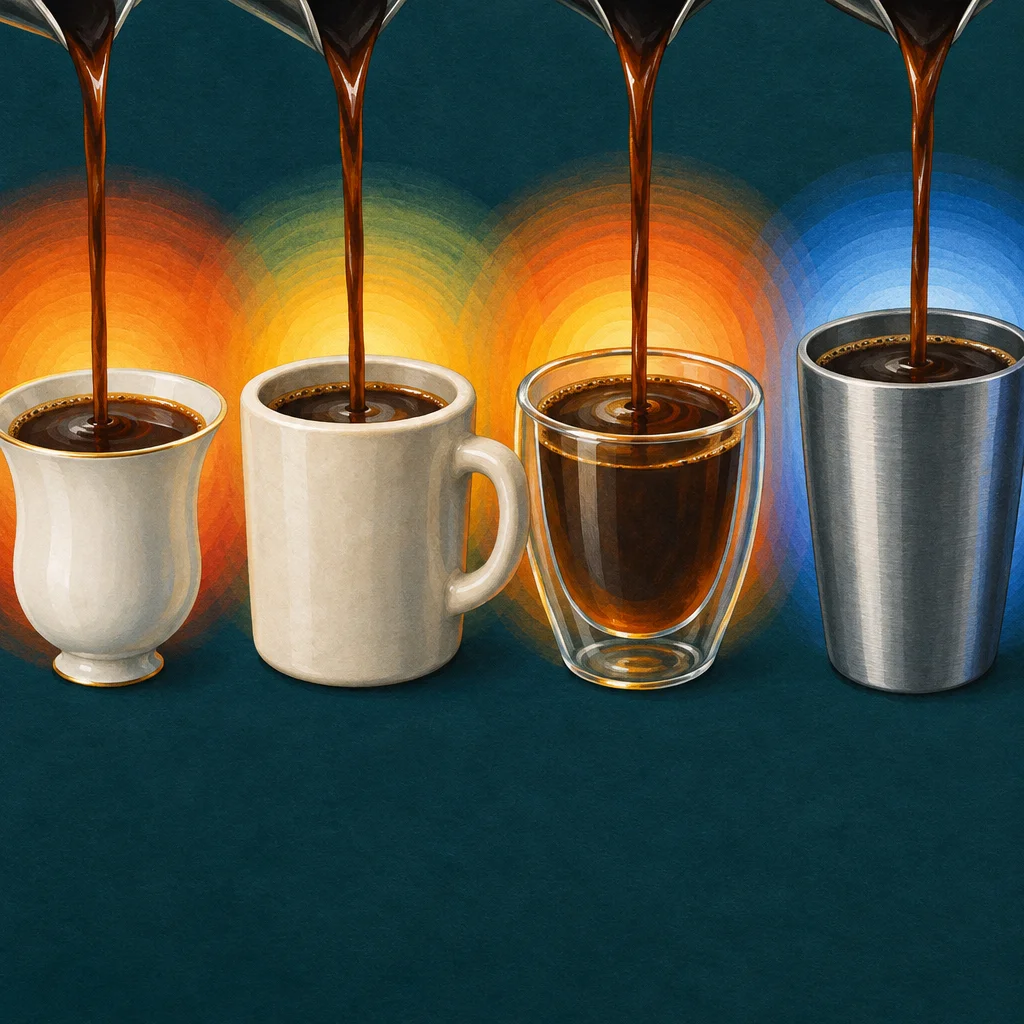
Most home brewers spend real energy on grind size, water temperature, and coffee ratios. Those things matter. But there is one variable that gets almost no attention and affects almost every cup: the mug or cup you pour into.
This is not about aesthetics or whether your mug has a clever slogan on it. It is about heat, surface area, and a few small physics details that change what you taste.
Why the Cup Matters at All
When brewed coffee leaves your brewer or kettle at roughly 190 to 205 degrees Fahrenheit, it starts losing heat immediately. How fast it loses that heat depends heavily on the vessel receiving it. A thin ceramic mug sitting on a cold counter pulls heat out of your coffee quickly. A thick-walled mug that has been sitting near a heat source holds temperature longer. A glass cup lets you see the color of your brew but conducts heat away faster than ceramic does.
This would be a minor issue if temperature only affected comfort. But temperature also affects what flavor compounds you perceive. Coffee at around 140 to 160 degrees Fahrenheit tends to taste more balanced to most people. Below 120 degrees, acidity becomes more prominent and sweetness often flattens. Above 160 degrees, your palate registers heat before flavor. So if your cup is pulling temperature away fast, your tasting window narrows before you even get halfway through.
The Preheating Habit That Actually Moves the Needle
Preheating your mug takes about thirty seconds and makes a noticeable difference. Pour hot water from your kettle into your mug, let it sit for twenty to thirty seconds, then dump it out and pour your coffee in.
The difference is real. A cold ceramic mug can drop brewed coffee by 15 to 20 degrees in the first minute. A preheated mug significantly slows that drop, not forever, but long enough to give you more of the cup at the temperature where it tastes best.
If you use an electric kettle with a hold function, you already have hot water ready. If not, heating a little extra water for the preheat adds almost nothing to your routine.
Wall Thickness Changes More Than You Think
Different mugs have very different wall thicknesses, and that affects two things: heat retention and the sensory experience of drinking from the rim.
Thicker walls hold heat longer because there is more material to buffer against the ambient temperature. A heavy stoneware mug or a double-walled glass tumbler will keep your coffee warmer for longer than a thin porcelain cup. That is useful if you drink slowly or if your kitchen runs cold.
The rim thickness also affects how coffee lands on your palate. A thinner rim directs coffee onto your tongue and toward the back of your mouth. A thick, wide rim spreads the liquid across your lips slightly differently. This sounds like a marginal detail, but if you have two mugs and notice you always prefer coffee from one of them, rim shape is worth considering as one contributing factor.
Surface Material and Aroma
Coffee flavor is mostly aroma. A significant portion of what you taste is actually what you smell as you bring the cup to your face. This means the shape of your cup affects flavor in a functional way.
A narrow opening concentrates the steam and aroma rising from the surface, directing more of it toward your nose as you drink. A wide, shallow cup lets aroma disperse more quickly into the room. Neither is wrong, but they produce a different experience with the same coffee.
If you find that your coffee smells wonderful in the brewer but seems flatter in the cup, try a mug with a slightly narrower opening and notice whether the aromatic intensity changes. This is a simple experiment worth running with whatever you already own.
Glazed versus unglazed ceramic interiors also make a small difference. Unglazed surfaces are slightly porous and can absorb residual oils over time, which affects flavor in either direction depending on how clean the cup is kept. A well-maintained unglazed cup is fine. One that has not been cleaned thoroughly can contribute stale flavors. Glazed interiors are easier to keep neutral.
The Volume Question
Mug volume is easy to overlook. If your brew recipe is calibrated for a 10-ounce cup and you pour it into a 16-ounce mug, two things happen. First, your coffee sits in a larger thermal mass relative to its volume, which speeds cooling. Second, the larger air space above the coffee means more aroma dissipates before it reaches you.
This does not mean you need to drink from tiny cups. It means matching your brew volume to your vessel size is a small habit that keeps your coffee doing what you intended. If you want a larger mug, brew more coffee to fill it appropriately.
A Quick Practical Summary
You do not need to buy anything to apply most of this. Here is what you can try with what you already have:
Preheat your mug with hot water for thirty seconds before pouring. It takes almost no time and slows heat loss noticeably.
Pay attention to whether your coffee tastes different in different mugs. If it does, wall thickness, rim shape, and opening width are the three most likely reasons.
Match your brew volume to your mug size so the coffee is not floating in a vessel much larger than it needs.
Keep your mugs clean, especially if they have unglazed interiors. Residual oils and mineral buildup from water can layer in over time and contribute off flavors that have nothing to do with your beans or your technique.
Try a narrower-opening mug if you want more aromatic intensity from the same coffee.
None of this replaces dialing in your grind or using good water. But once your brewing process is reasonably consistent, the cup you pour into is one of the last overlooked variables that actually has something to offer. It is worth spending five minutes noticing it.