How to Brew Coffee When You're Grinding at Home but Doing It Hours Before You Actually Brew
Pre-grinding your coffee saves morning time but accelerates staling in ways a few targeted habits can meaningfully slow down.
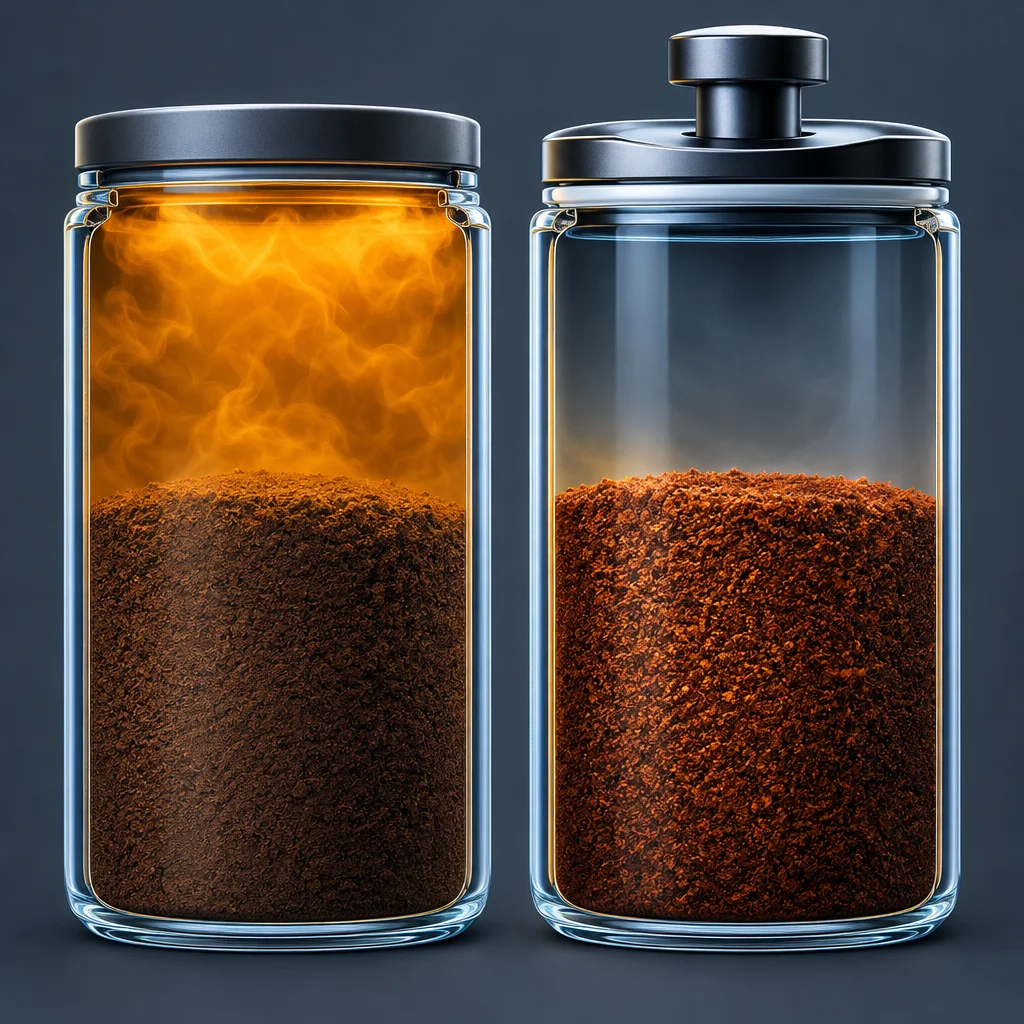
Grinding fresh right before brewing is the standard advice, and it holds up. The moment you crack open a coffee bean, the aromatic compounds inside start escaping into the air. Grind the whole batch at once and you've dramatically increased the surface area exposed to oxygen, speeding that process up considerably.
But life is real. Maybe you share a home with someone who sleeps while you brew. Maybe your grinder is loud and your mornings are rushed. Maybe you grind on weekends and want something ready on Tuesday. Pre-grinding is a genuine trade-off, not a character flaw, and understanding exactly what happens when you do it helps you protect as much flavor as possible.
What actually changes when ground coffee sits
Freshly ground coffee holds onto carbon dioxide, the same gas that causes bloom when hot water first hits your grounds. That CO2 acts as a kind of protective layer. It helps push oxygen away from the organic compounds that give coffee its brightness, sweetness, and complexity. Once the CO2 dissipates, those compounds oxidize more quickly.
Ground coffee loses its CO2 significantly faster than whole beans do. Whole beans can stay reasonably fresh in a good container for two or more weeks after roasting. Ground coffee at the same stage of freshness, stored the same way, will taste noticeably more muted after just a day or two.
What you lose first is usually the brightest, most volatile aromatics. Fruity or floral notes tend to disappear early. What stays longer is the denser, heavier character: roasty, chocolatey, sometimes woody tones. So pre-ground coffee doesn't just get weaker; it often shifts in flavor toward something heavier and flatter.
How long you can reasonably pre-grind
A useful working range, with no special storage, is roughly six to twelve hours. If you grind in the evening for the next morning and keep the coffee in a sealed container on the counter, you will probably still get a decent cup. It won't be the same as grinding right before brewing, but it won't be ruined either.
Beyond 24 hours without specific precautions, the losses become harder to compensate for. The coffee isn't undrinkable, but you'll likely notice the flatness even if you can't name it.
A few variables affect how quickly this happens. Coarser grinds stale a bit more slowly than fine ones because they have less total surface area exposed. Darker roasts, which have already lost some of their more volatile aromatics during roasting, may show less dramatic flavor shift than lighter roasts, though they still stale.
The container makes more difference than most people expect
If you're going to pre-grind, your storage container matters a lot. A loosely sealed bag, an open jar, or a container with air space inside will all accelerate staling. What you want is a container that fits your ground coffee closely, minimizes headspace, and seals firmly.
Small glass jars with rubber-sealed lids work well for this. Fill the jar as close to the top as you can manage. The less air sitting above the coffee, the less oxygen is available to accelerate oxidation. If you have a larger container and a smaller amount of coffee, consider splitting into two smaller jars.
Some home brewers press a small piece of plastic wrap directly onto the surface of the grounds before sealing the container. This isn't a perfect solution but it does reduce direct air contact. It's a low-cost habit worth trying if you're pre-grinding regularly.
Avoiding the freezer is usually wise for pre-ground coffee you plan to use within a day or two. Freezing introduces moisture risk when the coffee thaws, and the temperature swings can cause condensation inside the container. Freezing makes more sense for longer-term storage of whole beans in an airtight, well-portioned container.
Adjusting your brew when you use pre-ground coffee
Even with careful storage, pre-ground coffee behaves differently in the brewer than fresh-ground does. Specifically, it's often less reactive. The bloom you'd normally see when hot water hits fresh grounds, that bubbling, expanding puff of CO2, will be smaller or nearly absent.
That matters because the bloom is part of what helps water distribute evenly through your grounds. Without much CO2 pushing back, water can channel more easily through the bed. If you brew a pour-over and notice your grounds look flat and waterlogged rather than domed and active, that's the sign.
One practical adjustment is to give the coffee a gentle stir after the bloom phase, or after your first pour, to encourage even saturation. With pour-over methods especially, this helps compensate for the reduced reactivity.
You may also find that pre-ground coffee extracts slightly differently than fresh. If the cup tastes flat or underwhelming even after adjusting technique, try grinding just a touch finer next time before you pre-grind. A marginally smaller grind size increases extraction slightly, which can help recover some of what staling took away.
When pre-grinding actually works fine
For espresso, pre-grinding is usually more problematic because the grind is fine and the flavor clarity matters a lot. For coarser methods like a French press or a drip machine, the gap between fresh-ground and pre-ground narrows, particularly with medium or dark roasts.
If you're making coffee for a group and grinding a large batch the same morning, the difference between grinding at 6 a.m. and brewing at 9 a.m. is small enough that most people won't notice. Pre-grinding the night before that same event, however, starts to introduce more meaningful flavor loss.
The goal here isn't perfection. It's knowing where the trade-offs actually live so you can decide what matters to you on any given day. A well-stored pre-grind in a tightly sealed jar, brewed within twelve hours, is a genuinely reasonable cup. It's just not the same cup as grinding two minutes before brewing. Both are allowed.