How to Brew Coffee When You're Grinding at Home but Never Dial In the Same Grind Twice
Without a repeatable way to return to your best grind setting, every bag becomes a guessing game that good habits can mostly eliminate.
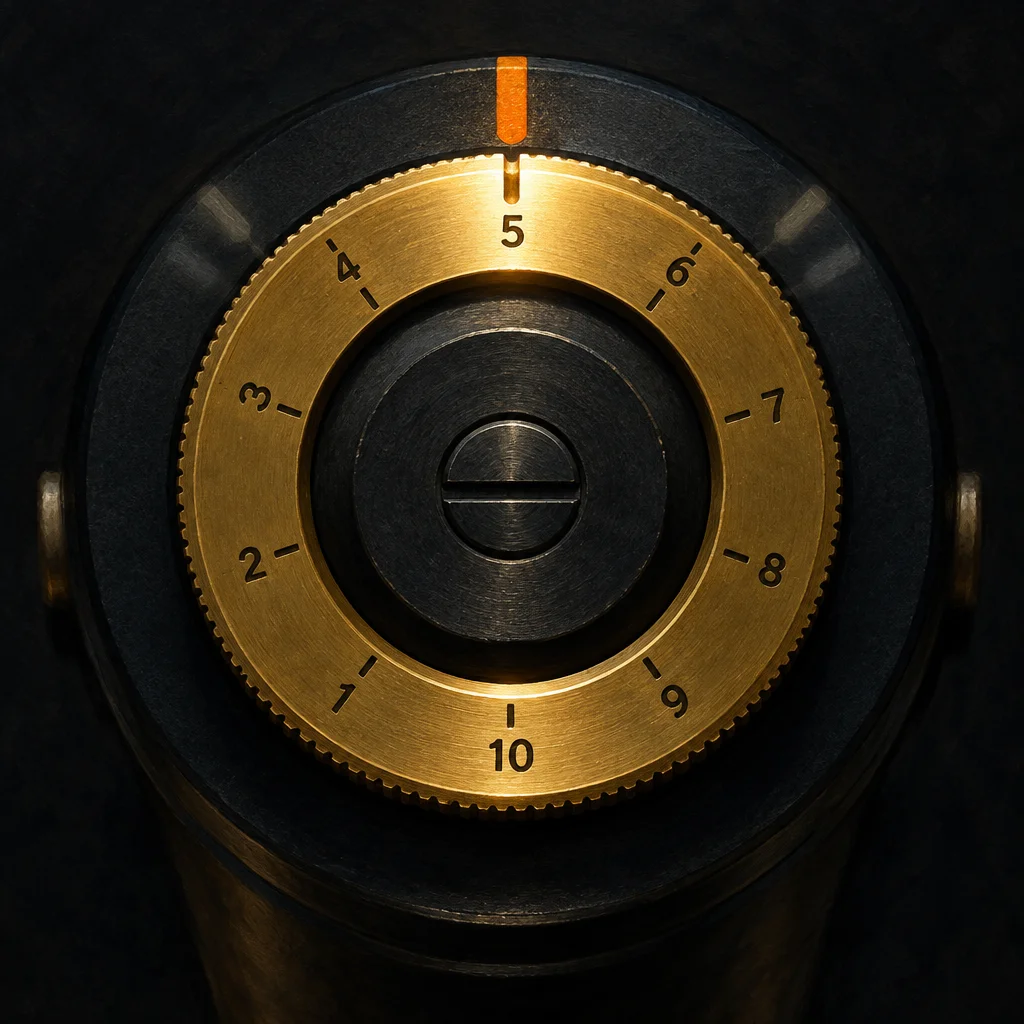
If you have ever found a grind size that made your cup taste exactly right, then lost it completely the next time you touched the grinder, you are not doing anything wrong. Most home grinders were not designed with memory in mind. The adjustment ring has no save button. So each new bag, each borrowed grinder moment, each curious experiment leaves you spinning the burrs back toward a setting you can only half-remember.
The good news is that building repeatability into your routine does not require a more expensive grinder or a complicated logging system. It takes two things: a way to record where you are, and an understanding of why grinders drift in the first place.
Why Your Grind Setting Does Not Stay Put
Burr grinders, whether flat or conical, hold their position through friction and sometimes a detent click system. Light contact is enough to shift the adjustment ring slightly, especially on grinders where the collar sits on the outside of the body where hands naturally rest while grinding. After a few weeks of daily use, small movements accumulate. You may not notice any single shift, but over time the grind gets coarser or finer without you touching the adjustment intentionally.
Bean density also plays a role in how grind setting translates to actual particle size. A dense, lightly roasted bean and a more porous, darker roasted bean will produce different particle size distributions at the identical setting on the same grinder. This means your best setting for one bag may land slightly off for the next, even from the same roaster. The setting is a starting point, not a universal answer.
Finally, burr seasoning changes how a grinder performs. New grinders have sharp, slightly rough burr edges that grind inconsistently at first. After several weeks of regular use, the surfaces smooth out and the grinder begins to produce a more consistent grind at any given setting. If you recently bought your grinder, what worked at week one may feel different at week eight, even without any adjustment.
Record the Setting Before You Move It
The single most useful habit is writing down your current setting before you change anything. This sounds obvious, but most people skip it because they assume they will remember, or because they plan to come back to the current bag before they adjust anything. Then life happens.
Most grinders mark their adjustment with numbers, lines, or clicks relative to a reference point. Take a moment to note exactly where your ring sits: the number or click count, and which direction is finer. Some grinders count clicks from zero, where the burrs touch. If yours does, note how many clicks out you are sitting. If yours uses a numbered scale, write the number and whether the arrow or line is at the top, middle, or bottom of that number's range.
A small notebook kept near your grinder works well. A notes app on your phone works equally well. The format does not matter. What matters is that you record origin, roast level, brew method, and grind setting together so the note is actually useful when you return to similar beans later.
Use a Physical Reference Mark If Your Grinder Allows It
If your grinder has a smooth collar without clear markings, a small strip of painter's tape placed across the adjustment ring and the grinder body creates a visible reference. When the two halves of the tape strip are aligned, you are at the same setting where you placed the tape. When they are misaligned, you can see at a glance that something shifted.
This is not a permanent solution if you change settings often, but for people who find one setting that works for their main brew method and stick with it for weeks at a time, it removes all the guesswork. Tape is cheap and does not mark the grinder.
Some grinders come with a printed scale that is genuinely difficult to read precisely because the marks are small and the dial can be read slightly differently depending on the angle you view it from. For those grinders, the tape method is often more reliable than trying to split the difference between two tick marks.
Give Yourself a Calibration Dose on New Bags
When a new bag arrives, treat the first brew as a calibration brew rather than a finished cup. Start from your recorded setting for beans of similar roast level and origin. Brew normally, taste the result, and adjust one click or one small increment toward finer if it tastes sour or thin, or one increment toward coarser if it tastes bitter or heavy. Brew again.
This two-step process, record and calibrate, closes most of the gap between guessing and dialing in. You are not starting from scratch each time. You are starting from a reasonable reference and making a small, informed move.
If you find that your calibration always requires the same adjustment in the same direction for a certain type of bean, update your notes to reflect that. Over several bags, your records become genuinely useful data about how your grinder handles different coffees, which makes future dialing in faster.
Account for Burr Drift Over Time
If your cup quality has been slowly declining over several weeks without any obvious change in beans or water, it is worth checking whether the adjustment ring has drifted. Set the grinder back to zero by tightening until the burrs just make contact, then back out to your recorded setting. Compare the resulting grind visually or by touch to what you remember. If it looks noticeably different, the ring drifted and you can adjust from there.
Some grinders have a small set screw or locking ring designed to hold the adjustment in place. If yours has one and you have not been using it, tightening it after you find your setting removes most of the drift problem entirely. Check your grinder's manual or the manufacturer's website if you are not sure whether yours has this feature.
The Payoff Is Faster, Calmer Brewing
None of this is complicated, but the payoff is real. When you stop starting from scratch each time you open a new bag, coffee becomes a lot more relaxed to make at home. You are refining a known starting point rather than hunting for one. That shift in approach, from guessing to calibrating, is what separates home brewers who feel confident about their cup from those who feel like they are always a little behind the grinder.