How to Brew Coffee When You're Making It the Night Before and Want It to Still Taste Good in the Morning
Brewed coffee stored overnight loses more than temperature, but two small decisions at brew time protect most of what made it taste good.
Most home brewing advice assumes you are drinking coffee within minutes of making it. That is a reasonable assumption for a weekend morning when you have time to stand over a pour-over. It is less useful on a Tuesday when you want something decent waiting for you at six in the morning without any effort at all.
Brewing ahead is a real and practical thing to do. The question is whether you can do it without ending up with something that tastes flat, sour, or oddly bitter by the time you reach for it.
The short answer is yes, with two adjustments that happen before you store it.
What actually happens to coffee as it sits
Freshly brewed coffee is chemically active. The compounds that give it brightness and sweetness continue reacting after brewing stops, and heat speeds that process up dramatically. Coffee sitting on a warming plate or in a thermal carafe at high temperature for hours is essentially continuing to cook, which is why office coffee tastes the way it does.
Oxidation also plays a role. Coffee exposed to air gradually loses the aromatic compounds responsible for what you smell and taste first. Those top notes that make a good cup feel lively are among the first things to go.
Cold slows both of these processes considerably. Refrigerated brewed coffee degrades much more slowly than coffee held at room temperature or kept warm. That is the foundational reason cold storage works, and it is why cold brew became popular with people who want coffee on demand without sacrificing too much quality.
You do not need to make cold brew, though. Regular hot-brewed coffee, stored correctly after brewing, can hold up well for twelve hours and even longer without tasting stale or harsh.
The first decision: brew slightly stronger than you normally would
When you brew coffee you plan to drink immediately, you dial in the ratio and grind to taste good right now. When you brew ahead, you are tasting it after it has lost some aromatic complexity and mellowed slightly in the fridge.
Brewing a little stronger than your usual ratio compensates for this. Not dramatically stronger, because over-extracted coffee tastes worse no matter when you drink it. A modest increase, something like shifting from a 1:15 coffee-to-water ratio to a 1:14 ratio, gives the cup a bit more body and flavor presence that holds up after an overnight rest.
If you are not using a scale and ratio, try adding a small additional amount of ground coffee, roughly half a teaspoon more than you usually use for the same amount of water. Taste it the next day and adjust from there. This is genuinely about your palate and your beans, so treat it as a starting suggestion rather than a rule.
The goal is a cup that, when cold or reheated, still has something to it. A ratio that tastes just right when fresh can taste thin and washed out after hours in the fridge.
The second decision: cool it down fast and seal it well
This step matters more than most people expect. Letting brewed coffee sit on the counter for an hour before refrigerating it is common, but that hour at room temperature is when the most noticeable degradation happens. You want to get it cold quickly.
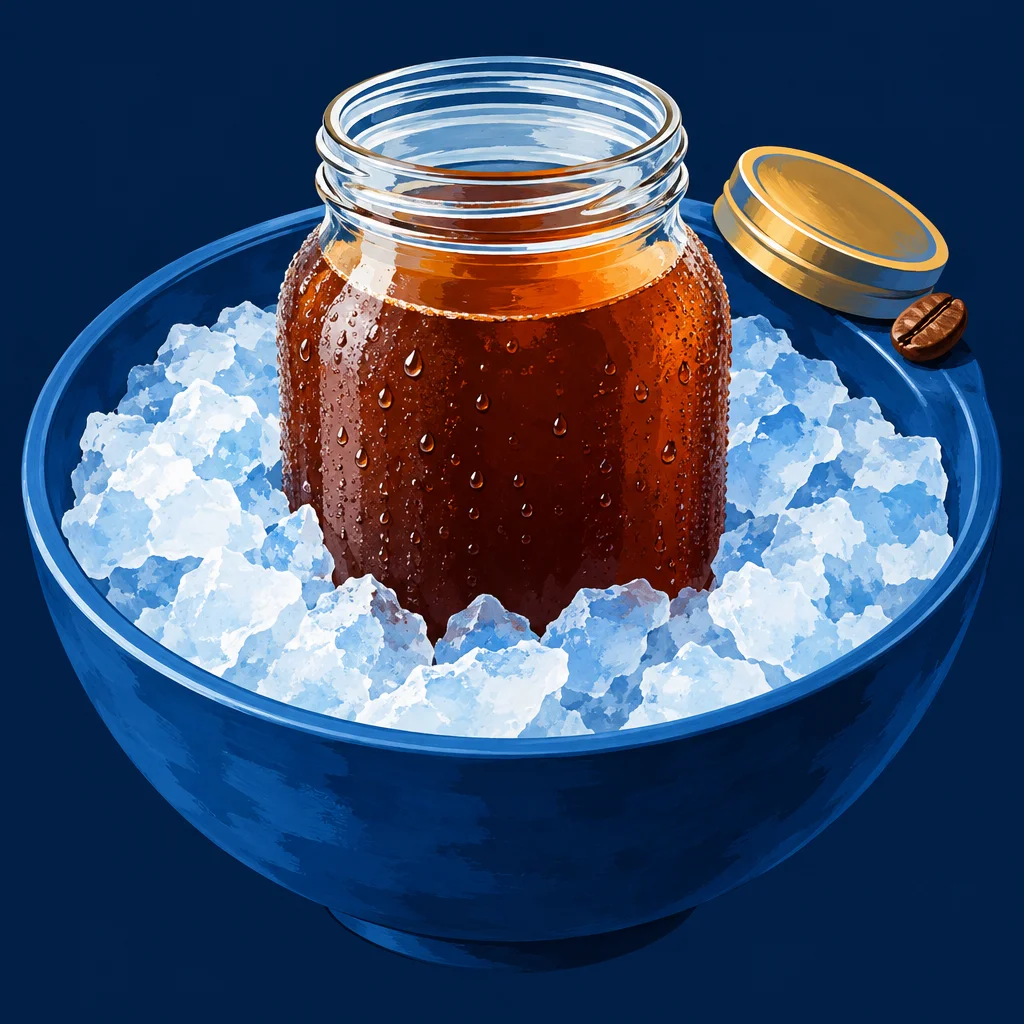
One practical approach: brew directly into a container that can go straight into the fridge. A glass jar with a tight lid works well. If you brew a large amount, splitting it into two smaller jars gives you more surface area to help it cool faster, and you can open one without exposing the other to air.
If the coffee is still quite hot and you are worried about temperature shock on a glass container, let it cool for ten minutes, not an hour, and then refrigerate it. The difference between ten minutes and sixty is significant in terms of how much oxidation and continued heat reaction happens.
Seal the container as tightly as you can. This is not complicated equipment advice, just a reminder that a loosely placed lid versus a properly sealed one makes a real difference when the goal is keeping aromatic compounds inside the jar rather than releasing them into your fridge.
Reheating without wrecking it
Cold brewed coffee reheated in a microwave gets a bad reputation, some of it deserved and some of it overstated. The issue is usually uneven heating and reheating to a temperature that is too high, not the microwave itself.
Heat it in shorter intervals and stop when it is warm enough to drink, not boiling. Overheating reintroduces the same problem as sitting on a warming plate: accelerated breakdown of flavor compounds.
Pour-over and drip coffee reheated gently tends to retain more brightness than you might expect from its reputation. The difference between carefully reheated next-day coffee and fresh coffee is real, but it is not as dramatic as letting that same coffee sit on a warming plate all morning.
If you prefer drinking it cold or over ice, skip reheating entirely. Cold-stored coffee over ice with a splash of water or milk is a reasonable everyday drink, and in that context the slightly muted aromatics that come with storage matter less because you are not expecting the same experience as a fresh hot cup.
One thing that will not help
Adding more coffee to a batch you have already brewed will not fix flat overnight coffee. Neither will grinding finer after the fact. The adjustments that matter happen before brewing, not after. Once the coffee is made, your main tool is storage quality and serving temperature, not more coffee.
Brewing ahead is a practical habit, not a compromise you need to apologize for. A cup made with a slightly stronger ratio, sealed quickly, and stored cold will be genuinely good the next morning. Not identical to fresh, but good in its own right, which is the actual goal on a morning when the alternative is nothing at all.