How to Brew Coffee When You're Pouring With the Right Ratio but the Cup Keeps Tasting Thin
A correct coffee-to-water ratio guarantees the right amount of coffee, not the right extraction, and one adjustment closes the gap reliably.
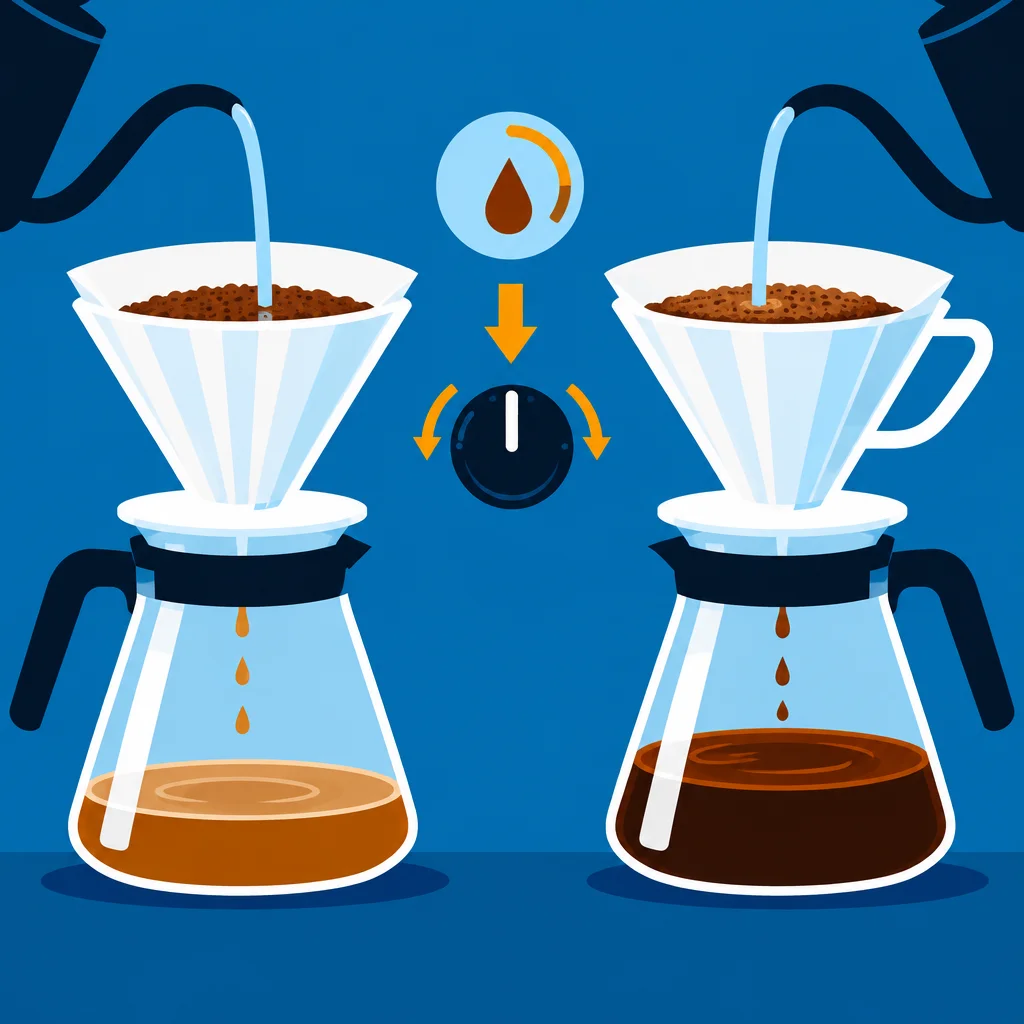
Ratio is the first thing most home brewers learn to get right, and for good reason. Moving from rough scoops to an actual coffee-to-water ratio makes a real difference. But ratio is a starting point, not a finish line. If your cup is tasting thin, watery, or flat even when the numbers are correct, ratio is almost certainly not the problem anymore.
Here is what ratio actually controls, and what it does not.
What ratio does
Ratio tells you how much dry coffee to use relative to how much water you brew with. A common starting point for most home brewing methods is somewhere between 1:15 and 1:17, meaning one gram of coffee for every 15 to 17 grams of water. Dialing into that range ensures you are not under-dosing (too little coffee for the water volume) or over-dosing (so much coffee that the water cannot move through it properly).
What ratio does not control is how much of the flavor compounds inside those coffee grounds actually end up in your cup. That part is called extraction, and it depends on different variables entirely.
Why a correct ratio can still taste thin
Imagine, as a hypothetical, two identical brews at exactly 1:16. Same beans, same grinder, same water volume. The only difference is grind size. One is ground slightly coarser than the other. Both hit the right ratio. But the coarser one will taste noticeably thinner, lighter, and less sweet, because the water passed through the grounds too quickly to dissolve much.
That is under-extraction. The grounds had all the flavor to give, but the brew did not draw it out. Ratio kept the dose correct. Extraction left the cup short.
Under-extraction is the most common reason a ratio-correct cup still tastes thin, and grind size is usually the variable causing it.
The adjustment to make
If your ratio is already in a reasonable range and the cup tastes thin or watery, the most direct fix is to grind finer. Not dramatically finer. A small step on your grinder, then brew again and taste.
Grinding finer increases the surface area of your grounds that water comes into contact with. More surface area means more opportunity for extraction. The water picks up more dissolved solids, more sweetness, more body. The cup tastes fuller.
How much finer depends on your grinder. Grinders with many fine steps let you make very small adjustments. Others have broader steps, and a single click makes a more noticeable difference. Either way, move one step and taste before moving more. Overcorrecting toward too fine can push you into over-extraction, which tastes harsh and dry rather than thin.
A simpler way to think about it
Ratio answers the question: how much coffee am I using? Grind size answers the question: how much of what is in that coffee am I actually getting out?
A good cup needs both answers to be right. Ratio alone cannot do the job.
Other variables that affect extraction alongside grind size
Grind size is the most direct lever, but it is not the only one. If you have already moved your grind finer and the cup is still tasting thin, consider these as secondary places to look.
Water temperature. Cooler water extracts less. If your water is not hot enough when it hits the grounds, extraction will be low even at the right grind. For most filter coffee, water in the 90 to 96 degree Celsius range (roughly 195 to 205 Fahrenheit) is a practical starting range. If you are not sure how hot your water is, letting a boiled kettle sit for 30 to 45 seconds before pouring is a reasonable starting habit.
Contact time. Water that moves through your grounds very quickly does not have enough time to extract well. For pour-over brewing, a slower, more controlled pour gives water more time in contact with the grounds. For immersion methods like a French press, making sure you are steeping for the full suggested time matters.
Bloom step. If your brewing method involves a short pre-wet before the main pour, skipping or rushing it can reduce overall extraction. The bloom allows carbon dioxide trapped in fresh beans to escape before brewing begins, which helps water move more evenly through the grounds afterward. Thirty to 45 seconds is usually enough.
How to troubleshoot quickly
When a cup tastes thin and ratio is already in range, work through these in order.
First, check your grind. Is it at the setting you expect? Shared grinders especially can drift between uses. Grind a small amount and look at it. Does it look roughly as fine as your last good cup?
Second, check your water temperature. Even if you use the same kettle every time, a kettle that was sitting cold and only partially boiled will produce cooler water than one that reached a full boil.
Third, check your contact time. Did the brew drain faster than usual? Pour-over brews that finish in under two minutes for a standard two-cup dose are often moving too fast.
If all three seem roughly normal, then the issue is likely the grind being a step or two coarser than ideal. Move it finer and test again.
Keeping notes helps here
Thin cups are frustrating partly because they can feel random. They often are not. A short note after each brew, just the grind setting, water temperature if you track it, and one word about how the cup tasted, builds up a useful picture fast. After a few sessions you will have a clear sense of where your sweet spot is, and you will know immediately when something has drifted.
Ratio is a great foundation. But a good cup is built on top of it, not guaranteed by it.