How to Brew Coffee When You're Running Out of Beans and Need to Stretch the Last Few Days
When your bag runs low, most recipes stop working well, but two small adjustments keep extraction balanced through the final doses.
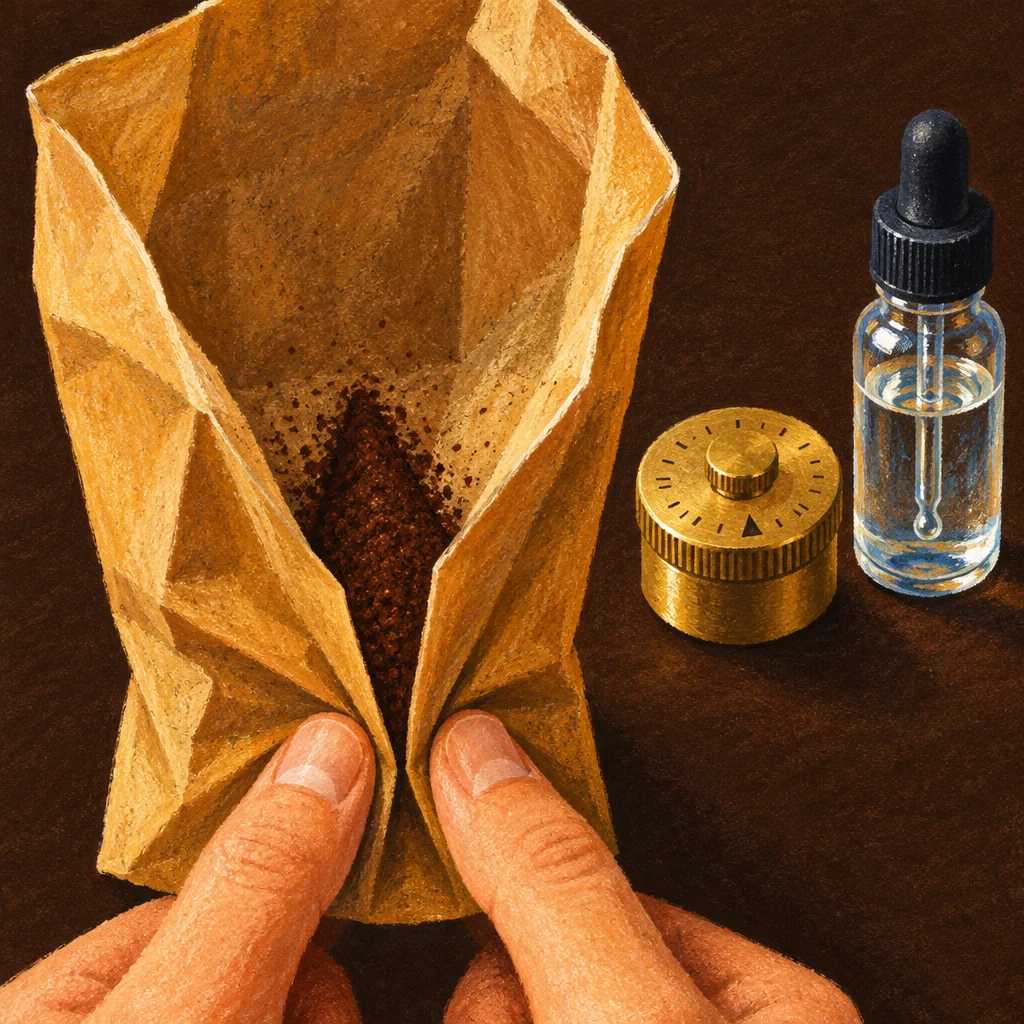
The last third of a bag behaves differently than the rest of it, and most home brewers never quite pin down why. The cups get a little flat, a little hollow, sometimes weirdly bitter. You tweak things, nothing quite clicks, and then the bag is gone. Next bag arrives and everything works again. Easy to assume it was just old beans. Sometimes it is. But a lot of the time, the problem is something more practical and more fixable.
Here is what is actually happening near the bottom of a bag, and how to stay in good cups all the way through it.
Why the end of a bag brews differently
Two things change as your supply dwindles, and they work against you in slightly different ways.
First, the beans themselves are older. Once a bag is opened, oxygen gets in and oxidation accelerates. The beans you are grinding in the final few days have been exposed significantly longer than the ones you used in the first week. Staleness is real and it does affect flavor, but the good news is that it affects flavor more than it affects your ability to extract. Stale coffee still extracts, it just has less of the volatile aromatics that make a cup interesting. Knowing this helps you stop chasing a problem you cannot fully solve with technique alone.
Second, and this is the one most people miss entirely: the amount of coffee left in the bag changes how your grinder behaves.
The grinder weight effect
Burr grinders, even good ones, feed beans a little differently depending on how much weight is pressing down from above. A full hopper or a full bag tipping into the feeder puts consistent pressure on the burrs. As the bag empties, that pressure drops. Lighter loads can result in slightly less consistent grinding, with a marginally wider spread of particle sizes. The effect is not enormous, but it is real enough to shift the taste of your cup, especially if you are brewing pour-over or any method sensitive to grind consistency.
If you grind directly from a hopper, this effect is more pronounced. If you weigh your beans and pour them in fresh each morning, it is smaller but still present, because even a small amount of beans can rattle around and feed unevenly.
This is not a reason to panic or buy a new grinder. It is a reason to make one small compensation.
Adjustment one: go slightly finer
When you hit the last quarter of your bag, consider stepping your grind one or two notches finer than your usual setting. Not dramatically finer, just a small move. This compensates for the slight reduction in extraction efficiency that comes from both the minor grinder inconsistency and the reduced gas content of older beans. Fresher beans bloom aggressively because they are still off-gassing CO2, and that gas actually helps push water through the grounds in a useful way. Older beans have less gas, which means water moves through a little differently and extraction can run slightly short.
A finer grind increases surface area and slows the water down just enough to close that gap. You are not changing your recipe, you are nudging one variable to account for what the beans are no longer doing on their own.
If your cup starts tasting more bitter after going finer, you have gone too far. Back off half a notch. The goal is to match extraction, not overdo it.
Adjustment two: use your scale more carefully than usual
This sounds minor but it makes a real difference. When beans are plentiful, a small dosing error of half a gram here or there is no big deal. When you are down to the last 40 grams in a bag and you need to get three more doses out of it, dosing imprecision starts to matter. An accidental underdose by a gram or two produces a weaker cup. An accidental overdose means you run out before your last morning.
Weigh your doses carefully during this stretch. If you usually eyeball your beans or use a scoop, switch to your scale for the final few days. This is also the time to think ahead about how many doses you actually have left, so you are not blindsided by a half-cup on a morning when you needed a full one.
A simple way to estimate: weigh the remaining beans in the bag. Divide by your usual dose. That tells you exactly how many brews you have left. If you are short, you can adjust now rather than improvise when you are still half-asleep.
One thing worth accepting
Even with good adjustments, the last few days of a bag are rarely as bright and complex as the first week. Some of what made those early cups interesting is genuinely gone. The aromatics that made the coffee smell great when you first opened the bag are not fully recoverable through technique. You can get a balanced, satisfying cup from older beans, but you probably cannot get the peak of what those beans had to offer.
This is worth accepting rather than fighting. A cup that is balanced and pleasant is a good cup. Chasing the first-week brightness in the last-day beans usually leads to over-adjusted brews that taste stranger than the mildly stale version would have.
A small habit that helps going forward
If you find you consistently end up with stale beans at the bottom of a bag, consider buying in slightly smaller quantities more often rather than buying a large bag for the value. A 250-gram bag used within two weeks will taste better in its final days than a 500-gram bag stretched over a month. The tradeoff is more frequent purchases, but for most home brewers who care about the cup, the quality difference is noticeable.
You do not need to become obsessive about it. Just notice how long your current bag is lasting and whether the flavor drops off noticeably toward the end. If it does, a smaller bag size is usually the simplest fix.
The end of a bag does not have to be a mystery or a disappointment. Two small moves, a slight grind adjustment and tighter dose control, get you through it with cups worth drinking all the way to the last one.