How to Brew Coffee When You're Sharing Beans Between a Stovetop Moka Pot and a Pour-Over
The same beans brewed on two different methods need different grind sizes, and knowing why lets you get good results from both without buying separate bags.
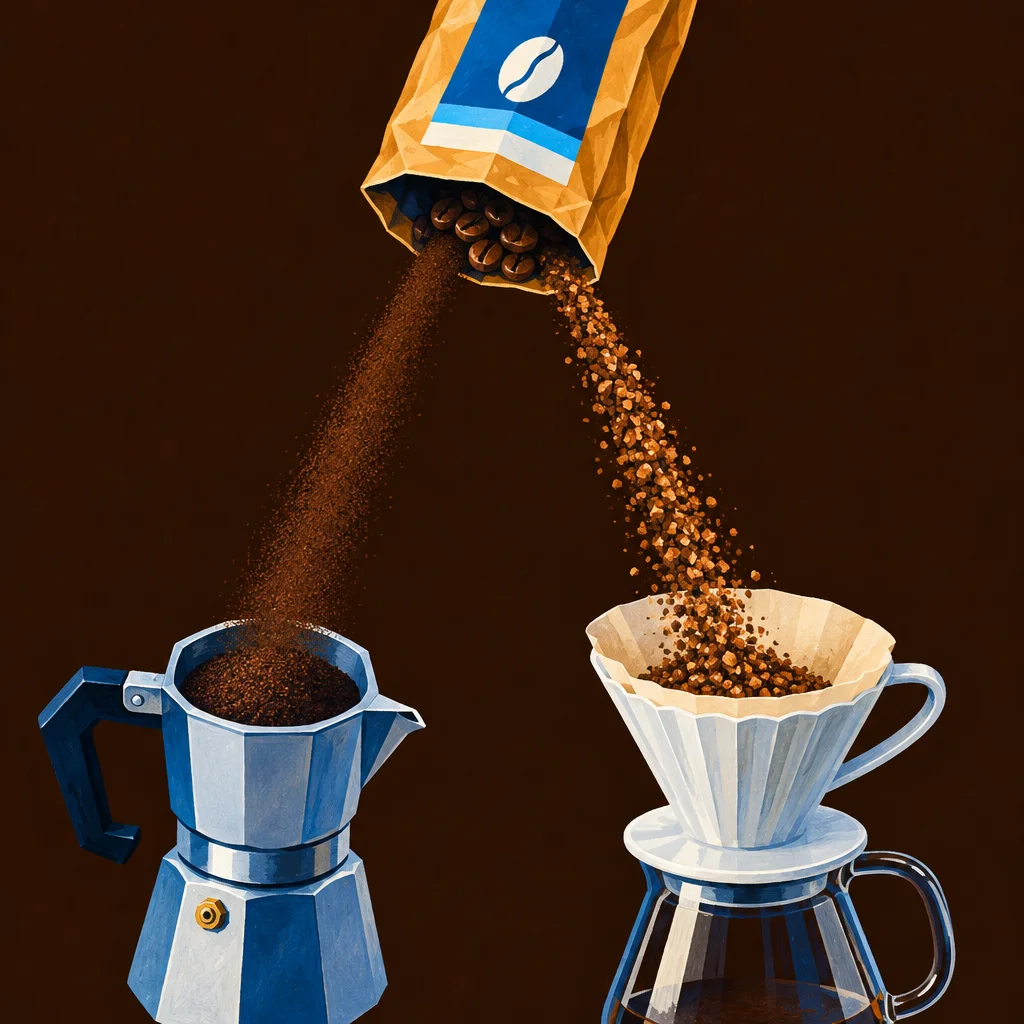
A lot of home brewers end up with two brewers in the cabinet. Maybe you bought a pour-over for weekend mornings and kept a moka pot for weekday speed. Or someone gave you one and you like both. The problem that shows up quickly: you have one bag of beans and two pieces of equipment that want completely different things from those beans.
If you try to meet in the middle with a single grind setting, both cups will be off. The pour-over will taste weak or flat. The moka pot will taste bitter and harsh. The good news is that once you understand what each brewer is actually doing, splitting your approach becomes straightforward.
Why the Same Grind Fails Both Brewers
A pour-over works by gravity. Water falls slowly through a bed of grounds sitting in a filter, and the contact time is relatively long, usually two to four minutes depending on your technique. For that to work well, the grind needs to be coarse enough that water can move through at a reasonable pace, but fine enough to create enough surface area for extraction to happen. A medium to medium-fine grind is the usual target.
A moka pot works by pressure. Water in the bottom chamber heats up, pressure builds, and water is forced up through a packed basket of finely ground coffee. The contact time is very short, maybe a minute or less, and the pressure is doing a lot of the extraction work. If the grind is too coarse, water blows through too fast and the coffee tastes thin and sour. If it is too fine, you risk a dangerously pressurized seal or a thick, ashy result. The target for a moka pot is much finer than a pour-over, somewhere close to what you might use for an espresso machine, though not quite as fine.
Those two targets are far enough apart that a single setting genuinely does not work well for both.
What to Actually Do With One Bag
The simplest approach is to use your grinder's settings intentionally rather than leaving it in one spot. Before you brew with the moka pot, dial to your finer moka setting. Before you brew for the pour-over, move to the coarser setting. This sounds obvious but a lot of people avoid adjusting their grinder because they are worried about losing a dialed-in setting.
Here is what makes that easier: write your two settings down somewhere. If your grinder has numbered positions, note them. If it does not, count clicks from one setting to the other so you can move back reliably. A piece of tape on the side of the grinder with two numbers works fine.
If your grinder has retention, meaning it holds some grounds inside between uses, grind a small amount and discard it after each setting change before grinding your actual dose. This purges the old grind size out and keeps your fresh grounds consistent. A few grams is usually enough.
Adjusting Your Recipe, Not Just Your Grind
Grind is the main thing to change, but the brew ratios also differ between these two methods, and it helps to think of them separately.
For a pour-over, a starting ratio of around 1 gram of coffee for every 15 to 17 grams of water is a reasonable place to begin. You control how much you make and can adjust based on taste.
A moka pot is less flexible on ratio because the basket size is fixed. You fill the basket with ground coffee, level it gently without tamping, fill the bottom chamber to just below the relief valve, and the machine determines roughly how much coffee comes out. The key variable you can control is grind size, and that is where your attention should go.
If your moka pot coffee tastes sour, go finer. If it tastes bitter and harsh, go slightly coarser or check that your heat is low enough. Moka pots brewed on high heat push water through too fast and too hot, which extracts bitter compounds. Medium-low heat is usually better.
When the Same Beans Work Well for Both
Not every bag is equally suited to both brewers, and it is worth knowing what tends to work.
Darker roasts are forgiving in a moka pot. The roast has already developed the kinds of flavors that pressure extraction emphasizes, and the result can taste rich and chocolatey in a good way. The same beans in a pour-over can taste flat or one-dimensional because there is less brightness to highlight.
Lighter roasts shine in a pour-over. The longer contact time and filter extraction bring out acidity and nuance. In a moka pot, lighter roasts can taste sour and sharp because the short contact time does not fully develop those flavors.
A medium roast is genuinely the middle ground that works reasonably well in both brewers. If you are buying one bag to use across both methods, look for something labeled medium. You will make small compromises in each direction, but both cups will be drinkable and often quite good.
One Practical Sequence for Mornings
If you use both brewers on the same morning, do the pour-over first. Grind at your pour-over setting, brew, and set the cup aside. Then adjust the grinder to your moka setting, run a small purge dose, grind your moka portion, and start the pot. By the time the pour-over is cool enough to drink, the moka pot will be done.
This sequence works because you are moving from coarser to finer, which typically requires less grinder adjustment than going the other direction, and you can do both brews in one session without any wasted coffee beyond the purge amount.
Sharing beans between two very different brewers is not a compromise. It is just a matter of knowing which setting each method needs and keeping that information somewhere you can find it.