How to Brew Coffee When You're Storing Beans in the Wrong Spot and Wonder Why Freshness Disappears Fast
Where you keep your beans between uses affects how quickly they go stale, and one storage change extends noticeable freshness by days.
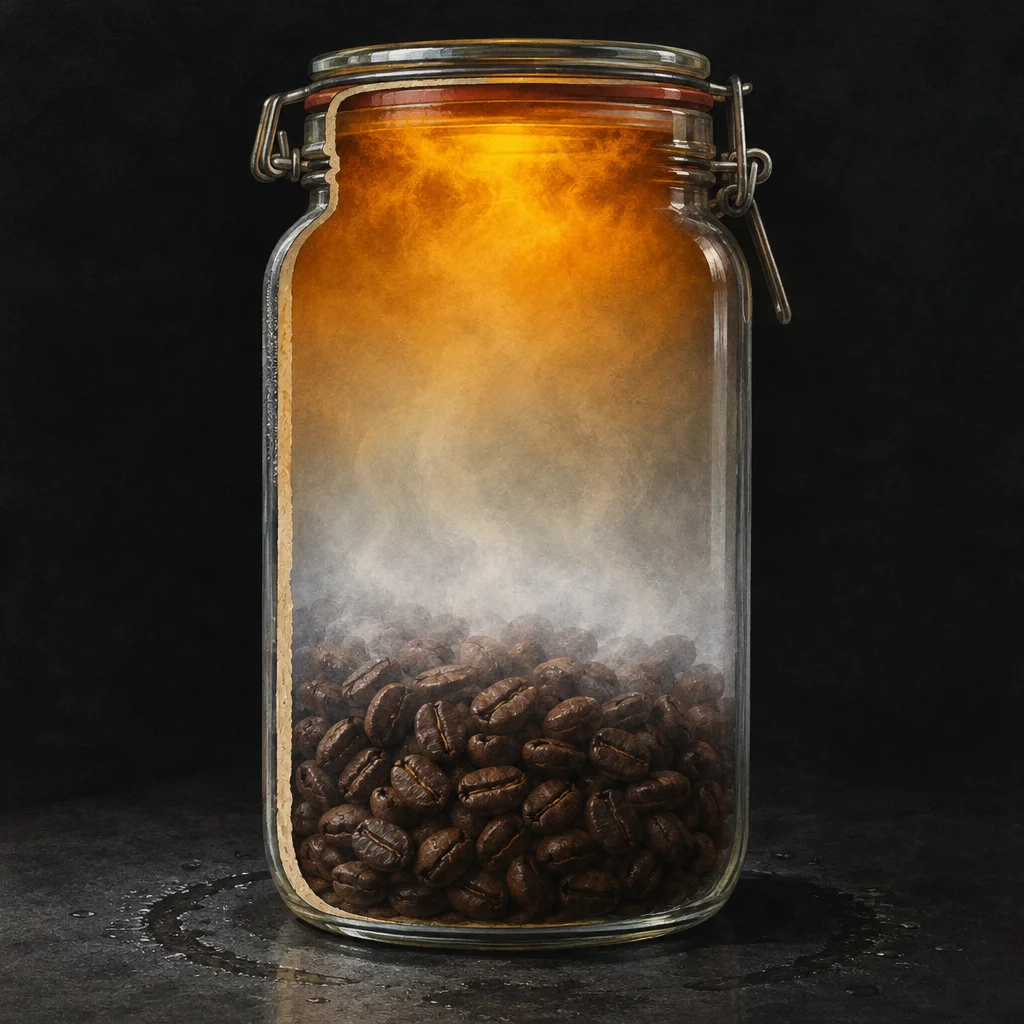
Most home brewers spend real thought on grind size, water temperature, and pour technique. Storage often gets treated as an afterthought, which is understandable, because a bag sitting on your counter looks fine right up until it doesn't taste fine anymore. If your beans seem to lose their liveliness faster than the roast date suggests they should, storage is usually worth looking at first.
What's Actually Happening to Your Beans
Roasted coffee has four main enemies: oxygen, moisture, heat, and light. Once a bean is roasted, it starts slowly releasing carbon dioxide and, at the same time, absorbing oxygen from the surrounding air. That oxygen contact is what drives staling. The flavors that make a good cup interesting, the brightness, the sweetness, the complexity, are the first things to fade when oxidation gets a foothold.
Heat accelerates this process. A spot near the stove, above the refrigerator, or on a sunny windowsill is noticeably warmer than it feels, and that warmth speeds up chemical reactions in the bean. Moisture is a separate problem. It can cause surface degradation and, in bad cases, encourage mold, but the more common issue is that any condensation cycle, beans going from cold to warm environments repeatedly, pulls moisture into the bean and muddies the flavor.
Light degrades coffee more slowly than oxygen or heat, but a clear jar on a bright counter is still doing your beans no favors over a week or two.
The Counter Habit and Why It Works Against You
Leaving beans in their original bag, folded over and clipped, on the kitchen counter is the most common storage approach. It works reasonably well for the first few days after opening, especially if the bag has a one-way valve, which most specialty roasters include. That valve lets carbon dioxide escape without letting oxygen in, and it genuinely helps.
The problem is the counter itself. Kitchen counters sit close to appliances, absorb ambient heat from cooking, and often catch direct light through windows. If you cook regularly, the temperature near your bean bag swings throughout the day. Each swing means the bag breathes a little differently, and oxygen exposure compounds.
If your beans typically go flat somewhere between days four and eight after opening, the counter environment is a reasonable suspect.
One Change Worth Making First
Move your beans to an airtight container kept in a cool, dark cabinet away from your stove and oven. This single adjustment is the one most home brewers notice most quickly. The goal is a stable, cool environment with minimal air exposure.
For the container itself, look for something with a tight seal. A dedicated coffee canister with a pressure-release valve is genuinely useful if you buy one you'll actually use, but a clean, dry mason jar with a lid sealed tightly works well too. The important thing is that the container closes completely and that you open it only when you're about to grind.
A low cabinet away from the oven, or a pantry shelf, tends to stay closer to room temperature and doesn't experience the heat spikes that happen near cooking surfaces. That consistency matters more than chasing a perfectly cold temperature.
What About the Freezer
Freezing coffee comes up in almost every storage conversation, and it's worth being honest about. Freezing can extend the life of coffee, but it introduces a moisture risk that trips people up. The issue isn't freezing itself, it's the thawing and refreezing cycle. Every time you take cold beans out and expose them to warmer air, condensation can form on the surface, and that moisture works into the bean.
If you buy in bulk and want to freeze a portion, the suggestion that tends to work well is to divide beans into small single-use portions before freezing, seal them as airtight as possible, and only thaw what you'll use in the next few days. Once a portion is thawed, don't refreeze it. Keep it in your cabinet container and use it within a week.
For a standard bag you're working through over two to three weeks, freezing is probably more complexity than it's worth. The cabinet method handles that timeframe reliably.
Matching Container Size to Your Buying Habit
One underappreciated storage factor is headspace, the air sitting above your beans inside the container. As you use beans over the course of a week, the container empties out and more air fills the space above what remains. That air is in contact with your beans continuously.
A practical workaround is to match your container size to the amount you actually use. If you regularly have a quarter-bag of beans sitting around for days, a smaller container keeps headspace low. Some home brewers keep two containers for this reason, a larger one for the full bag and a smaller one they refill every few days. That approach is optional, but if you notice beans tasting notably flat toward the end of a bag even with careful storage, headspace could be part of why.
Another option is to press out excess air from the original bag before sealing it, then store the whole bag inside a larger airtight container. This is a simple way to reduce oxygen exposure without buying additional equipment.
A Note on Buying Cadence
Storage improvements only go so far if you're buying more coffee than you can use while it's still at its best. Most roasted coffee has a window of peak flavor that runs roughly from a week to three or four weeks after roast, depending on the bean and roast level. Buying in smaller quantities more often, if your roaster or local shop makes that practical, keeps you working with fresher coffee overall.
If you currently buy a large bag and find yourself on the tail end of it with noticeably less interesting coffee, splitting that into two smaller purchases a couple of weeks apart is worth trying. The storage improvements above help most when you're already working with coffee that's in its good window.
None of this requires a complicated setup. A sealed container, a stable cabinet away from heat, and a buying habit that matches how fast you actually drink coffee will get most home brewers meaningfully better results than the counter bag approach, often within the first few days of switching.