How to Brew Coffee When You're Switching to a Coarser Grind for the First Time and the Cup Tastes Wrong
Going coarser fixes some problems but creates new ones, and two small compensations keep extraction on track through the change.
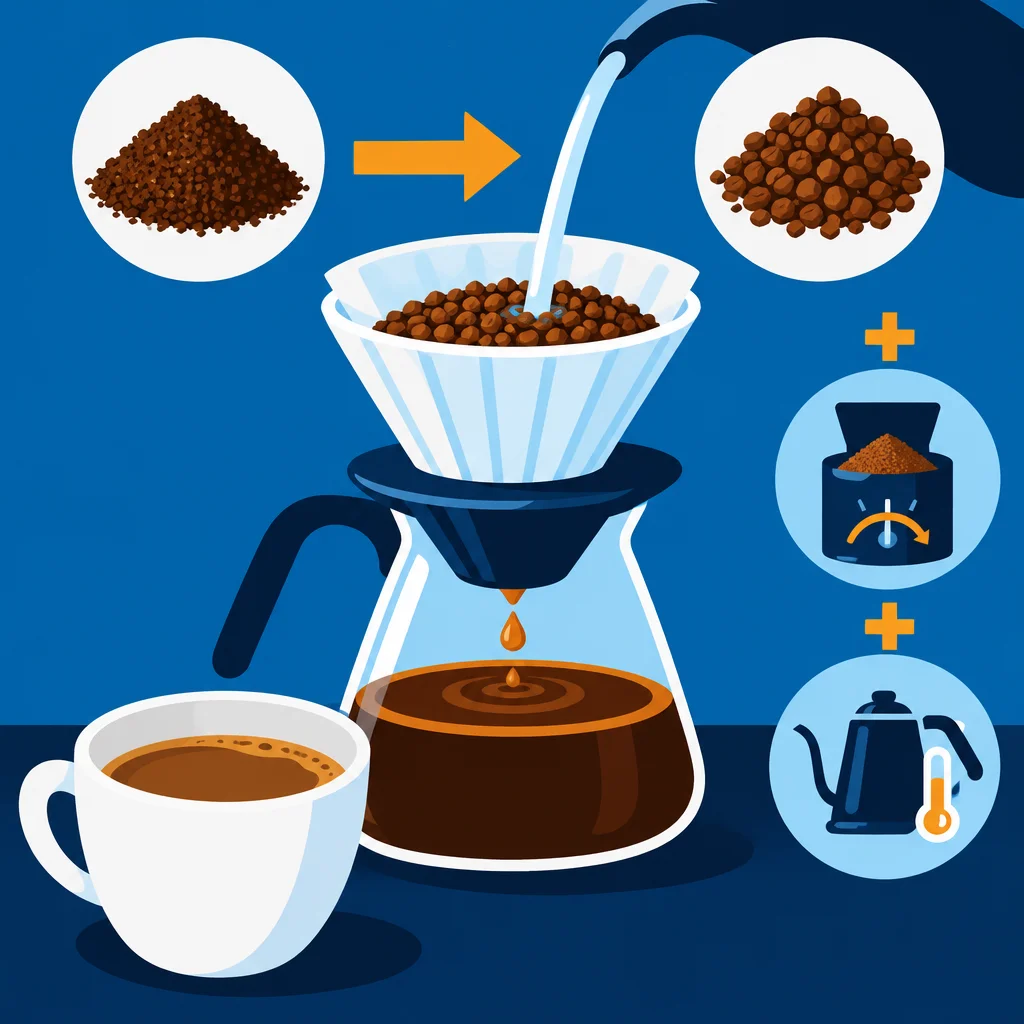
Most home brewers discover grind size matters about ten minutes after they start paying attention to their cup. Coarser grinding comes up quickly as a suggestion, usually as a fix for bitterness or a clogged filter. So you shift the grinder dial, brew as usual, and the result tastes thin, sour, or just flat. That reaction is common enough that it deserves a clear explanation, because the problem is not that coarser grinding was the wrong move. The problem is that coarser grinding changes more than one thing at once, and the recipe you were using was not written for those new conditions.
What actually changes when you grind coarser
Grinding coarser produces larger particles with less total surface area exposed to water. Less surface area means water contacts the coffee more slowly and extracts fewer soluble compounds in the same amount of time. This is exactly what you want when you are fixing over-extraction or bitterness. But it also means that if you keep your brew time, your water temperature, and your water volume exactly the same, your cup will almost certainly taste under-extracted: sour, sharp, watery, or some combination of all three.
The shift is not subtle. Even moving a single step coarser on most burr grinders produces a noticeable change in how fast water drains through the bed, how long the bloom holds, and how the finished cup tastes. Think of it as having pressed a reset button on your extraction, not just turned a single dial.
The first compensation: slow the brew down
The most direct way to recover extraction after going coarser is to give the water more time in contact with the grounds. For pour-over brewing, this means pouring more slowly and in smaller increments. Instead of two or three large pours, try four or five smaller ones, pausing between each until the bed nearly drains before adding more water. This adds contact time without requiring you to change anything about the grinder setting you just dialed in.
For immersion brewing, like a French press or a Clever Dripper, the adjustment is simpler: extend the steep time by thirty seconds to a minute and taste before you commit to that as your new baseline. You are not trying to hit a specific number of minutes. You are tasting for the cup to stop tasting sharp and start tasting balanced.
For automatic drip machines, you have less control over pour rate, but you can try a slightly finer setting than your first coarse attempt, splitting the difference between where you started and where you moved. Alternatively, reduce the amount of water slightly so the bed stays saturated longer. Either approach gives the grounds more extraction opportunity.
The second compensation: check your dose
Grinding coarser usually means your dose by volume will feel the same but weigh slightly less, because larger particles pack less efficiently. If you scoop rather than weigh, this introduces a small deficit you might not notice. If you use a scale, you are already protected from this. If you do not, going coarser is a good occasion to start, or at minimum to add a small extra scoop to compensate.
More practically, if your cup tastes thin or sour after going coarser, adding a gram or two of coffee is a fast and low-effort adjustment worth trying before you reach for any other variable. It shortens your path to a good result because it increases the overall extraction potential of the brew without requiring you to perfectly understand what happened to your contact time.
A note on temperature
Water temperature is a secondary lever here, but it is worth knowing about. Higher temperatures extract faster, which can help compensate for coarser grounds. If your kitchen runs cold or you are brewing with water that has cooled below its target range, coarser grounds will underperform even more noticeably. If you are not using a thermometer, try waiting a slightly shorter time after your kettle boils before you pour. This keeps the water hotter going in and helps the larger particles extract more fully.
This is not the first adjustment to make, because it is easier to overshoot with temperature than with grind or dose. But if you have already slowed your pour and checked your dose and the cup is still flat, temperature is the next thing to look at.
How to know when you have found the right balance
A well-extracted cup after a coarser grind adjustment should taste rounded rather than sharp. Sweetness and body should be present without heaviness. If you were chasing a fix for bitterness, that bitterness should be reduced or gone, replaced by something that tastes more like the actual flavor of the coffee. If instead you now have a cup that is still thin or noticeably sour, you have likely not yet compensated enough for the reduced extraction rate.
Work through the adjustments in order: contact time first, dose second, temperature last. Change one thing between brews, not two, so you can tell which adjustment actually moved the cup in the right direction. This sounds slower than it is. In practice, you are usually within two or three brews of a result you like.
Going coarser is a starting point, not the final answer
The useful thing to understand about grind size is that it sets the pace of extraction, not the outcome by itself. Moving coarser slows things down, and a slower extraction needs other variables to compensate if you want the cup to stay full-tasting. Once you have made those compensations and landed on a cup you like, you have effectively learned something durable about how your specific grinder, brewer, and beans interact. That knowledge transfers to the next bag and the next adjustment, which makes dialing in faster and less frustrating every time you do it.