How to Brew Coffee When You're Switching to a Lighter Roast for the First Time and the Cup Tastes Sour and Weak
Light roasts behave differently from medium or dark roasts in ways that demand specific adjustments, and three changes reliably close the gap.
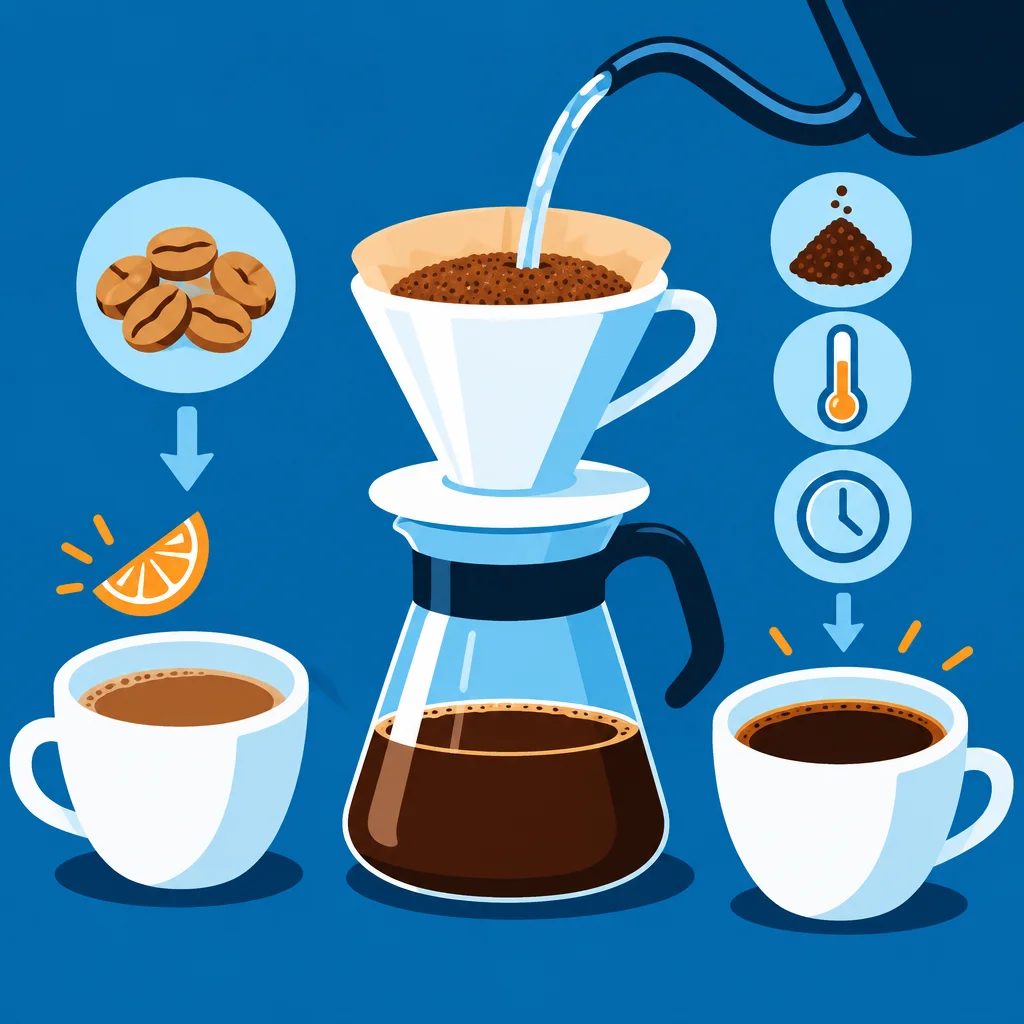
Light roasts have a reputation for being difficult, and a lot of people try one, find the cup sour and thin, and quietly go back to what they know. That is a shame, because the problem almost always has a fixable cause. Light roasts are not harder to brew well, they just respond to a different set of conditions than darker roasts do, and if you carry your old recipe straight over, it tends to land in the wrong place.
Here is the core reason this happens. Roasting drives moisture out of a coffee bean and breaks down its cell structure. The longer and darker the roast, the more that structure loosens and opens up. A dark roast bean is physically more porous. Water moves through it easily, and extraction happens quickly. A light roast bean is denser and more compact, which means water has to work harder to pull flavor out. If you brew a light roast exactly the way you brew a dark roast, you are very likely to get under-extraction, which shows up as sourness, a hollow finish, and that thin, watery quality that makes you wonder why anyone bothers.
The good news is there are three adjustments that address this directly. You do not need new equipment. You need to change how you are using what you already have.
Grind finer than you think you should
This is the adjustment that makes the biggest difference and the one most people skip. Because a light roast bean resists extraction, you need to increase the surface area available to the water. Going finer does that. It also slows the flow of water through your grounds, which gives the water more contact time to do its work.
If you are used to a medium roast, try dropping your grinder one or two notches finer than your usual setting when you switch to a light roast. The cup will likely improve noticeably before you need to touch anything else. If you go too far and the cup starts tasting muddy or heavy, back off slightly. But most people making this switch for the first time need to go finer, not coarser.
This applies to pour-over, drip, and French press, though the degree of adjustment varies. Espresso from a light roast is its own separate challenge and worth a dedicated conversation another time.
Brew hotter than your default temperature
If you have been brewing around 195 degrees Fahrenheit and adjusting downward for darker roasts to avoid bitterness, you may have internalized the idea that lower temperature is usually better. With light roasts, that instinct works against you.
Higher water temperature increases the rate of extraction. Because a light roast is denser and more resistant, it benefits from that extra energy. Many experienced home brewers use water between 200 and 205 degrees Fahrenheit for light roasts, which is close to boiling at sea level. If you have been letting your kettle cool for a minute before pouring, try pouring sooner and notice what changes.
You are not trying to scald the coffee. You are giving the water enough energy to pull flavor out of a compact, dense bean. Sourness in a light roast cup is almost always under-extraction, and temperature is one of the two fastest levers you have to address it, with grind size being the other.
Extend your brew time slightly
The third adjustment follows from the first two and sometimes handles itself once you adjust grind size. If you go finer, your water naturally slows down and spends more time in contact with the grounds. But if you want to be deliberate about it, you can also extend brew time directly.
For pour-over, this might mean pouring more slowly or giving the grounds a longer bloom before continuing. A bloom is the initial small pour that lets gases escape before you add the rest of your water. With light roasts, a longer bloom, around 45 seconds rather than 30, can help water penetrate the denser grounds more evenly before the main brew begins. This is a small thing but it matters because uneven saturation means some of your grounds are over-extracted while others are under-extracted, which muddles the flavor.
For drip machines, brew time is harder to control directly, which is why grind size and temperature matter even more. A finer grind slows the water on its own.
One thing to keep in mind about ratio
Your coffee-to-water ratio probably does not need a dramatic change, but it is worth checking your starting point. A ratio around 1 gram of coffee to 15 or 16 grams of water is a reasonable starting place for a light roast pour-over. If your cup still tastes thin after adjusting grind and temperature, try using slightly more coffee before chasing other variables. Adding coffee is a blunter tool than adjusting grind size, but it can help close the gap while you dial in.
Avoid the temptation to keep adding coffee as a substitute for proper extraction. A sour cup with more coffee in it is still a sour cup, just a stronger one. The sourness comes from under-extraction, and the fix is getting more out of the coffee you already have, not just using more of it.
What a well-brewed light roast actually tastes like
Part of why people find light roasts confusing at first is that they are genuinely different in character from darker roasts. They often taste brighter and more acidic even when brewed correctly. Fruit notes, florals, and a cleaner finish are common. If you are expecting the heavy, roasty quality of a dark roast, a well-brewed light roast can still catch you off guard.
But there is a clear difference between the natural brightness of a properly extracted light roast and the sharp, empty sourness of one that did not extract enough. Once you taste the difference, it is easy to recognize. The sourness of under-extraction feels hollow and unpleasant. The brightness of a good light roast feels alive and has something behind it.
Adjust your grind finer, brew hotter, give it a little more time, and the cup you were hoping for when you bought those beans becomes much easier to find.