How to Brew Coffee When You're Tasting Different Things in the Same Cup from Sip to Sip
A cup that tastes bright at first and flat or muddy by the end usually has one fixable cause rooted in how water moved through the grounds.
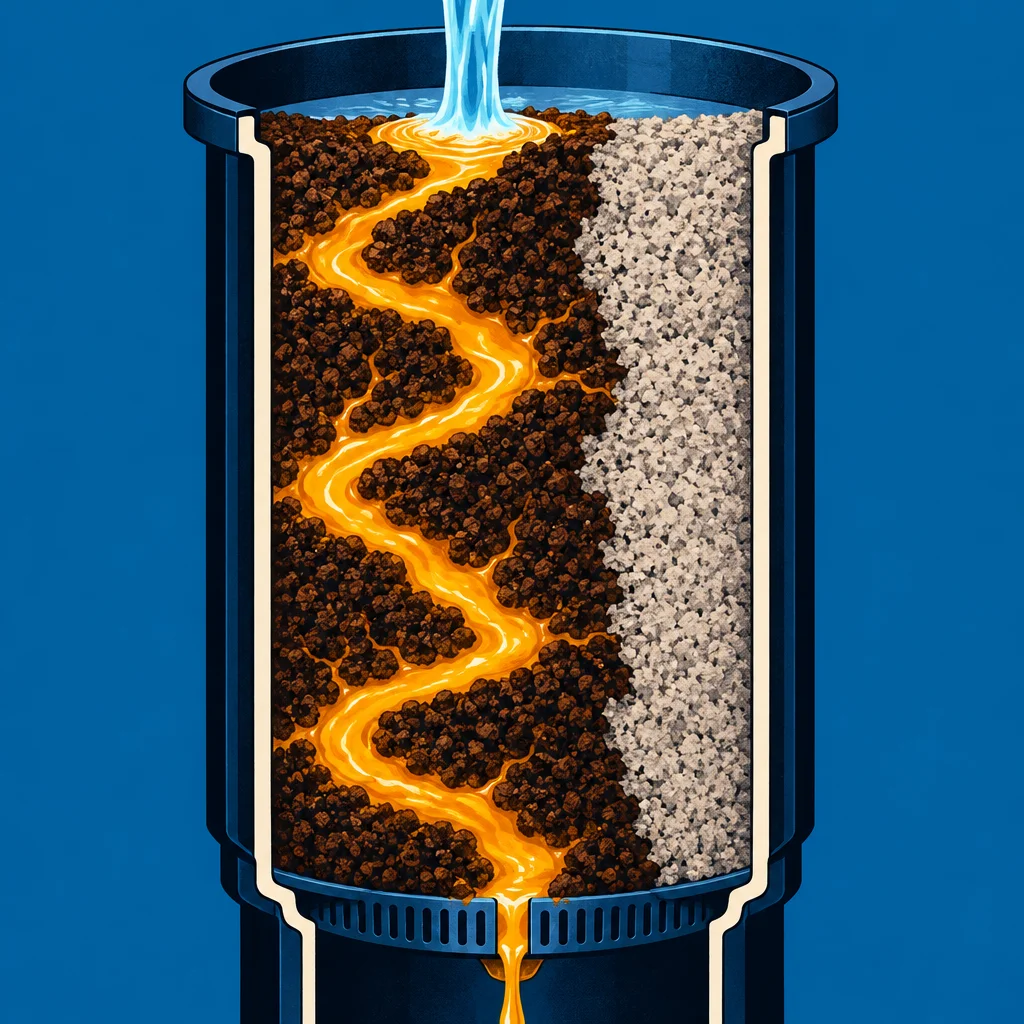
Most home brewers assume that if a cup tastes bad, it tastes bad all the way through. But there is a specific and very common problem that is easy to miss: the cup changes noticeably as you drink it. The first few sips taste lively and interesting, and then somewhere in the middle the flavor shifts, goes dull, or picks up a chalky or muddy quality that was not there at the start. If this sounds familiar, you are not imagining it, and you are not being too precious about your coffee. Something real is happening, and it has a straightforward explanation.
Why the Flavor Shifts at All
When water passes through a bed of ground coffee, it does not extract everything evenly or all at once. The compounds that dissolve first tend to be the bright, acidic, fruity ones. The heavier, more complex compounds take longer to move into the water. The bitter or astringent compounds are often the last to extract in meaningful amounts.
In a well-brewed cup, all of these dissolve in proportions that feel balanced together. But when the water moves unevenly through your grounds, different parts of the bed extract at different rates. Some grounds get far more water contact than they should. Others get much less. The result is that you are tasting a blend of over-extracted coffee from some zones and under-extracted coffee from others, and those contributions do not stay constant throughout the pour. What hits your cup first is different from what hits it last.
This is called channeling when it is severe, and uneven extraction when it is mild. You do not need technical language to fix it. You just need to understand where the unevenness is coming from.
The Most Common Cause: An Uneven Bed Before You Pour
The single most frequent reason water moves unevenly through grounds is that the grounds were not level or evenly distributed before brewing started. This matters more in a pour-over setup than in a drip machine, but it affects both.
If your coffee bed has a small mound in the center, or a depression on one side, water will find the path of least resistance and flow through those spots preferentially. The high spots get less contact. The low spots or thin areas get saturated and over-extract. By the time the brew is done, your cup is a mixture of the two, and that mixture tastes different at different points in the brew depending on which extraction zone was dominant at that moment.
The fix is simple and takes about three seconds. After you add grounds to your filter or basket, give the brewer a gentle tap on the counter or a slow swirl, and look at the surface of the grounds from above. You want a flat, even layer. If you brew with a pour-over and have a habit of pouring directly in the center every time without moving the pour outward, that center-heavy habit creates exactly this kind of uneven saturation over time.
A Second Cause: Inconsistent Pouring Pace
If your grounds are level but the cup still shifts noticeably, look at your pour. When you pour too fast in one moment and then slow down or pause in another, the water level in the bed changes dramatically. A high, fast-moving water level pushes through some grounds aggressively while others barely get wet. A slow, low-water pour lets certain zones sit and steep while others drain almost immediately.
Some variation in pour speed is fine and normal. But large swings in pace, especially in the first half of a pour-over brew, create zones of uneven saturation that play out in the cup as that shifting, inconsistent flavor.
A practical suggestion: try keeping your pour in a slow, steady spiral that moves from just inside the edge inward to the center, then back out. You do not need to be mechanical about it. The goal is just to wet the grounds more evenly across the whole surface rather than concentrating the pour in one spot for too long.
What Happens With Pre-Ground Coffee or Inconsistent Grind
If you grind your own coffee and your grinder produces a lot of fine particles alongside coarser ones, those fines tend to settle toward the bottom of the bed or cluster together. They extract much faster than the coarser particles around them. The coarser particles may under-extract at the same time. This produces a brew that tastes simultaneously over-extracted in some ways and under-extracted in others, and because the fines and coarses are distributed unevenly, the cup shifts as you drink it.
You cannot eliminate fines entirely with a home burr grinder, and you should not worry too much about them. But if the problem is significant, one thing worth trying is a slightly coarser grind setting. This reduces the proportion of very fine particles, which often does more to even out extraction than adjusting ratio or temperature.
Stirring the Brew Can Help More Than You Expect
One underrated technique that smooths out extraction is a gentle stir of the slurry during the bloom or early pour. If you brew pour-over, try using a chopstick or the back of a spoon to give the wet grounds a slow stir just after your initial bloom pour. This wets all the grounds more evenly and breaks up any dry pockets that may have formed in the center of the bed.
In a French press, a gentle stir at the beginning and a slow press are usually enough to get even saturation. If your French press cup shifts flavors noticeably, check whether your grounds are floating unevenly or clumping on one side during the steep.
A Quick Test to Isolate the Problem
If you want to check whether unevenness is really the issue, try this on your next brew. Pour your finished coffee into a larger vessel, give it a slow stir to combine everything, and then taste it. If that cup tastes noticeably more consistent than the sip-by-sip version did straight from the brewer, your extraction was uneven and you were tasting different zones at different moments. That confirmation tells you the fix lives in distribution and pour technique, not in ratio or bean quality.
This is genuinely one of those problems that looks complicated from the outside but usually traces back to something small and fixable. A flatter bed, a steadier pour, and a single stir during bloom will handle the majority of cases. Start there, and your cup should taste like itself from the first sip to the last.