How to Brew Coffee When You're Using the Same Recipe on a New Brewer You Just Bought
A recipe dialed in on one brewer rarely transfers directly to a new one, but three physical differences explain why and point to the right adjustments.
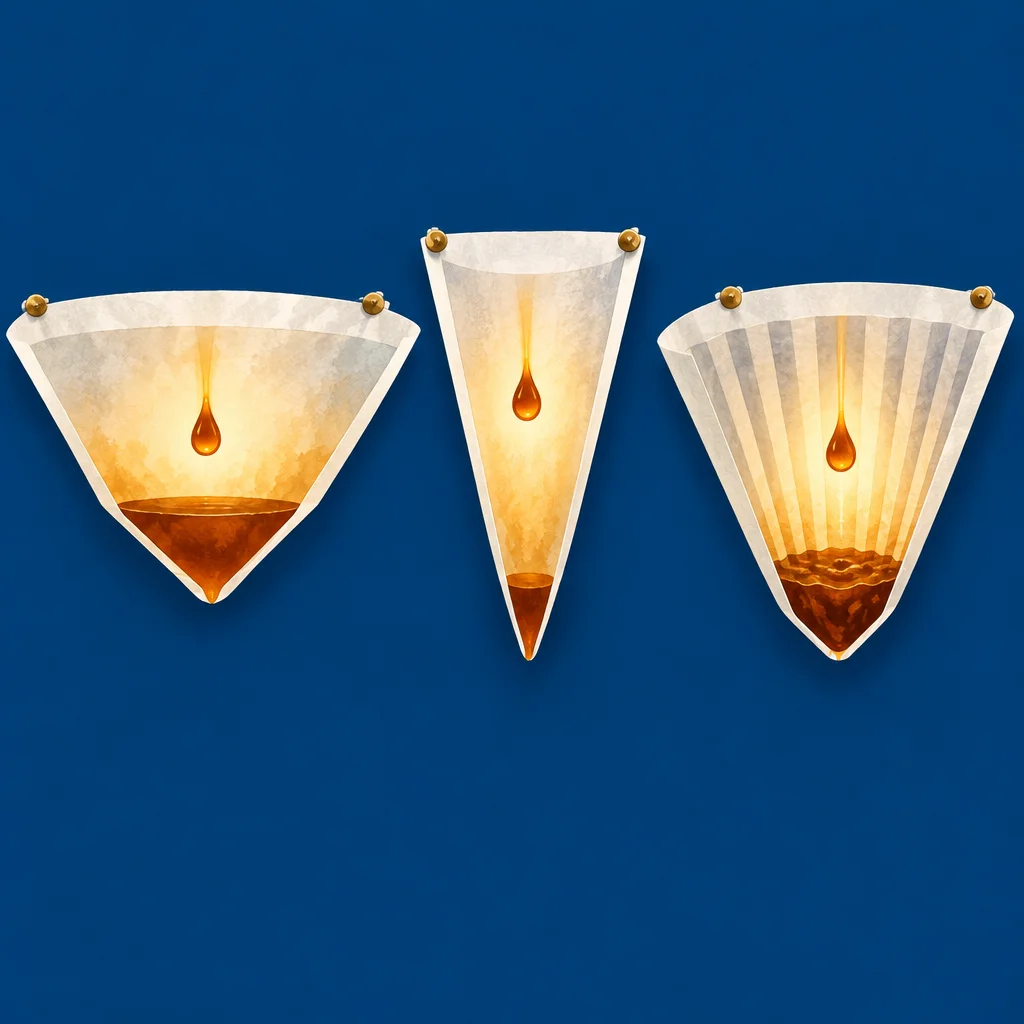
Getting a new brewer is genuinely exciting. You unbox it, set it up, and pour in your usual recipe expecting a familiar cup. What you get instead is something slightly off, sometimes sour, sometimes bitter, sometimes just flat. The beans haven't changed. The water hasn't changed. But the cup has.
This happens to almost everyone, and it isn't a sign that you bought the wrong thing or that your old recipe was somehow fragile. It happens because brewers are not interchangeable containers. Even two brewers designed for the same method, say two different pour-over drippers or two different French presses, have physical differences that change how water and coffee interact. Once you understand which three differences matter most, you can adjust your recipe with a clear reason for each change instead of just guessing.
The first difference: how fast water drains through
Every brewer has a drain rate, meaning how quickly water moves through the grounds and out the other side. Some drippers drain fast, some drain slow, and many fall somewhere in between. Your old brewer had a drain rate you had unknowingly calibrated your recipe around. Your new brewer may drain faster or slower.
When water moves through faster than you're used to, contact time between water and grounds goes down, and the cup can taste thin or sour because extraction didn't complete. When water moves through slower, contact time goes up, and the cup can taste heavy or bitter because it extracted more than intended.
A simple way to get a rough sense of drain rate is to pour a small amount of just water through your new brewer with no coffee in it and watch how long it takes to empty. Then recall roughly how your old brewer behaved. If the new one drains noticeably faster, try grinding a bit finer than your usual setting. If it drains slower, try a touch coarser. You're not overhauling the recipe, just nudging grind size to compensate for the change in contact time.
The second difference: how the filter behaves
Filters vary more than they look like they should. Paper filters differ in thickness and in how tightly they're woven. Some pass more fine particles than others. Metal and cloth filters pass almost everything. If you've switched filter materials along with your brewer, that change alone can shift the texture and intensity of your cup.
Paper filters tend to produce a cleaner, lighter cup because they trap more of the fine particles and oils. Metal filters let more of those through, which gives you a heavier, slightly more textured cup with more of the coffee's natural oils present. Neither is better, but if you've gone from one to the other, the flavor difference will feel significant even with an identical recipe.
If you've switched filter types and the cup tastes noticeably different, give yourself a few brews to adjust your expectations before changing the recipe. Sometimes what feels like a flaw is just an unfamiliar characteristic of the filter you're now using. If after a few brews it still doesn't suit you, try adjusting grind size first, since filter type affects how fines behave and grind is your most direct lever.
The third difference: how heat is retained during the brew
Brewing is a process that takes anywhere from two to five minutes depending on method, and throughout that time your brewer is either holding heat reasonably well or losing it steadily. Ceramic brewers hold heat better than plastic ones. Thicker walls hold heat better than thin ones. Metal brewers can go either way depending on construction.
If your new brewer retains heat less effectively than your old one, the water temperature drops more during brewing, which tends to produce a flatter, slightly less extracted cup even with everything else held constant. If your new brewer retains heat more effectively, you may find the cup comes out a bit more intense or slightly bitter if your old recipe was calibrated around some natural temperature loss.
A practical habit that helps regardless of brewer material is pre-warming. Before you brew, pour hot water into the brewer, let it sit for thirty seconds, and pour it out. This brings the brewer up to temperature so your actual brew water doesn't lose heat to the cold vessel on contact. This is worth doing with any brewer, but it becomes especially important when you're working with one that's less thermally stable than what you're used to.
A starting strategy that works across brewer changes
When you're transferring a recipe to a new brewer, treat your first three brews as information rather than failures. Use your existing recipe as a starting point, brew it exactly as written, and taste it carefully. Ask yourself whether the cup is too sour and thin, which suggests under-extraction, or too bitter and heavy, which suggests over-extraction. That one observation tells you which direction to adjust.
From there, change only one thing at a time. Grind size is usually the most effective first adjustment because it directly controls extraction rate without requiring you to relearn your whole recipe. Temperature adjustment and pour technique can follow if grind alone doesn't get you there.
Give yourself permission for the first week with a new brewer to be a learning period. You are not doing anything wrong by needing to adjust. You are doing exactly what anyone does when they change equipment, which is re-calibrating to a slightly different set of physical conditions. The recipe you built on your old brewer is still yours and still useful. It just needs a small translation.
One thing worth writing down
When you do find the settings that work on your new brewer, write them down immediately. Note the grind setting, the dose, the water amount, and anything you changed about technique. It takes thirty seconds and saves you from rebuilding the same knowledge next time you use it after a break. Small notes like this are the closest thing to a shortcut that home brewing actually offers.