How to Brew Coffee When You're Working With Hard Water and the Cup Keeps Tasting Chalky or Dull
Hard water leaves mineral deposits that gradually change how your brewer and grinder perform, and two adjustments bring your cup back to clarity.
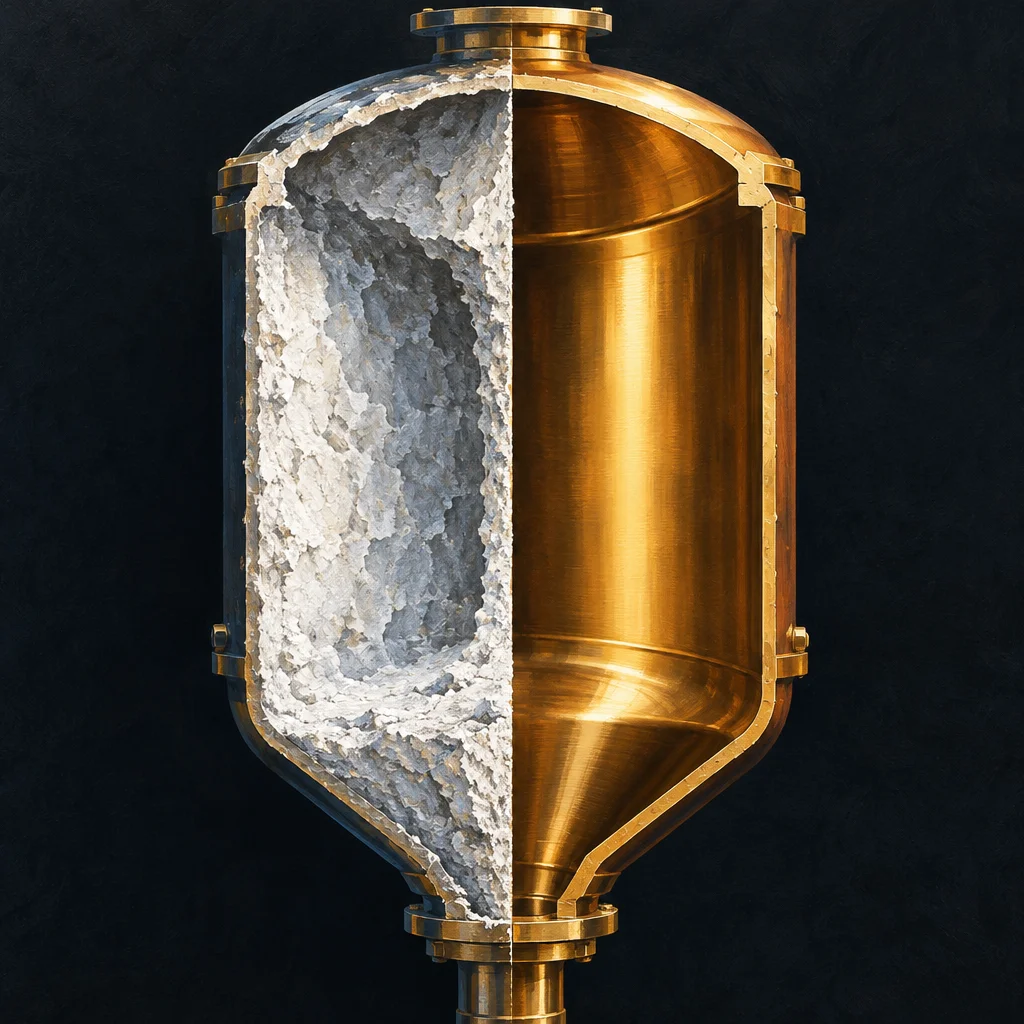
If your tap water tastes fine on its own but your coffee has started tasting chalky, flat, or strangely muffled, the water is probably still the culprit. Not because of what it lacks, but because of what it carries.
Hard water is water with a high concentration of dissolved minerals, mostly calcium and magnesium. Some of those minerals actually help with coffee extraction. The problem comes when there is too much of them, or when they start accumulating inside your equipment over time. Both situations affect your cup in ways that are easy to confuse with other problems like stale beans or a bad grind setting.
This guide covers what hard water is actually doing to your brew, how to tell if it is the source of your problem, and two practical things you can do about it.
What hard water does to brewed coffee
At moderate levels, minerals like magnesium help pull flavor compounds out of coffee grounds. That is why fully stripped or distilled water produces a flat, lifeless cup. You need some mineral content for good extraction.
But when mineral concentration climbs above a certain point, the water starts competing with extraction in ways that work against you. Very hard water can suppress some of the brighter, more delicate flavors in a coffee, leaving behind a heavier, sometimes chalky or bitter quality that sits in the back of your throat. The cup feels thick but not in a good way.
Hard water also deposits those minerals inside your kettle, your brewer, and any other equipment water touches regularly. This buildup is called scale, and it matters because it insulates heating elements, narrows water channels, and can flake off into your brew in small amounts. Scale buildup is gradual enough that most people assume something else changed.
How to tell if hard water is your actual problem
Check your kettle first. If you see a white or grayish crust forming on the inside walls or around the heating element, your water is hard enough to cause scale. That alone is a useful signal.
If you do not have a kettle to inspect, look at your coffee gear more broadly. White residue around the spout of a gooseneck, chalky deposits on the inside of a glass carafe, or gritty texture appearing on equipment you clean regularly are all signs of mineral accumulation.
You can also do a simple informal test. Brew a cup using bottled water from a brand labeled as spring water, which typically contains moderate mineral levels. If that cup tastes noticeably cleaner or more vivid than your usual tap-brewed cup using the same beans and the same recipe, hard water is likely playing a role.
Adjustment one: address scale in your equipment
Scale buildup changes your brew even when everything else stays constant. It affects how evenly heat transfers in your kettle, which means your water temperature at the pour is less predictable than it was when your kettle was clean. In automatic drip brewers, scale can restrict water flow and reduce brew time or pressure in ways that lead to under-extraction.
The fix is descaling, which sounds more complicated than it is. White vinegar diluted with water works well for most home brewing equipment. A common starting point is one part vinegar to two parts water, run through the brewer the way you would run a normal brew cycle, followed by two or three cycles of plain water to rinse. For a kettle, filling it with the same diluted mixture, letting it sit for twenty minutes to an hour, and then rinsing thoroughly does the job.
If you prefer to avoid vinegar, food-grade citric acid dissolved in water is another option. Use roughly one to two teaspoons per liter of water as a rough guide, though the specifics depend on how much scale you are dealing with.
How often you need to do this depends on how hard your water is and how much coffee you brew. If you are brewing daily with hard water, descaling every four to six weeks is a reasonable habit to try. You can adjust that interval based on how quickly you notice residue returning.
Adjustment two: shift your water source or blend it
Descaling handles the equipment side, but it does not change what is in the cup right now. If your tap water is very hard, the mineral content is affecting each brew directly.
One option is to swap entirely to bottled spring water. Spring water is not as stripped as filtered or distilled water, so it retains the moderate mineral content that supports good extraction without the excess that causes problems. This works well and is straightforward, though it creates ongoing cost and packaging waste.
A more practical middle-ground approach is blending your tap water with filtered water. If you have a simple pitcher filter at home, that filtered water will have lower mineral content than your tap. Mixing filtered and tap water in roughly equal parts softens the overall hardness without removing all the minerals. This takes some experimentation since your tap water's specific hardness level is unique to where you live, but starting at a fifty-fifty split and tasting from there is a reasonable way to find what works.
Some home brewers find that one-third tap to two-thirds filtered is a useful ratio with very hard water. Others find the full tap water is fine after descaling their equipment regularly. The right balance depends on your specific water and your taste.
A note on what hard water is not
Hard water is worth addressing, but it is not responsible for every cup problem. If you descale your equipment and shift your water source and the cup still tastes off, go back to basics. Check your grind size, your dose, your brew temperature, and the age of your beans before assuming the water is still the issue. Hard water is a real and common culprit, but it is not the only one.
The cup you get after taking care of your equipment and adjusting your water will often taste noticeably cleaner than what you have been drinking, sometimes dramatically so. That contrast is the clearest sign this was the problem all along.